

Why Your Cantaloupe Is Flavorless
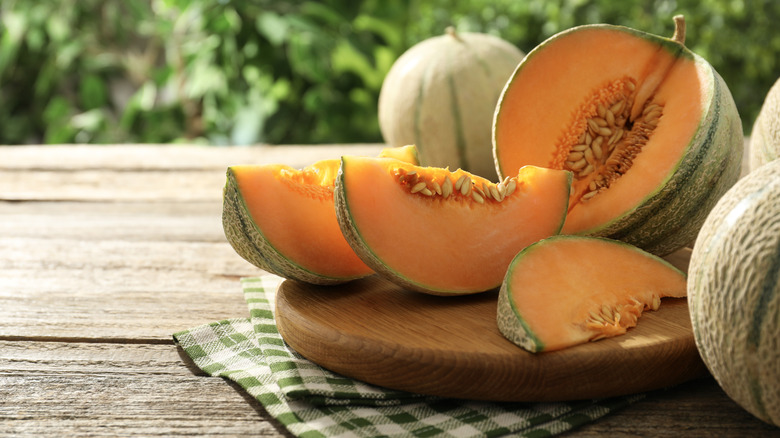
Cantaloupe is just one of those misunderstood foods. It's often filler fruit, ideal for bulking up fruit salads, platters, and breakfast buffets, and one that usually tastes like nothing. But when you get a good cantaloupe, it's a rarity so exciting it's like the world turned upside down in the best way possible. The perfect cantaloupe is juicy, sweet, and almost neon orange, with a burst of flavor hitting you with every bite. Cantaloupe, however, doesn't get many chances to be perfect — or even great.
Early harvesting, overwatering, soil nutrition, diseases, and pests can all interfere with a cantaloupe developing peak sweetness before it hits stores. These factors make cantaloupe one of the hardest fruits to grow. "Mine usually get wiped out by wilt disease before they have a chance to become bland," horticulturist George Weigel says (via Penn Live). Add in the physical handling and temperature changes that go with shipping and storage (the same factors that cause dark spots on potatoes), and you get even fewer good-quality melons. Unlike some other produce types, cantaloupes may not continue to ripen after they're picked. If they're harvested too early, they may not reach full sweetness, no matter how long they sit on your counter. So when you do encounter a great cantaloupe, get excited.
How to choose a flavorful cantaloupe
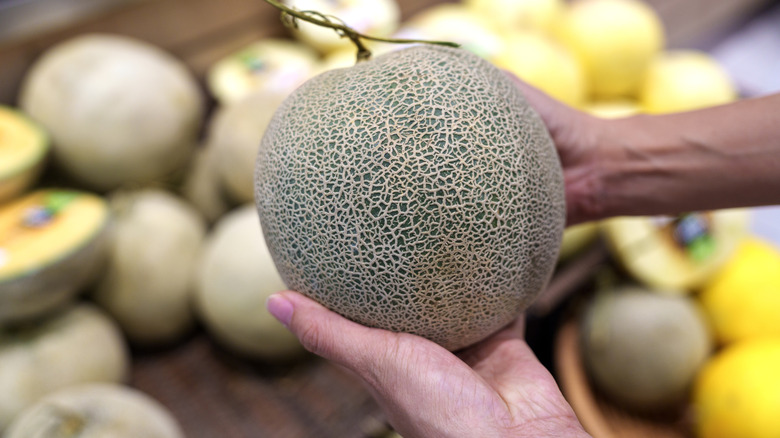
Grabbing a cantaloupe that doesn't taste like watery disappointment is all about timing and knowledge. For starters, cantaloupe's peak season is June through August. Cantaloupe melons sold outside of that period are more likely to be bland. Next, trust your senses. Start with sight: You're looking for cantaloupes that are beige or golden underneath raised webbing. If the skin is green or gray, it was picked too early.
After identifying solid cantaloupe contenders, the best way to choose a ripe cantaloupe at the store is to smell it. If it doesn't smell sweet and fruity, it's not going to taste sweet and fruity. If it passes the smell test, give it a shake. You don't want to hear seeds rattling around, which indicates overripeness. You want to hear nothing. When you're picking the melon up to smell and shake it, pay attention to its weight. A heavy cantaloupe weighs more because it's full of juice. You want that. These quick tests help you avoid common mistakes when buying produce at the store – saying goodbye to disappointing fruit forever.