

The Best Baked Potato Topping Is Simple, Flavorful, And Can Be Grown In Your Kitchen
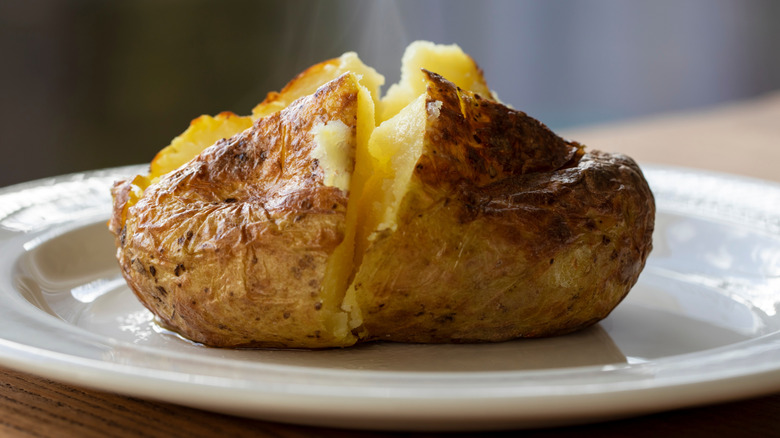
Whether you use Martha Stewart's trick for fluffy baked potatoes or you make extra crispy baked potatoes in the air fryer, those spuds can't live up to their full potential until they are furnished with all the flavorful toppings that make them so appealing. Everyone has their favorites, with some loading them up with meat and cheese, while others swear a decent "baker" deserves to be crowned with a charitable ladle of chili. Yet, with all the heavier ingredients hogging the spotlight, chives are frequently overlooked as a must-have for any baked potato worth its salt.
Contrary to what some folks think, chives aren't the same as green onions. Whereas the latter boasts a pungent, sometimes oniony flavor (depending on whether you use the green tops or the white ends), chives lend more subtle herbaceous notes with a hint of garlic that complements the savory flavors of other baked potato toppings like bacon and sour cream. The small green bits cut through the richness and make the dish feel a bit lighter and fresher.
The best part? They are essentially free. With a one-time purchase of a small pot containing drainage holes, a modest amount of quality soil, and chive seeds, you can grow chives right on your kitchen windowsill. By dedicating the time for just a little maintenance, you'll effectively have chives on hand any time a baked potato calls your name.
Keep fresh chives on hand year-round in your kitchen
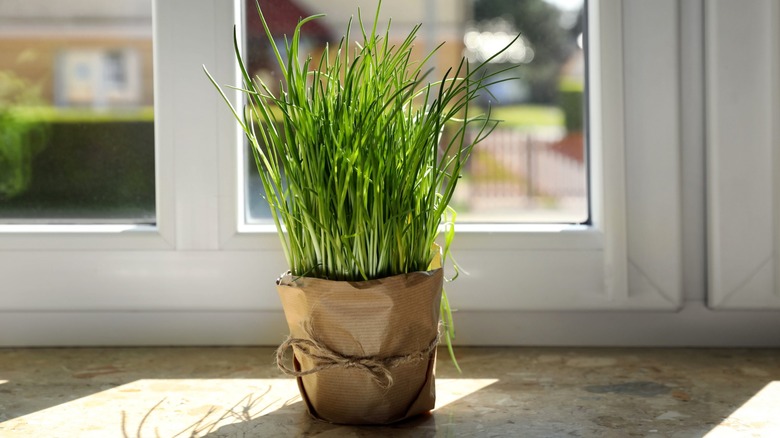
The beauty of growing a baked potato's best friend in your kitchen is that you don't necessarily need a green thumb to have chives within reach at any given moment. Once you've added soil to a small pot that can drain, simply moisten the top and scatter some seeds over the surface. Lightly cover the seeds with wet soil and place the pot in an area that receives six hours of full sunlight per day. That's it. Within 10 days, you should notice chive seedlings springing to life.
Adequate light is the primary factor in determining how well your chives grow. If your kitchen doesn't allow for six hours of sunlight, you could also secure a grow light about a foot above the plants. You'll also want to stay on top of watering. While chives are fairly resilient and will likely survive if deprived of water for a short time, they should ideally be given a healthy drink whenever the topsoil is dry, using a spray bottle.
When cutting the chive plant to upgrade your baked potato, be sure to use sharp scissors and only remove roughly a third of the length to avoid inhibiting further growth. After the chives have grown for some time, you may notice small flowers budding toward the top of the plant. You can trim the blossoms and make yourself a cute little bouquet, but all parts of the plant are edible. A fresh, crunchy salad topped with flavorful chive blossoms can make a terrific side dish to complement your loaded baked potato.