

Give Your Bland Green Bean Casserole A Flavor Overhaul With This Ingredient
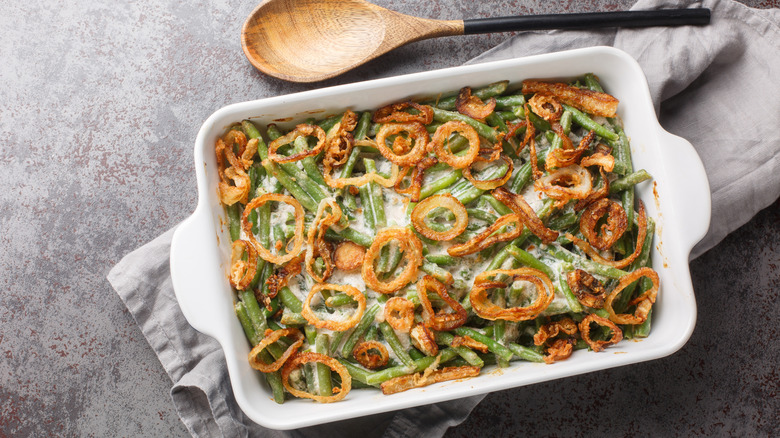
Statistically, green bean casserole has to be someone's favorite Thanksgiving dish, but I have yet to meet them. Still, it appears on many Thanksgiving tables year after year. And it does have an important function: We need some greens to balance out those starchy Thanksgiving essentials, after all. So this year, stop making the obvious mistakes with your green bean casserole, and give it a chance to shine with one new ingredient –— miso paste.
While this fermented soy paste might not be many home cooks' first thought when considering an upgrade for their classic green beans, it adds a deeply umami flavor and a serious depth that Campbell's Cream of Mushroom just can't match. That being said, the flavor of miso is never simple or easy to summarize. I like to use sweet, salty white miso in vegetable heavy dishes, including the sauce for my green been casserole.
White (or shiro) miso isn't as rich and dark as its cousin, red miso, so it provides space for fresh and citric notes. This also allows you to manipulate flavors to suit your own tastes — you could add sour cream and lemon to lighten your gravy and let fresh green beans have a moment. You could also use soy sauce to emulate the traditional mushroom flavors of grandma's green bean casserole, or a meaty gravy base to bring out darker, wintry notes.
How to make your best ever green bean casserole using white miso
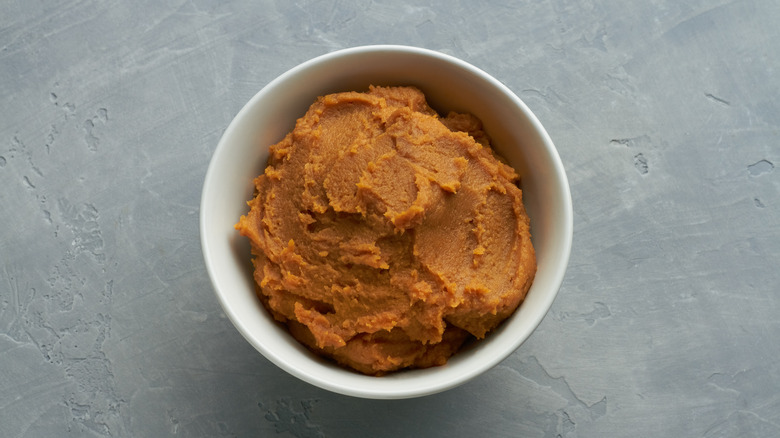
Whether you choose to reinvent the casserole using miso, or simply add some to your existing recipe, incorporating the new ingredient shouldn't be difficult. If you're making a sauce with condensed soup, just stir in a spoonful of miso paste as you warm everything. Because it's a paste, this is easiest if you decant a little of the sauce and stir in your miso to make sure it's fully incorporated before you pour it back into the pot. If you're making a gravy that starts with a roux, add the first spoonful of miso along with your initial splashes of broth, and then continue to make your recipe.
Miso-laced green bean casserole is very much a "to taste" dish, so start cautiously and then slowly add more miso once you've started tasting. The miso can offer anything from a background note to the backbone of your casserole's flavor profile.
All the usual rules of a good green bean casserole still apply. You should use fresh green beans and add them late if you want them to remain fresh-flavored and snap when you eat them. The casserole is best served warm, and should be topped with something crunchy. Crispy onions work great, but if you want to double down on that Japanese twist, you could use flavored and toasted panko breadcrumbs instead, or mix them with your onions.
The practical stuff – where to buy miso, storage methods, and how to use the rest

You may need to go to an international grocery store to get miso (or if you're lucky enough to live in an H-Mart state, you're almost guaranteed to find it there). It may also be available in the international aisles at Kroger, Walmart, or other stores. There are many types of miso, so look for labels that say "white miso" or "shiro miso." Avoid the prepared miso soup powders: They include other ingredients and are dried and powdered, rather than fresh.
Some miso comes in intimidating amounts, but don't panic! Once you know how to use it, the Japanese staple will become a go-to ingredient, particularly in the chillier months. Both red and white miso can be used to add depth to many dishes, and they're a fantastic hack if you want a vegetable to taste like it isn't one (useful if you have vegetarians at your holiday dinner table. Bottom line: Miso just makes food better. Why not try a little in a Thanksgiving-leftovers winter soup, or in chocolaty-sweet treats for a cookie swap?
And for anyone who isn't planning to adopt a 30% miso paste diet as their New Year's resolution, storing the fermented ingredient is simple. It should be kept in an airtight container in the fridge. In this manner, miso can often keeps for up to a year, and it's fine to use as long as it's not moldy or tastes overly fermented. Buy it now and you'll have plenty for next Christmas dinner, too.