

The 4 Cs Of Food Safety You Need To Remember In The Kitchen
When you need to remember something, nothing helps quite like a handy little mnemonic device. And if the stuff you want to remember all starts with the same letter, you're in luck. You only need to remember the three Rs of waste management (reduce, reuse, recycle), the three Ps of conflict de-escalation (pause, paraphrase, probe), or, indeed, the four Cs of kitchen safety: clean, cook, contain, and chill.
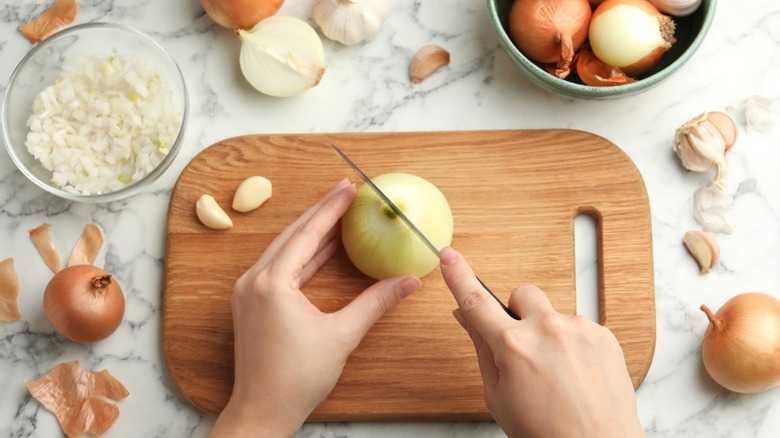
"Clean" is a pretty straightforward one. You should be washing your hands for at least 20 seconds to keep your food safe from whatever you've been touching all day — and to protect you from anything you don't want to linger on your hands when you're done. But keeping your work surface clean is just as important: If you cut onions on the same cutting board on which you handled raw chicken, this can be a recipe for food poisoning. That makes it a good idea to wash your surfaces after each use.
This leads us into "contain," or "cross-contamination." There's a reason why Gordon Ramsay always got mad when raw and cooked chicken was kept together on "Kitchen Nightmares." You want to avoid cross-contamination at all costs, which is why washing surfaces is so important — or, better yet, use two different cutting boards for raw meat and vegetables. Cross-contamination is why you should also avoid washing your chicken in the sink: It's totally unnecessary and only serves to spread juices around where they don't belong.
Cook and chill to keep your food safe from germs
As for "cook," that's pretty straightforward, too: You need to make sure you cook your food thoroughly in order to kill off anything you don't want in your system, like salmonella or E. coli. It's important to measure the internal temperature of meat with a food thermometer when you cook it, although the safe minimum temperature will differ depending on what you're cooking. (That said, you should avoid overcooking, if only because it's quite unpleasant to chew through shoe leather — although it is possible to salvage overcooked burgers.)
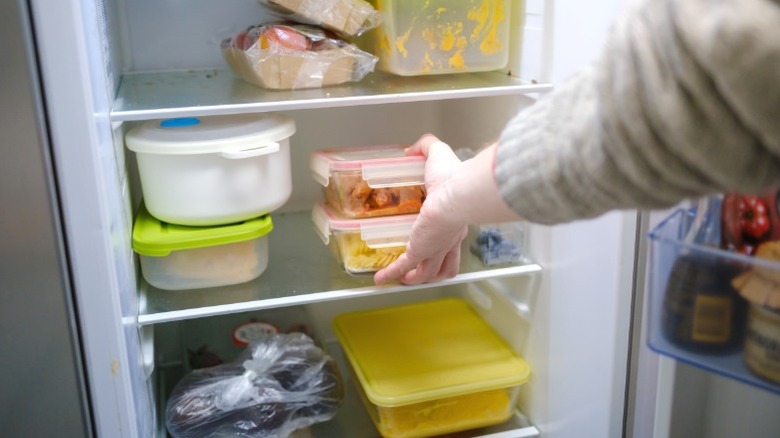
Once you cook your food through, your job still isn't quite done; this is where "chill" comes in. If you're going to put your cooked food in the refrigerator or the freezer — let's say you made beef stew for the next day, or you prepped a pumpkin pie early to serve on Thanksgiving — you'll want to let it cool completely before putting it away, lest you preserve harmful bacteria. But don't let it sit out for too long, as that can help the harmful bacteria multiply. For perishable foods, two hours is the maximum.