

The 18th-Century Stewed Pear Dessert That Was As Pretty As It Was Poisonous
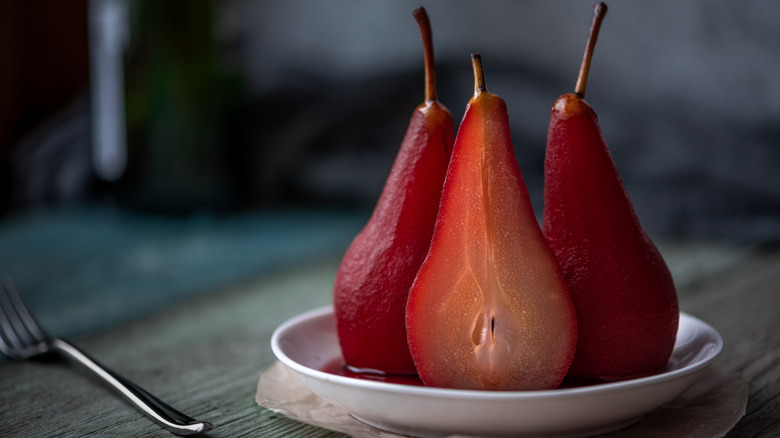
There's a fair amount of romanticism about old courtly foods and Victorian feasts. While some recipes from that time still exist today, many have faded into obscurity due to a lack of ingredients or unpopular flavors. One 1700s dessert is no longer served for a better reason than most. Stewed purple pears were a soft, sliced pear dish that used only sugar, water, and heat to slowly change the pears to a pleasing purple color. The result was a delicious confection served with liquor. Too bad it was utterly deadly.
While there are foods that can prove deadly if not done right, this is a rare case of the food being deadly because it was done right. The original recipe from 1747, written by Hannah Glasse, instructs that the pears be heated in a stew pan, covered by a pewter plate. This is an important detail because the chemical reaction with the pewter lid was what made them change color. The pewter did more than just change the color, though. When it came in contact with the acid released from the sliced pears, the pewter would shed molecules of lead, copper, and tin. These minerals would leach into the food, creating lead poisoning and eventually death if consumed in large quantities. While it might sound shocking that a dessert could be fatal, these pears wouldn't even crack the top 10 foods that killed people in Georgian and Victorian times.
Poisonous food wasn't all that unheard of centuries ago
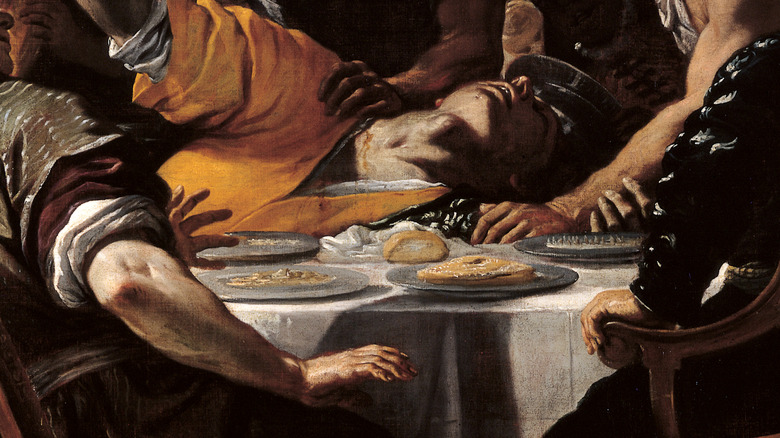
Throughout history, especially in the 18th and 19th centuries, various cultures were pretty adept at accidentally poisoning themselves. White makeup called Venetian ceruse contained enough toxic minerals to cause skin deterioration and sometimes death. Many medicines contained mercury and quinine, which often proved more deadly than the very ailments they attempted to treat. Food handling and safety were definitely lacking, meaning spoiled food and tainted water often caused mass deaths. Something as safe as a slice of toast wasn't even safe because plain old white bread in the Victorian era was hiding a toxic secret. In order to make bread appear light and pure, bakers often included toxic additives, including plaster.
Even with all these dangers looming, many people who were killed by what they ate suffered from the same poisoning caused by the purple pears: lead poisoning. Cookware often contained lead or other toxic minerals, and this leached poison into food when it came in contact with acid or heat. As dishes used more citrus and tomato, lead-based cookware became even more deadly, especially among the upper class, which could afford nice pewter plates and drinkware.
While more education about lead poisoning and food safety has meant we now avoid pewter in the kitchen, that doesn't mean folks still don't fall victim to deadly food. Even today, people manage to create poisonous dishes, as occurs yearly in France when hundreds become ill from eating poisonous foraged mushrooms.
How you can safely stew purple pears nowadays
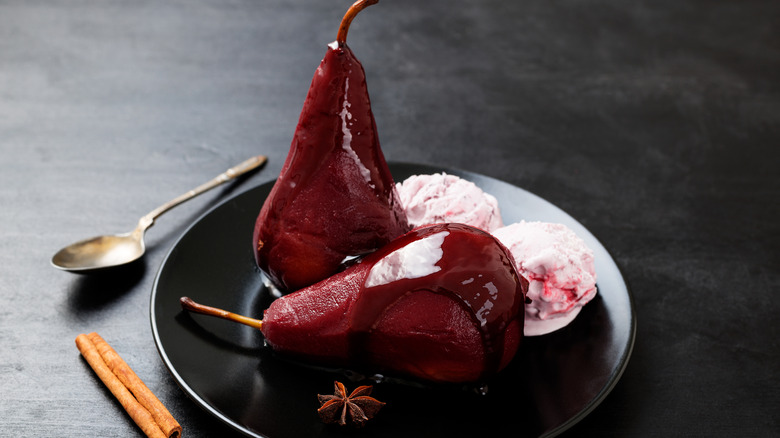
After knowing all of this, maybe you still looked at those pears and thought to yourself that they looked pretty tasty. For adventurous eaters, you're in luck! You can still have a stewed purple pear dessert, minus the deadly toxic effect, and it's simple to make at home. There are a few different ways to achieve the purpling effect that do not use a pewter chemical reaction, so you can pick the one that sounds the tastiest to you.
One of the most common ways to create purple pears is to stew them in red wine. When poached or boiled with sugar and citrus, they take on a vibrant burgundy color and a rich, alcohol burn. You can marinate and then stew pears in butterfly pea and lavender if you want a more blue-tinged purple and a botanical flavor. If you're feeling trendy, consider creating unicorn-inspired poached pears, a recipe from Suncore Foods that sees the pears dyed with sweet potato powder and topped with sprinkles. There are still some foods out there that can be toxic if prepared incorrectly, but by using any of these variations, your purple pears won't have to be one of them.