

The Peculiar Reason Dinner Is Served So Late In Spain
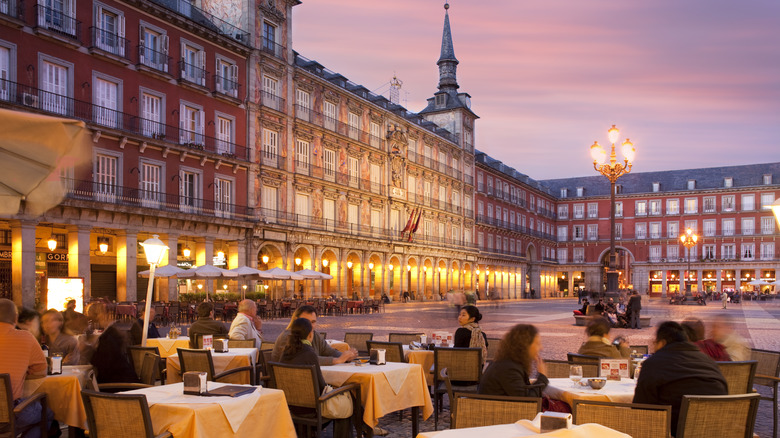
In much of Spain, dinner isn't typically served until 9 p.m., and locals don't sit down to eat until 10 or 11. To outsiders and those who love early bird specials, this late-night dining ritual might seem unusual, but it's the result of cultural and historical factors that have shaped Spanish life for generations.
One of the biggest reasons for late-night suppers might surprise you. Before World War II, Spain operated on Greenwich Mean Time (GMT), same as Portugal and the United Kingdom. But in 1940, dictator Francisco Franco moved the clocks forward an hour to align with Germany as a symbolic political gesture. Interestingly, the country never switched back and still operates in Central European Time (CET) today. And Spaniards didn't change their meal times either, resulting in a late lunch that happened around 2 p.m. and an even later dinner.
But dinner doesn't have the same cultural weight in Spain as it does in the United States. Traditionally, Spanish daily life has been built around multiple smaller meals rather than three large ones. The main meal of the day, la comida, happens in the mid-afternoon. This long lunch is when families and friends gather for multi-course meals. Because la comida is so filling, there's typically no need to eat another meal until much later in the night (although snacks are encouraged).
While much less common now in modern urban areas, the siesta also played a role in shaping mealtimes. In traditional rural life, workers would rest during the hottest part of the day which also shifted the daily rhythm. While Spain's big cities now run on more standard office schedules, the late dinner tradition has stuck.
Climate and culture also play a part
Climate is another factor that keeps Spain up at night. Summers can be intensely hot, and cooler evening temperatures make outdoor dining much more enjoyable. Dining al fresco at 10 p.m. isn't just culturally normal, it's practical. Warm weather evenings encourage long, leisurely dinners and allow plenty of time for pintxos and tapas beforehand. This also means the sun rises and sets later in Spain than in many other European nations at the same clock time. For tourists, it's kind of perfect. You have the morning to sleep in, and the extended sunlight in the evening means more play time and festive meals that go on past midnight.
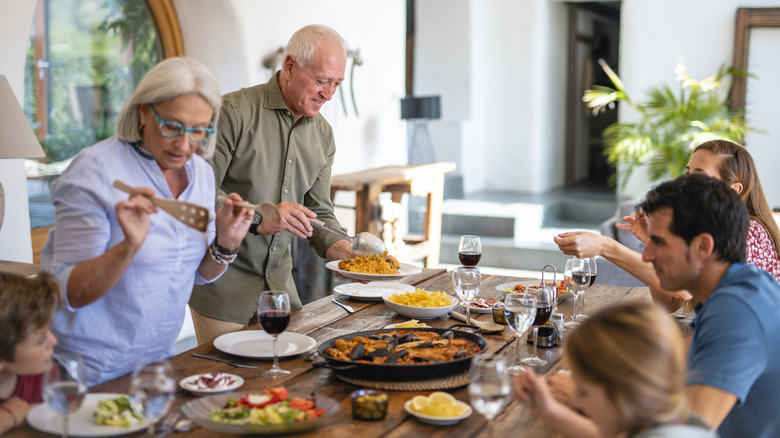
Late dinners also reflect Spain's social culture. Unlike American dining, Spanish meals aren't a rushed affair; they're social events, a time for lingering conversation over tapas, wine, and shared plates. A late dinner means more people can participate after work or evening activities. As a result, restaurants and plazas open late (typically not until 8 p.m.) and stay lively deep into the night.
And yet, these night owl hours have their detractors. Spain is considering switching back to their actual geographic time zone, and various reports and political voices have pushed for it. They argue that being in the "wrong" time zone could negatively impact sleep, productivity, and social habit. But no definitive action has been taken yet. Many Spaniards are deeply tied to current schedules. It's not just a late-night dinner — it's about history, climate, tradition, and the deeply social spirit of Spanish life.