

TGI Fridays Claims To Have Invented Potato Skins, But Something Doesn't Add Up

TGI Fridays is an interesting chain which claims to have invented the Happy Hour and the Long Island Iced Tea as well as its signature Jack Daniel's sauce and glaze (this one it invented for sure). The kooky, tchotchke-laden restaurant group also claims to have invented the potato skin appetizer in which potatoes are baked, halved, scooped out, loaded with cheese and bacon and baked again. (At my house growing up we simply made twice baked potatoes which includes mashed potato filling but they're the same idea and just as delicious.) The only issue is that, like basically every popular restaurant recipe, this claim of invention seems a little suspect. The recipe appears to trace back to the 1970s, but like the origin of the hamburger and the birth of the potato chip, the legend is cloaked in mystery. Three competing restaurants claim the recipe: Prime Rib Restaurant in Washington D.C., Chicago's R.J. Grunts, and TGI Fridays.
Prime Rib claims it got its recipe from a home cook who got it from James Beard, modified by Liberace. TGI Fridays has the classic food myth of the humble accident. The story goes that a chef dropped some skins in the fryer and discovered they were delicious, especially when loaded with bacon and cheese. R.J. Grunts arguably has the most plausible explanation: The owner, Richard Melman, had heard about sailors eating potato skins at sea from his brother. Potato skins are nutrient dense and full of fiber, so he thought it would make a healthy addition to the menu.
Never believe the 'happy accident' story in food history
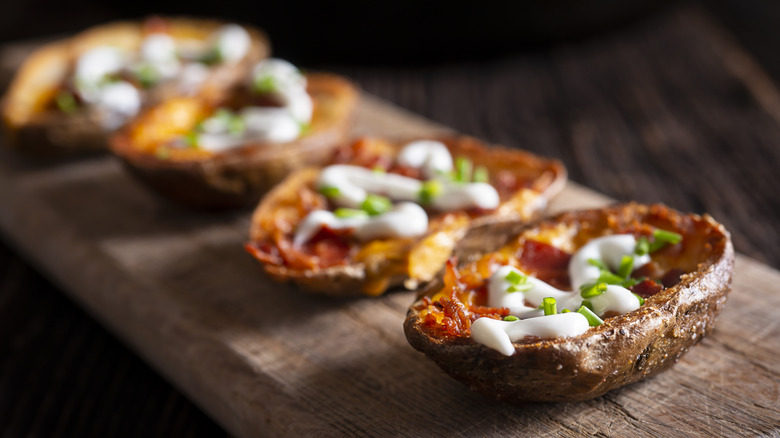
While it's undeniable that potato skins are heavily associated with TGI Fridays, the history of modern menus is littered with tall tales and fables about how a lowly chef accidentally created the best selling item on the menu. While the 1970s would have been part of TGI Fridays' "humble origins" era (having opened its first location in Manhattan in 1965, explicitly as a singles bar), it's hard to believe an established franchise would let an item be created on accident.
It's no secret that massive chains have research and development labs. It's not hard to surmise that the potato skin recipe has changed or been engineered over time. Further, a lot of food or beverage recipes that are now sold have totally made up origins, like the Seelbach cocktail. But all this leads me to ask: why?
Why does it matter that a recipe was created by one guy in one kitchen? Food is wonderful because it requires farmers, pickers, sellers, and cooks. A lot of recipes are communal in origin or have been passed down for generations. It's hard to think of how and why it matters outside marketing campaigns (like the Seelbach for instance) or claims to fame. I guess, what matters is if the food is delicious. As with potato skins, burgers, chips, the Seelbach, and more — the answer is resoundingly yes, they are.