

You Don't Need A Food Processor For Salsa: Use This Instead
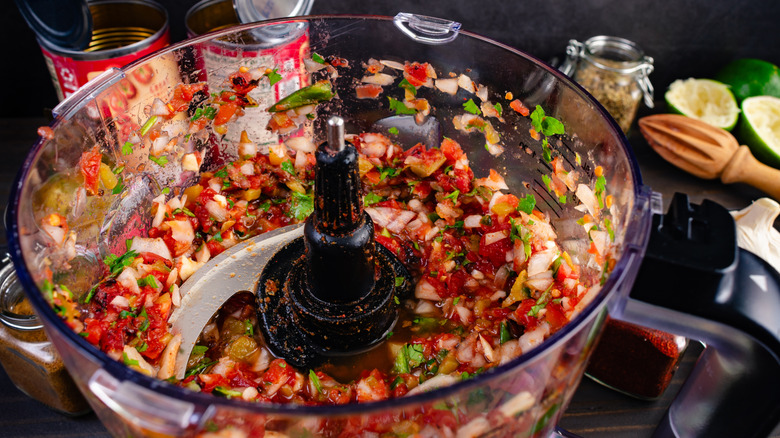
If you're planning to make homemade salsa, you might run into recipes that call for a food processor. But many folks — myself included — don't have a food processor on hand. While my blender works for most applications, I know that food processors and blenders aren't interchangeable. Can you use a blender to make salsa instead? And is a food processor even the best tool for the job?
The Takeout turned to Rick Bayless, who owns a host of celebrated restaurants — including Frontera Grill, Topolobampo, Xoco, and Bar Sótano — to learn more. The good news: Bayless says that a food processor isn't a necessity. "There are many different kinds of salsa, and a food processor (or blender) works for some of them," he explains. But Bayless doesn't recommend a food processor for rough-chopped salsas like pico de gallo. "For pico de gallo-type salsa, I don't like a food processor because the texture turns out mushy and the flavors aren't bright and distinct," he says. The bad news: Bayless's preferred way to make choppy salsas is a lot more work, since it involves going manual. "For [pico de gallo] salsa to be at its best, everything should be chopped by hand," he says.
What's the best tool to use for salsa?
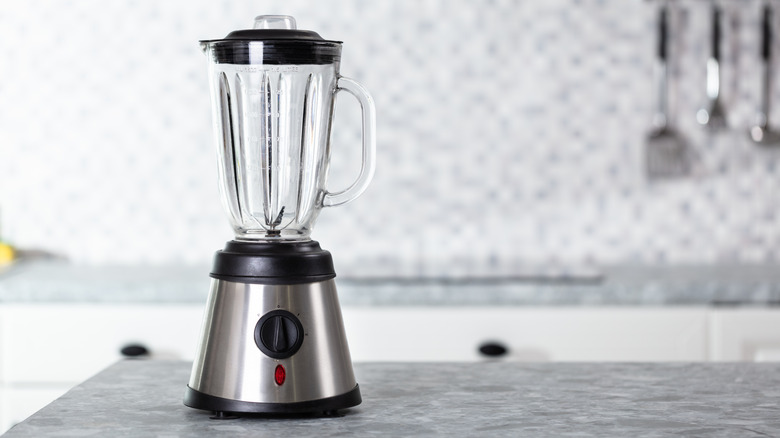
While Rick Bayless doesn't recommend using a food processor for salsas with fresh, bright ingredients, he admits that gadgets like blenders and food processors can be a good choice. His advice? Break out the blades if you're looking for salsa with a smoother texture. Nowadays, Mexican cooks tend to use blenders, which Bayless recommends over food processors: "Blenders are the most common appliance used in Mexico, and because their blades go over twice as fast as those of a food processor, you can get a more consistent, better texture," he says.
Bayless says that a blender works well for salsas made from roasted, boiled, or canned tomatoes or tomatillos. He does offer a word of warning, though: Be careful when blending onions. "I always recommend chopping onion by hand and rinsing it, then adding it to the blended salsa. Blended onion can release unpleasant flavors that can overwhelm a salsa," he explains.
Traditionally, cooks used a molcajete, a Mexican-style mortar and pestle. Using clever molcajete techniques can amp up the flavor of your salsa, and it's a fun way to prepare your food. But cleaning and maintaining one isn't necessarily an easy task. "A molcajete is classic, but it's a lot of work," says Bayless. "Plus, you have to know how to season it before use and how to crush the ingredients in a way that brings out the best flavors."