

The Actual Reason McDonald's Burgers Don't Rot (It's Not Chemicals)
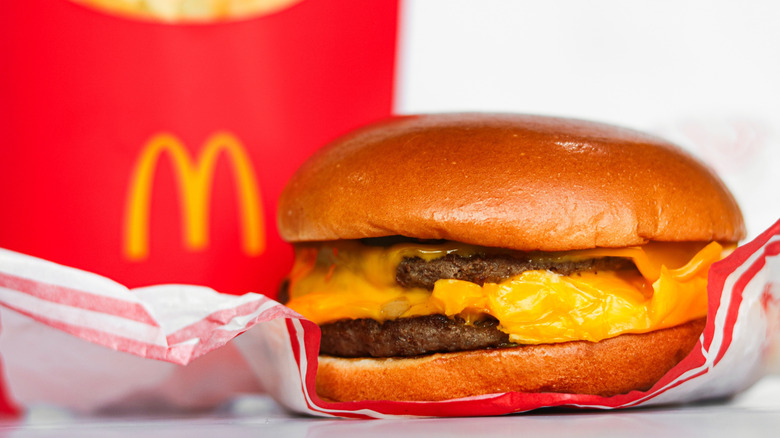
In the age of endless social media feeds, we've become used to shocking food facts, but some of these bombastic claims have been around for longer than the iPhone. A lot longer, actually. Before the Red 40 panic, risky raw milk drinking, and liver smoothies, there was the unfair cancellation of MSG, that weird experiment where people put a tooth in a glass of coke to see if it would dissolve, and the star of today's topic: the immortal McDonald's Burger.
The myth of the McDonald's burger that never rots rears its head every few years. Someone leaves out a burger and is astonished when it looks almost the same after hours, days, weeks, or (in some cases) years. As McDonald's is the poster boy for unhealthy fast food, the general assumption is that the chain's burgers don't rot or grow visible mold because they're full of chemicals. But while unexplored assumptions might lead to viral content, they're not very scientific.
In reality, McDonald's burgers tend not to age in the ways you might expect food to simply because they're relatively dry. In many environments, dry foods just keep getting drier instead of rotting because bacteria and mold feed on moisture. McDonald's has put out statements trying to quash rumors about its burgers, which the brand insists contain no preservatives, but if you're worried the fast food giant has too much skin in the game to play it straight, don't worry. The science checks out, and has been looked into independently.
How McDonald's burgers get so dry, and why it isn't unusual
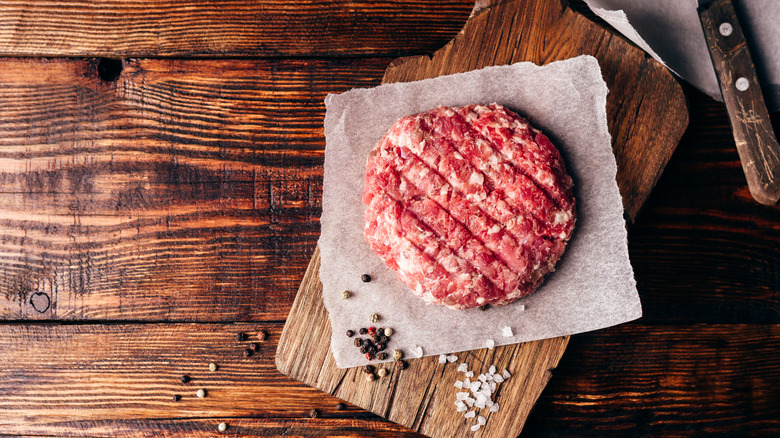
McDonald's burgers are thin, don't contain much fat, and tend to be well cooked. According to a former McDonald's chef, they're also salted after cooking, which draws out even more moisture. They might not taste dry, particularly once they're slathered in Big Mac Sauce, but scientifically, they are. More importantly, there's nothing else that notably differentiates them from homemade burgers. Extensive experiments over at Serious Eats found that thin, well-cooked, homemade burger patties aged almost exactly the same way McDonald's burgers do.
This means they resist mold when left in a reasonably dry environment with good air circulation, but tend to grow some mold in closed environments like a Ziplock bag or a particularly humid fridge. Thinner patties, like those used in a McDonald's Cheeseburger, resist mold better as they dry out quicker. Larger ones, like Quarter Pounders, might get a little furry before all the moisture at their center is drawn out and the whole thing is properly dehydrated.
The history of the eternal burger myth versus the reality of light mummification
Despite the science actually being quite simple, the idea of McDonald's age-defying burger as some kind of Franken-food is pervasive. TikTok influencers are the amateurs currently running experiments on McDonald's food, while previously the best known example of cheeseburger truthing came from Morgan Spurlock in his 2004 documentary film, "Super Size Me."
Other fast food truthers have really put in the time. One Icelandic hostel owner live-streamed a seemingly unchanging McDonald's burger and fries for at least 10 years. The meal was originally purchased in 2009 and was still available to stare at, dusty but well preserved, in 2019 (the livestream is no longer running). However, the record for "Do Your Own Research: Burger Edition" has to go to Australian friends Eduards Nits and Casey Dean. They purchased a Quarter Pounder in 1995 and kept it in a box. In 2025, it reportedly looked pretty much the same as it did when Nits' sister took them to the drive thru 30 years earlier. The Aussie duo told SFGATE the burger was "no longer food."
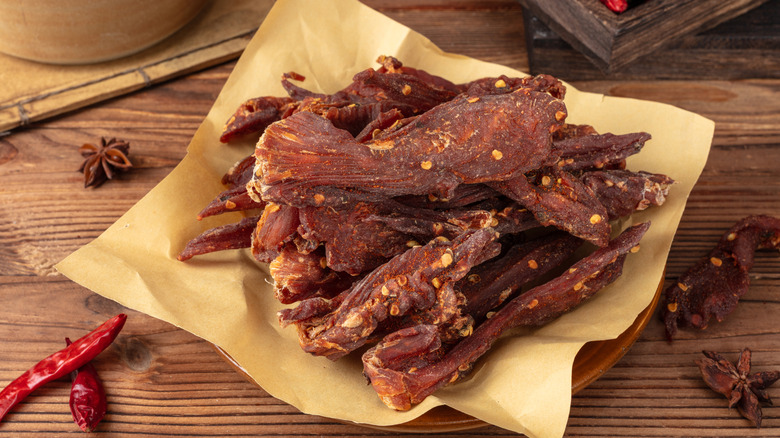
They might be odd ducks (long-term burger storage isn't a mainstream hobby), but were they right? Removing moisture to prevent rot is a common practice that goes back centuries. It's how jerky is made, after all. Then again, jerky isn't just left in a box for three decades come what may. So, while McDonald's burgers appear to resist rot for less than nefarious reasons, eating one seems more akin to chomping on an accidentally-mummified bog body than a strip of Biltong.