

11 Restaurant Industry Secrets Customers Aren't Supposed To Know
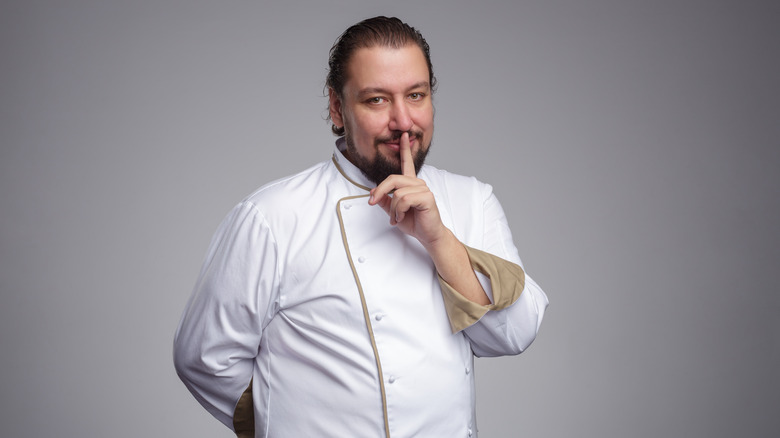
Dining out at your favorite restaurant can feel effortless. The dishes keep coming — each one better than the others. The service flows, and the experience appears seamless from start to finish, but the reality is often the opposite. Behind every restaurant meal lies a far more complex operation. One built on minute planning, complicated systems, demanding skillsets, and constant decision-making that most diners rarely see.
When we reached out to our experts, we had one goal in mind – to shed light on the realities behind the scenes. Only by understanding what happens behind the scenes can we gain a deeper appreciation for the craft and dedication required to run a successful kitchen.
To explore these perspectives, we spoke with experts from across the hospitality world, each with unique insights. Chef Sean Huggard, founder and president of Shucking Good Hospitality, oversees concepts including Blue Island Oyster Bar and Seafood, Oliver's Italian, and an upcoming restaurant, Ash and Agave. Chef Martin Lazarov, director of food and beverage at the luxury Sicilian retreat Il San Corrado di Noto and head chef of Principe di Belludia, brings the viewpoint of fine-dining gastronomy within a world-class hotel setting. Rounding out the conversation is Lucas Dudley, vice president of franchise operations at Bennigan's, a brand with decades of experience in restaurant hospitality. Together, they offer a clear picture of the work that goes into making a restaurant work — and why the craft of hospitality continues to command such respect.
A busy restaurant isn't always a profitable one
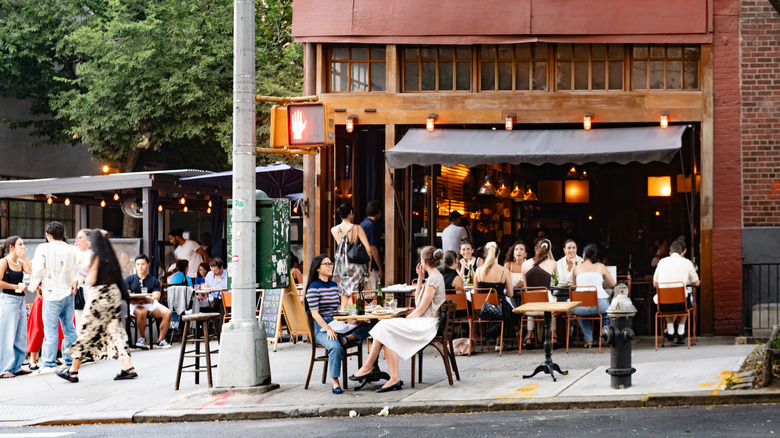
When you pass by a crowded restaurant or try in vain to get a reservation at the new favorite spot on the block, it's not too much of a stretch to believe that the place is doing well. Chef Sean Huggard spills the beans on one of the biggest myths surrounding restaurants. He explains, "If a restaurant is busy on Friday and Saturday nights, it must be 'killing it.' In reality, those two nights might only cover the rent, and 'might' is the key word."
Restaurant margins have always been tight, and in recent years, have become even slimmer. According to Huggard, "Due to rising food and labor costs, increasing rent and taxes, and growing legal and insurance expenses. Just because your favorite restaurant looks packed on the weekend does not mean they do not need support during the rest of the week."
The reality is that many restaurants rely largely on busy weekend sales to keep them afloat during the week. Quiet weekdays, however, still require restocking, labor costs, and running expenses. Understanding that this unpredictable customer demand may be the reason for midweek specials or promotions may help you decide to support your local, independent restaurant the next time you have the midweek munchies.
The price of your meal includes much more than what's on the plate
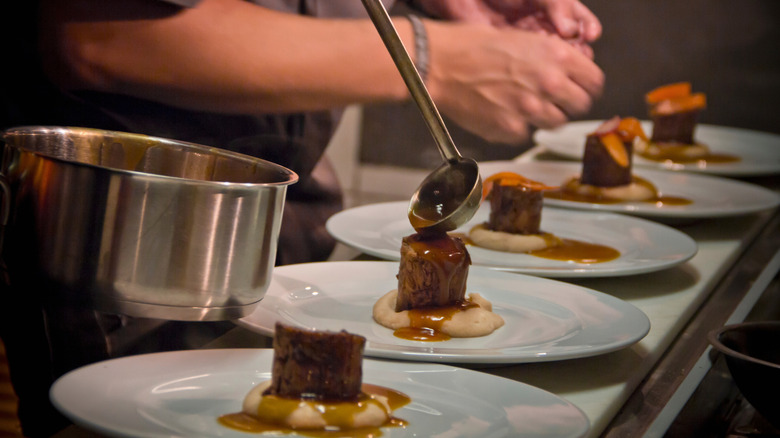
If you have ever wondered if the fine dining extravaganza you've splurged on is worth it or if the price even justifies the ingredients on your plate, our experts are here to reassure you that you are getting more than your money's worth. Ask any industry professional, and they will explain to you that the cost of a meal begins long before the food ever reaches the kitchen. As Sean Huggard clarifies, "It starts with sourcing and purchasing, followed by receiving deliveries, inspecting product quality, storing everything properly, and finally preparing and executing each dish."
Beyond the kitchen, restaurants walk a constant tightrope of balancing expenses — especially amidst rising costs. "Restaurants work hard to balance those costs while still delivering value to guests," says Lucas Dudley. Meanwhile, chef Martin Lazarov expands this point further: "Preparing a single dish or building a complete gastronomic experience requires time, research, skills, and great attention in selecting raw materials."
Lazarov adds that both high-quality ingredients and well-trained teams demand constant investment, which in turn results in tight margins for the business. What diners ultimately pay for is not just a dish but an entire ecosystem of logistics and expertise, which should be more than enough to justify the price you pay.
Independent restaurants are competing on an uneven playing field

If you've ever believed the food and beverage industry operates on a level playing field, the reality is far more complicated. Independent restaurants and large chains face very different economic pressures, and in many cases, smaller establishments work much harder just to keep the doors open. This imbalance has led to growing concern that the era of independent restaurants is over, or at least slowly crawling toward its demise.
Chef Sean Huggard describes the issue in detail: "A common misconception is that all restaurants pay the same price for ingredients. Large chain restaurants have enormous buying power compared to independent restaurants and can sometimes receive up to fifty percent lower pricing on major items. This makes it much harder for independent restaurants to compete on price while maintaining the same quality."
That difference, in turn, has a trickle-down effect on other restaurant running costs, such as menu pricing. Independent restaurants typically purchase smaller quantities, often paying considerably more for the same ingredients. Supply chains also tend to prioritize large-volume clients who benefit from more stable pricing. Independent restaurants, in contrast, are more exposed to sudden price fluctuations in key ingredients such as daily meat and seafood costs. As a customer, you may now understand why a burger or pasta dish often costs more at a small neighborhood restaurant than at a national chain, and extend your support where it is most needed.
The dish on your plate may represent days of work
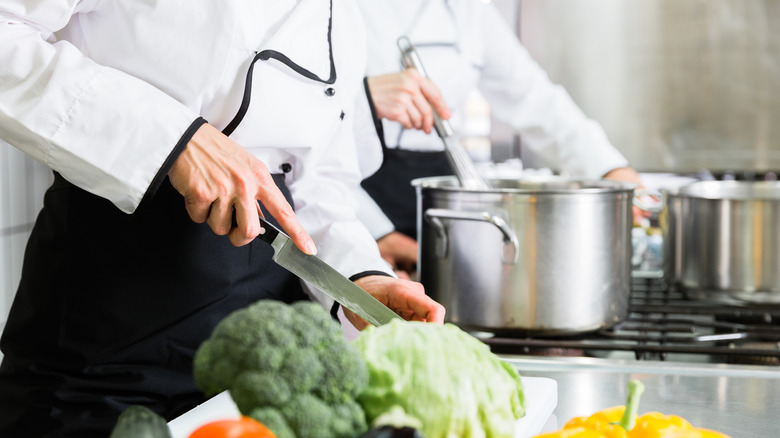
Odds are, you've been impressed when a neatly plated dish makes it to your table. What seems to have come together easily (and then polished off in an equally short amount of time) is actually a result of hours or even days of preparation and planning. Diners rarely see the extensive work that happens long before service begins, but it doesn't hurt to know what goes into your order.
As Sean Huggard describes, "Much of the consistency comes from the prep kitchen. Sauces, dressings, bases, and even batch cocktails are prepared in advance according to strict recipes." Dishes usually rely on multiple components before the final meal hits your plate. This could include stock that needs to be simmered overnight, sauces that need careful reduction over time, bread that needs fermentation and proving, fresh pasta dough made earlier in the day, marinades that demand hours to develop their flavor, and garnishes prepped separately.
Desserts, too, are rarely made all in one go. Sponge bases, pie crusts, fillings, frostings, and ice creams are prepared individually (maybe even days in advance) and assembled before service. Much of the real cooking happens long before diners ever take their seats. Once the dinner rush begins, chefs rely on these carefully managed and designed building blocks to create dishes quickly — all without sacrificing flavor or culinary precision.
In great kitchens, simple dishes are often the hardest to perfect
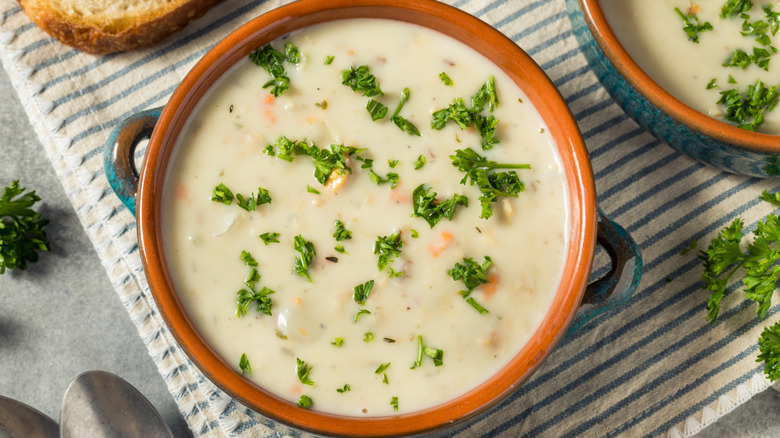
Some of the dishes that appear the most straightforward on a menu are often the ones that demand the greatest precision in the kitchen. For chef Sean Huggard, the perfect example is clam chowder. He elaborates, "Everything matters, from how long the bacon and onions are cooked to the exact temperature when the cream is added and the precise moment the seasoning goes in. It is a labor of love that requires attention to detail at every step."
It's a reminder that even in straightforward dishes, there is very little room for error in a commercial kitchen. Lucas Dudley notes that dishes that appear simple to the eye may have needed time-intensive components. For example, a house-made sauce may take effort to prepare, and plays a defining role in an otherwise straightforward dish.
Chefs say this attention to detail is fundamental to professional cooking. For Martin Lazarov, if the restaurant focuses on gastronomy, then research and study will play a pivotal role — no matter how "simple" the dish may look. He is adamant that "technique, study, and knowledge of the subject constantly intertwine in the kitchen," describing the process as one built on precision, patience, and control. Ultimately, he adds, in the kitchen, "Simplicity is often the result of extremely complex work."
Most of the real cooking happens long before service begins
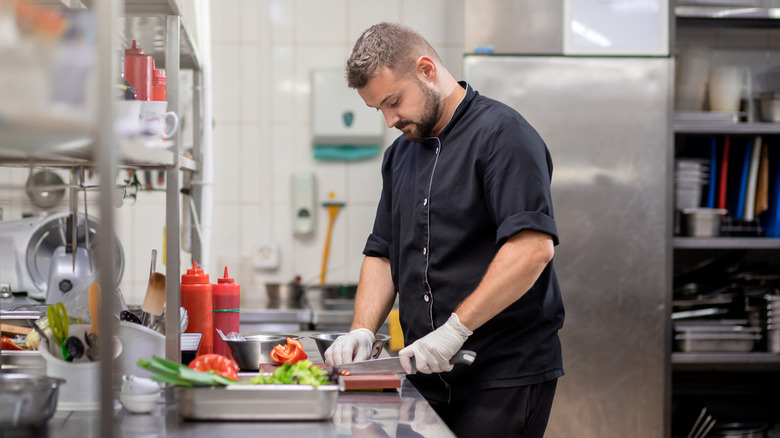
We've already touched on the amount of prep that happens prior to beginning service. In high-volume kitchens, this strategic planning can be extensive and often relentless. Sean Huggard notes, "Most diners would be surprised by how much work happens before service even begins. ... For example, something as simple as Caesar dressing might be made in batches of 20 gallons at a time." This kind of volume is more the norm than the exception. Stocks are usually made in large vats, sauces in bulk quantities, and ingredients prepped in numbers that can sustain an entire service without a moment's interruption.
But preparation in professional kitchens goes far beyond just chopping vegetables and meats or mixing sauces and stock. It's also about refinement. Martin Lazarov agrees, explaining that much more goes on behind the scenes than you may expect. "There is study, research, ongoing trials, and enormous attention to every detail." A kitchen team led by its chefs spends a significant amount of time adjusting recipes and switching techniques to eventually shape what lands on a guest's plate.
For diners, what may feel like a simple bread basket might mean the chef returning to the kitchen in the middle of the night to check on a fermentation at its peak. Because if the timing is not spot on, it can quite literally define the end result of a dish.
Consistency in restaurants is carefully engineered
If you love a particular dish at a restaurant, you probably expect it to taste and look the same every time you order it. In fact, this consistency is one of the toughest things to maintain in a commercial kitchen. "Consistency is everything in restaurants," says Lucas Dudley. When brands with long-standing reputations assure customers of a consistent experience, they rely on standardized recipes, detailed portioning systems, and clearly defined prep techniques to maintain reliability on scale.
This type of standardization allows kitchens to maintain quality, sometimes across various locations and definitely across multiple shifts and staff members. Every cook is meant to follow the identical process to ensure the look, taste, and feel of a dish remains consistent. And behind that consistency is also a careful management of costs.
Chef Sean Huggard wishes that "more people understood the true cost of running a restaurant and how thin the margins are." Apart from the price of the ingredients that go into each dish, the business also has to contend with fluctuating rates for rent, labor, utilities, supplies, and licensing. All these overheads need to be managed and contained before the business can show any sign of profit — an aspect very few diners take into consideration.
Menu design is more strategic than most diners realize
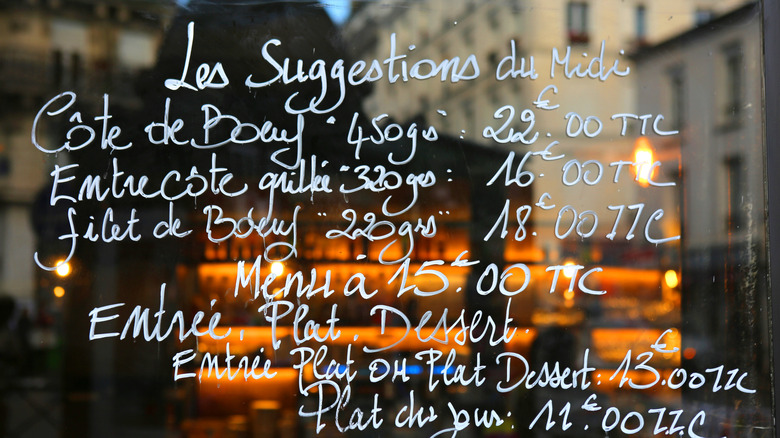
Menus today range from abbreviated one-pagers to huge menus with too many options that need an instruction manual of their own. For customers, menus largely mean a list of dishes available to order, maybe with a pointed nod toward a special of the day. Truth be told, for a restaurant insider, menu design is both a culinary and strategic exercise.
This strategy is almost always backed by data. As chef Sean Huggard explains, many restaurants evaluate their menus based on feedback and profitability. They group dishes into categories, and while the names might be amusing, what they indicate is very pertinent. Dishes that are high profit and equally popular are regarded as "stars," while those with lower demand but still high in profit are labeled as "puzzles." Popular dishes with a lower profit margin are nicknamed "plow horses." These categories then determine how they should be positioned on a menu. The goal is to get people to choose items they enjoy that are also sustainable for the business.
Beyond profitability, menu items are highlighted to catch the eye and nudge you in the direction of choosing well. "These are usually dishes that best represent our brand and deliver strong value and satisfaction," explains Lucas Dudley. Ultimately, menu strategy, combined with careful preparation, budgeting, and planning, ensures that every guest enjoys the most consistently satisfying meal.
Even the best restaurants struggle with staffing and timing

No matter how highly rated a restaurant is or how skilled the team, there are two challenges that continue to throw a spanner in the works (often at the worst times): staffing and timing. Both are largely invisible to diners but play important roles in determining how smoothly a restaurant functions.
Being short-staffed can affect every aspect of service, which is why no one needs workers more than restaurants. Whether it's pre-preparation, actual cooking and plating in the kitchen, or the service of the front-of-house team, even minor gaps in staffing can cause a ripple effect through the dining room. "Being short-staffed ... almost always affects the guest experience. When teams are stretched too thin, shortcuts can happen and quality can suffer," says Sean Huggard.
Timing is equally critical. Restaurants operate as complex operations where the kitchen, bar, and service team all must work with exquisite choreography. During busy periods, a delay at any point can affect the pace of the entire dining room. Lucas Dudley emphasizes how deeply interconnected and reliant all these systems are on each other. "Teamwork is absolutely critical and having good management leadership to assist team members in bridging any gaps in their operational systems is key to having flawlessly executed shifts," he says. Staffing and timing challenges are part of the hidden complexity of running a restaurant, and one that ensures that even during peak hours, dishes arrive on time, drinks flow seamlessly, and guests enjoy the consistent, high-quality experience they expect.
A restaurant meal is the work of an entire brigade
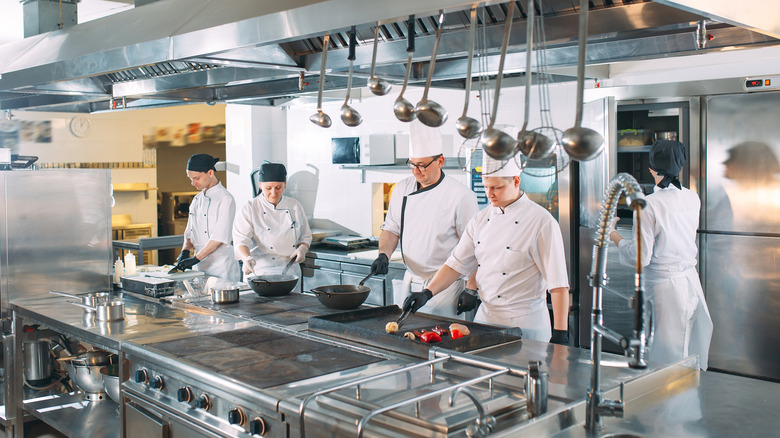
A precisely orchestrated series of events has to occur before a dish appears at the guest's table. Every person working behind the scenes has a specific role and needs to work in precise coordination for the entire system to operate smoothly. This includes tasks such as inventory stocking (and restocking), labeling, preparation of ingredients, and even food safety measures. Every step follows established systems designed to maintain quality and consistency across the service. "Many diners would be surprised by just how structured professional kitchens are," admits Lucas Dudley. "Those standards are what allow us to serve large numbers of guests while maintaining quality and consistency."
And make no mistake — these are not just rules but rather non-negotiable tasks to be followed to run a busy kitchen efficiently. Each team member, from prep cooks to line chefs to servers, has to know their role and how it fits into the broader operation. "In the kitchen, there are no shortcuts. There are methods, [techniques], and respect for the product. Efficiency comes from organization and experience, not from sacrificing quality." says Martin Lazarov. The brigade system in a restaurant kitchen highlights that cooking is never a solo effort. Every dish reflects the combined skill, discipline, and dedication of multiple professionals.
For many chefs, cooking is still a craft driven by passion
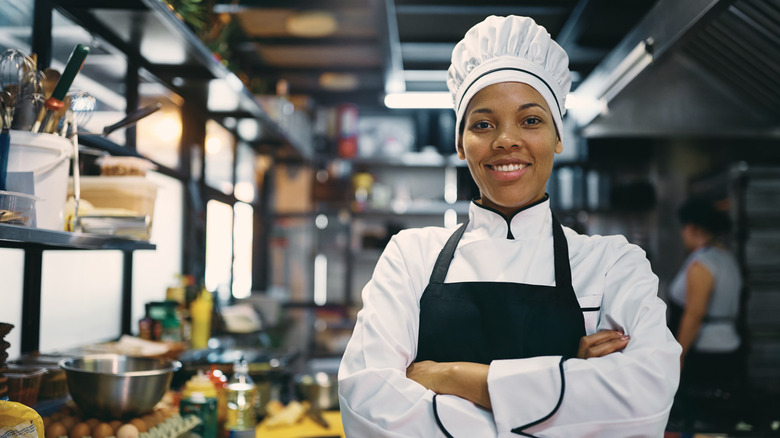
After speaking to professionals from the industry, it's very evident that running a restaurant is no simple task. More importantly — it's never just a job! Being a chef, running a restaurant, and managing a team are all skills that demand dedication and genuine love for what you do. Martin Lazarov puts it simply: "Of course, working in the kitchen isn't easy, especially if you want to do it well. It's a craft that must be loved in a visceral way." Few diners actually understand what goes on behind the scenes and tend to forget one important fact — there is a very real person responsible for the meal one is enjoying.
For many in the profession, cooking and feeding people is not another career path but a lifelong calling, and many chefs often have strong advice for anyone thinking of opening a restaurant. Reflecting on the future of the profession, Lazarov expresses both pride and concern. "I would like new generations to truly love this profession again and not see it only as a stepping stone to success," he says. "When you wear the chef's jacket, you must honor it and wear it with pride." His words remind us that without passion, the restaurant industry would fail to make an impact, no matter how demanding and exacting the systems and structures that keep it in place.