

Check Your Fridge — 2 Hospitalized In E. Coli Outbreak Linked To Cheddar Cheese
When times get tough, at least you can rely on cheese for comfort, right? Wrong. According to the U.S. Food and Drug Administration's (FDA), an E. coli outbreak linked to Raw Farm's raw cheddar cheese has led to seven confirmed infections and two hospitalizations. Four of the infections were in children under three — a group that is particularly susceptible to E. coli, according to the Centers for Disease Control (CDC). Fortunately, no deaths have been reported.
The outbreak is linked to the brand's Raw Cheddar products, both the blocks and shredded. Raw Farms cheese is made with raw milk, a controversial and risky trend. Normally, the situation would spark a recall. Recalls occur when products are found to violate FDA regulations. Typically, brands initiate recalls themselves and take steps to remove the products from the market. This is an unusual situation, though. While the FDA asked Raw Farm to initiate a voluntary recall, the company declined.
Most FDA recalls are voluntary. While companies typically oblige, they do have the right to object to a recall. Still, declining a recall is risky business. The FDA has limited authority to issue a mandatory recall if a company does not voluntarily comply.
Raw Farm products have been linked to outbreaks before. In July 2024, salmonella infections linked to the farm's raw milk products sickened 165 people. A few months later, Raw Farms milk was recalled due to bird flu risks. At both times, Raw Farms issued voluntary recalls.
Raw Farm's raw cheddar cheese hasn't been recalled yet, but that doesn't mean it's safe
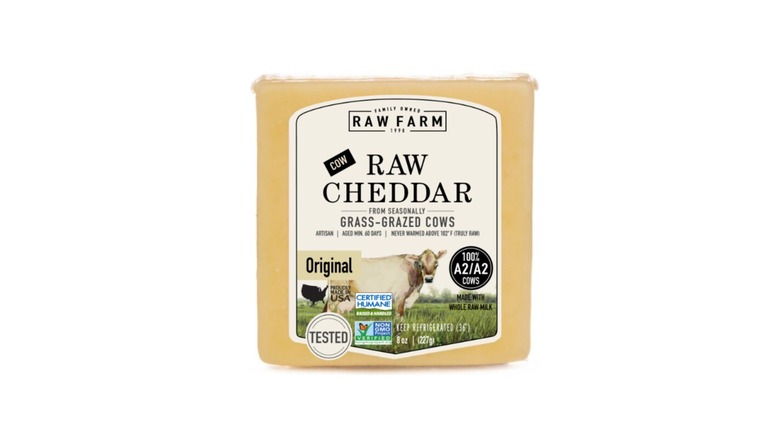
This time, Raw Farm, is taking the objection route. "We 100% disagree with the FDA's false 'possible link' and extreme allegations," the brand wrote in a statement. "[The] FDA has found NO Raw Farm products to be tested positive for E. coli in the marketplace." The brand went on to call the recall "egregious and extreme harassment."
It's true that the FDA has not found E. coli in any of the brand's cheddar cheese products sold during the reported outbreak. The agency has used other methods to link the outbreak to the brand, though, including E. coli genome sequencing (which indicate the cases are related) and interviews with people sickened by the outbreak, three of whom reported having eaten Raw Farm cheese. The FDA is currently in the process of testing samples and urges customers to check back for updates.
Even though the brand hasn't issued a formal recall, the safest action would be to dispose of the cheese. The FDA notes that customers may wish to sanitize any surfaces that came into contact with the product. Whatever you do, don't try to kill off E. coli by cooking.
If you have eaten Raw Farms cheddar cheese, keep an eye out for symptoms of E. coli infection, which can occur up to nine days after eating contaminated food and include fever, stomach cramps, diarrhea, and vomiting. Contact a doctor if you have symptoms — and send a complaint to the FDA while you're at it.