

What McDonald's Does With Its Leftover Food
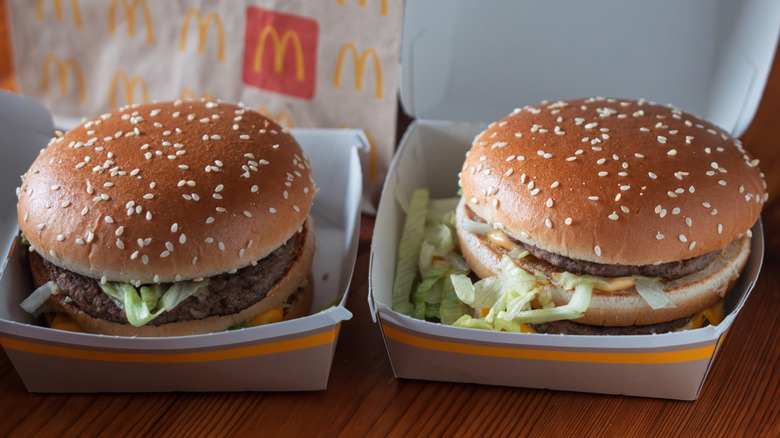
Food waste is a big issue in the food industry. Around 22 to 33 billion pounds of food from restaurants goes to waste yearly in the U.S. and almost 85% of this is discarded or thrown out. As the top brand among the biggest fast-food chains in America, it's easy to conclude McDonald's might be the biggest contributor to this food waste problem. However, the truth could never be further from that, as the Golden Arches implement an efficient protocol to address its food waste. So what does McDonald's do with its excess food items, and where do they go once they are no longer fit for selling? The answer is not that simple, as the chain has a multifaceted approach to reducing food waste — one that is based on the U.S. Environmental Protection Agency's (EPA) Food Recovery Hierarchy.
As per the agency's recommendations, there are many ways to deal with wasted food, but the most important is to prevent it by producing, buying, and serving only what is needed. That said, McDonald's monitors customer orders closely to minimize leftovers. "We keep a close eye on what we sell at different times of the day, which means that restaurants only order and prepare the amount of food that is likely to be sold," the company said on its website. Despite this, it's inevitable for food waste to pop up here and there, so the company deals with its leftovers accordingly.
Where McDonald's leftovers go
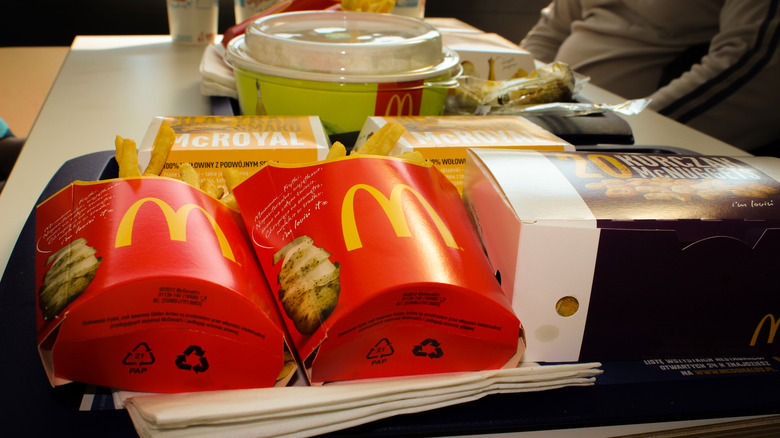
Like most fast-food establishments, the Golden Arches pre-makes some of its products in anticipation of peak times. This is why customers don't have to wait long for their McDonald's breakfast menu orders during breakfast hours. However, while McDonald's may not have a hard time selling its popular menu items during these times, there's no guarantee that all pre-made meals will get sold. Given the company's strict holding times for certain items — 10 minutes for beef products and 5 minutes for fries — it's inevitable for some stocks to pile up as leftovers and then get discarded at the end of the day.
Now, it is important to note that although McDonald's has confirmed it adheres to the EPA's guidelines, its branches do not necessarily implement all of them. For instance, in some locations, instead of donating or upscaling leftovers to feed charities, it prefers to send them elsewhere to avoid legal problems should the food items or their components prove to be no longer safe for human consumption. Meanwhile, others donate the excess or discarded items to organizations such as Feeding America, Food Donation Connection, and the Global FoodBanking Network. Food items that do not make it to the donation drives are handed to composting stations and other facilities for rendering and anaerobic digestion. Due to these efforts, McDonald's stated it yields less than 1% of waste from its edible food stock.