

The Small Problems Hiding Inside Mexican Restaurant Burritos
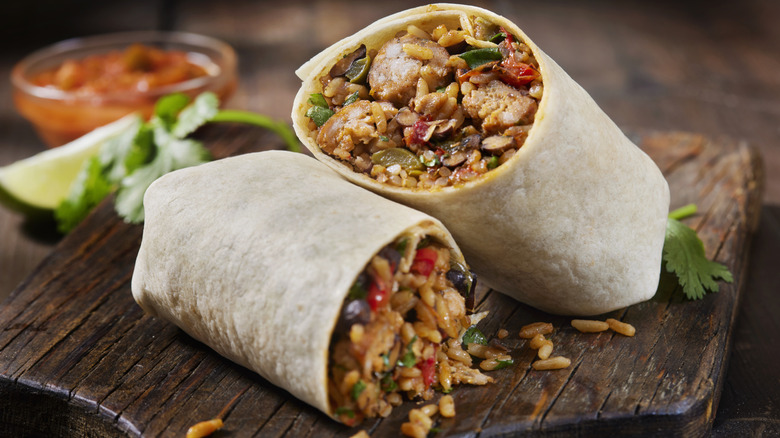
If you order a burrito at a Mexican restaurant in the U.S. and check inside, you might see one big indicator (or numerous tiny ones, if you count grain by grain) that it's not entirely authentic. Rice, you see, isn't really traditional for a Mexican burrito, as these are typically filled with meat, vegetables, and beans. Extras like cheese, guacamole, sour cream, and rice are additions you're more likely to see in burrito styles originating in the U.S. Unless you're a stickler for authenticity, rice itself isn't a problem (Chipotle's burritos seem to be pretty popular), but some restaurants tend to overdo it.
According to Laurence Cohen, corporate brand chef at Potomac Falls, Virginia's Tex-Mex Austin Grill and other establishments under the Thompson Restaurants umbrella, going heavy on the rice may be all because of the Benjamins. (Or more like the Hamiltons, since burritos don't tend to be pricey.) The reason why rice is used to bulk up burritos, Cohen said, is "perception of value; the bigger it is, the more people think [the] value is good. Rice is also cheap, and you can offset other ingredients with more rice."
If you're concerned that the rice might overwhelm everything else in your burrito, Cohen suggested asking a server if you can get one with only half as much as the restaurant usually uses. If the restaurant doesn't add anything extra but simply wraps the tortilla tighter, it may even result in a better balance overall. The burrito maker is unlikely to make up for less rice with more costly ingredients, but you might get an extra scoop of beans, so you should probably speak up if you want less rice with no added space fillers.
Rice-filled burritos are properly called mission-style
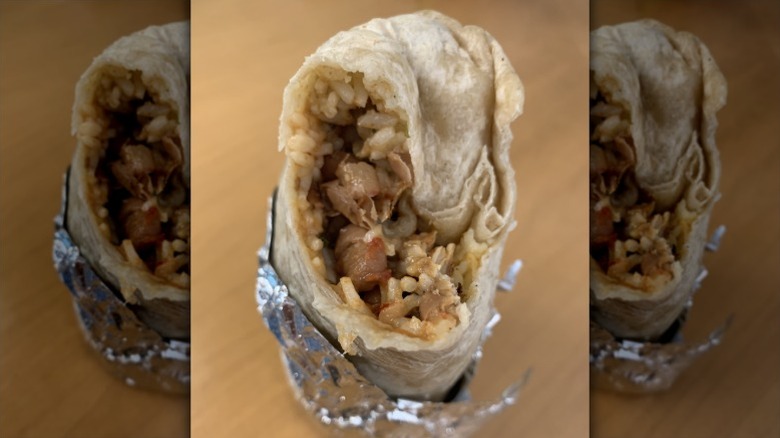
Chipotle may be the best-known purveyor of rice-packed burritos, but the chain didn't invent the concept. Instead, it borrowed both rice and foil wrapper from the mission-style burrito, a dish native to San Francisco. Mission burritos were born sometime in the '60s, although whether early or late depends on whose origin story you're buying. One restaurant, by the name of El Faro, claims to have come up with the concept on September 26, 1961, while another, Taqueria la Cumbre, says it debuted this burrito on September 29, 1969. We can't say which one's right, but it's interesting to note that September seems to be a big month for burritos. (Be sure to eat one on both days, and another on the 15th for El Grito.) Both establishments also beat Chipotle by a few decades, since that chain didn't launch until 1993.
Chipotle founder Steve Ells was said to have been inspired by food he'd eaten while working in San Francisco's Mission District, which is home to both aforementioned restaurants. Now the neighborhood's namesake burrito is known nationwide, even if Chipotle's menu never calls it by its true name.
If a starch-filled burrito doesn't bother you, here's another must-try to add to your burrito-based bucket list: the California burrito. These hail from San Diego and are made with carne asada topped with cheese, guacamole, pico de gallo, and sour cream. Instead of rice, the burritos are crammed full of french fries like a West Coast version of a Primanti Bros. sandwich. Chipotle might want to consider adding California burritos to the menu. That way, the chain would truly be a carb-lover's paradise, even if it's not a destination for a true Mexican-style burrito.