

Check For This Before Buying Secondhand Stainless Steel Cookware
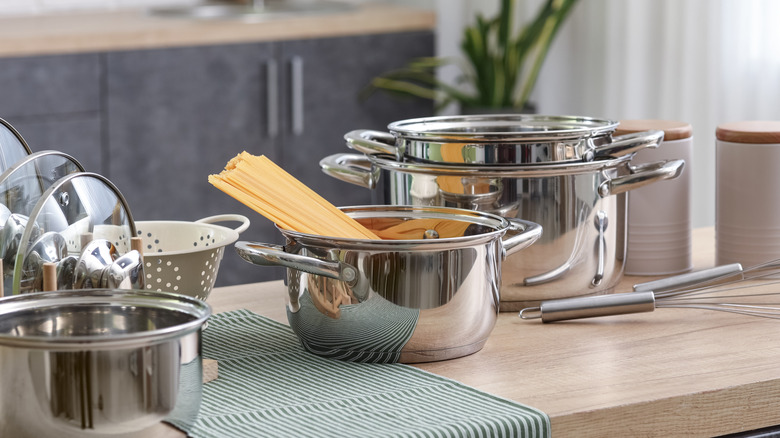
If you're shopping at your local thrift store, it can be a thrill to find a good deal on secondhand kitchen items, especially if you're just starting out on the journey of choosing the right cookware. But how do you know if a pot or pan is worth buying? Can secondhand stainless steel even be safely purchased?
Well, there are a few things to look for when it comes to used stainless steel. Specifically, be sure to avoid any pieces with deep scratches, whether they're on the interior or exterior of the cookware. These can cause further deterioration to the pot or pan over time, especially if you use it to cook salty or acidic foods — eventually, the surface can develop a type of dappled damage called pitting.
You should also steer clear of pans that have been warped. There's a simple test you can do in the store if you think a piece might be warped: Just place the cookware on a flat surface and give it a little push. If it rattles or spins, it's warped, and you should avoid buying it. If it slides (or, depending on how hard the push was and the weight of the cookware, stays still), it's not warped and is safe to purchase.
How stainless steel maintains its enduring appeal in the kitchen
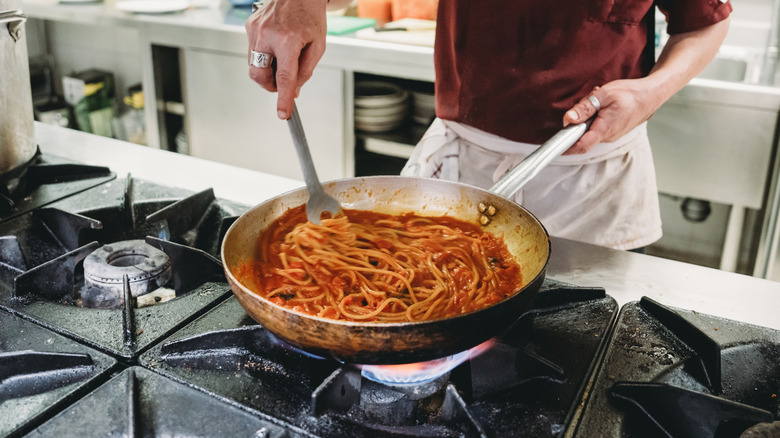
Even if you now know how to shop for secondhand stainless steel, you might be wondering why you should. Stainless steel is a popular choice for both professional and home cooks, and there's more than one reason why. Firstly, it's durable and highly resistant to rust, corrosion, and staining; the name "stainless steel" was meant to highlight that aspect of it as an advantage over carbon steel pans.
Stainless steel is also heat resistant and retains heat well, meaning you can cook foods at high temperatures in cookware made with this material. This is also an advantage to help cook foods evenly. Unlike a cast iron skillet, you can cook acidic foods without issue. As long as the interior is in good condition, stainless steel is non-reactive, meaning that you can cook high-acid dishes with ingredients like tomatoes and lemon juice without ruining the surface or risking chemicals leaching into your food.