

The World's Oldest Cheese Was Found Smeared In An Unexpected Place
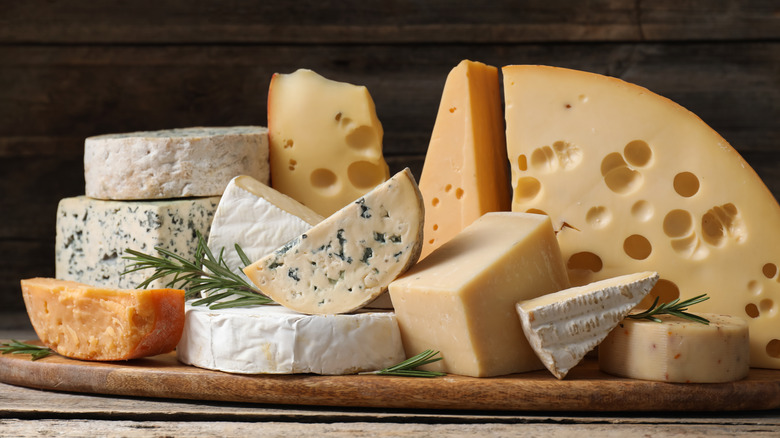
You may have heard of aged cheddar or parmesan, but how old does cheese really get? Well, while the world's oldest cheese was far from edible when it was found, it was older than Cleopatra by some distance, although not as old as the Pyramids of Giza. In fact, the world's oldest cheese ever discovered was over 3,600 years old when it was found on the preserved remains of mummies in northwestern China. Weirder still, this doesn't seem to have been the legacy of a mummy-maker who had some leftover lunch on their hands while they worked — the cheese may have been buried with the mummies deliberately.
The "mummy cheese" is actually a form of kefir, which is still consumed today as a beverage. Archaeologists were especially excited to find it because it contained examples of the bacteria that ancient cheesemakers used to create fermented dairy products. Scientists were then able to analyze the microbial strains to learn more about ancient dairy cultivation, fermentation, and the path taken by early cheesemaking cultures as they traveled across Asia.
Where cheese stands in a creamy, gooey history
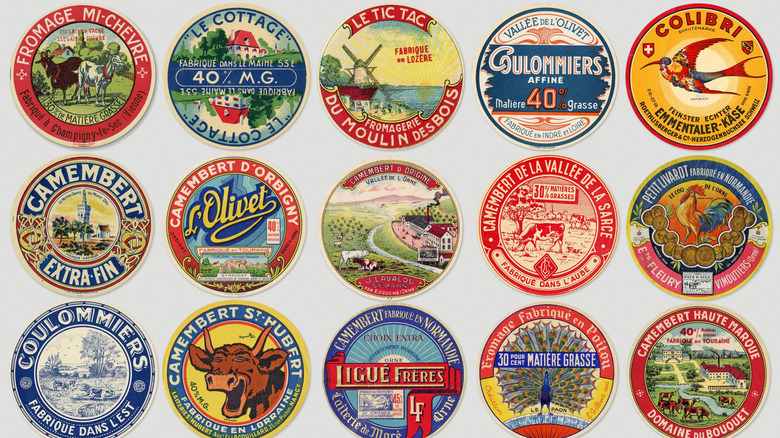
The cheese discovered with the Chinese mummies was important not just for what it taught researchers about dairy production and consumption in the ancient world, but for the rarity of the find. Unlike honey, which can be preserved for centuries and has been found intact in tombs in Egypt, cheese typically degrades over time. It's rare to find historic examples of cheese, let alone some from thousands of years ago. In fact, cheese may have been an accidental invention — while both dairy and plant-based milks are ancient foods, legend has it that the first cheese was created when milk was stored in a container made from an animal's stomach.
That said, although the dairy product found with the "cheese mummies" is the oldest ever discovered, the craft itself was hardly new by the time that ancient kefir was made. In fact, cheesemaking pottery found on the coast of Croatia is more than 7,000 years old, meaning the fermented food was already millennia old by the time of the kefir mummies.
Cheese would remain an important food for centuries, as cheesemaking allowed dairy to be preserved long before refrigeration and provided an important source of nutrition for those who couldn't afford — or chose to abstain from — meat. Today, milk consumption may be declining, but people still love cheese — the U.S. government stores over a billion pounds of it in reserve.