

No One Can Ever Watch The Oldest Televised Cooking Show Again
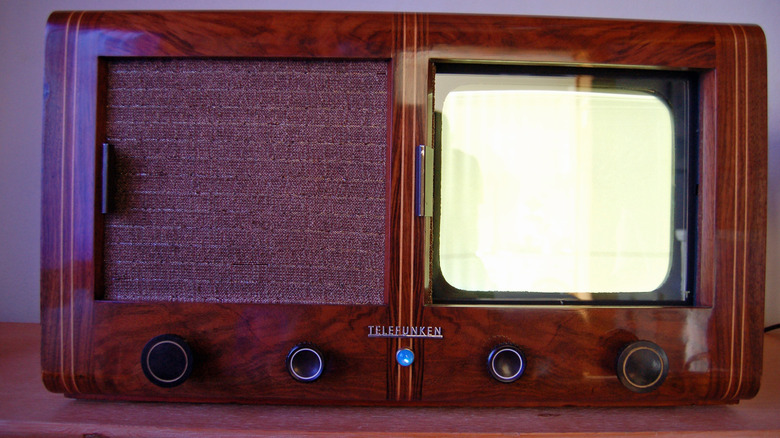
Nowadays, there are scores of truly wild baking shows on Netflix and other streaming services, but it wasn't always that way. In the earliest days of television, there was only one cooking show around, and it was called "Cook's Night Out." By comparison to modern cooking shows, it was very simple, but it was so popular that it paved the way for shows like "Is It Cake?" and "Hell's Kitchen."
In 1937, the BBC signed off on a small segment about cooking, scheduled to air in the late evening at 9:25 p.m. For this segment, the network called upon Xavier Marcel Boulestin, a French chef and restaurateur who was well known for both his writing and celebrity status in London. For 15 minutes on January 21, Boulestin demonstrated one simple dish, showing viewers how to properly prepare an omelet — a dish that could be eaten on its own or as part of a five-course dinner. At this time, learning to cook had been reserved for cookbooks and radio. Seeing Boulestin on screens cracking eggs was instantly popular, and the series continued for four more episodes where Boulestin went on to prepare a salad, filet de sole Murat, escalope de veau Choisy, and crêpes flambées.
We still have photos from the filming of the full series and its original television listing, but unfortunately, that's about all. The world's first cooking show is considered a piece of lost media, and unlike some others within this category, it will never be found since it aired live — not recorded. Luckily, the show's legacy lives on, as does that of its host, X. Marcel Boulestin.
Who was the first TV chef?
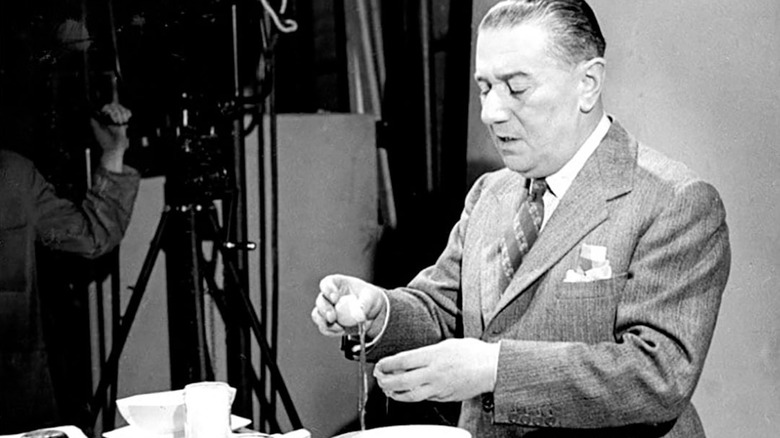
Xavier Marcel Boulestin was born in 1878 in France, and it wasn't immediately clear he was destined to be a chef. After moving to England in adulthood, he took on a wide variety of jobs, from interior designer to secretary, and even ghostwriter. After World War I, he returned to London and began teaching and writing about French cooking. His cookbooks sold like wildfire.
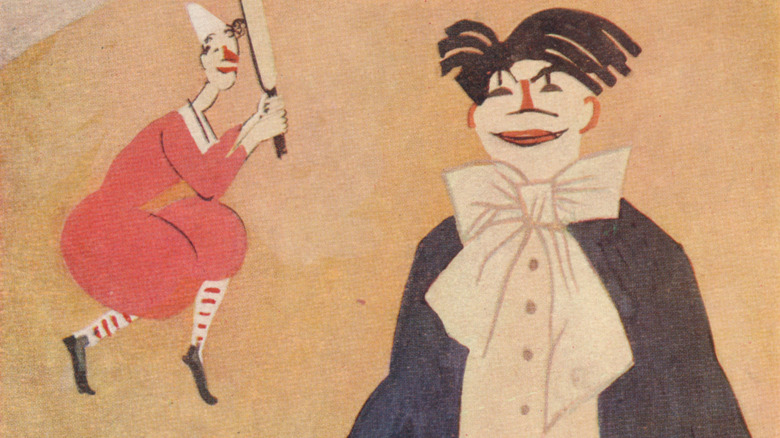
It didn't take long before he became something of a celebrity, and he opened a restaurant under his name in 1925. He moved the restaurant in 1927 to a new location, decorated splendidly with murals of the circus and designer upholstery. It was known as "the prettiest restaurant in London," and it was from there that the BBC contacted him for the first-ever cooking show a decade later.
After his initial broadcast of "Cook's Night Out," Boulestin continued to appear on television. He was a presenter on "Dish of the Month" in 1937 and "Foundations of Cookery" in 1939. He was also in cooking films like "A Party Dish by X. Marcel Boulestin," followed by "A Scratch Meal with Marcel Boulestin," both in 1936. Many other chefs and non-chefs were inspired by his example, including Elizabeth David, who quoted him in her own books. Boulestin supposedly taught Winston Churchill a few recipes as well. Interestingly enough, Julia Child's first dish she made on TV was also an omelet, though that may be purely coincidental.
Why this show is gone forever, but its memory lives on
This may seem like a perfect food show to watch with family over Thanksgiving dinner, but there will never be a rerun. When "Cook's Night Out" aired, there wasn't technology to record broadcasts yet, so it was all done live and untaped. We do not even have a written transcript of the show, only a photo and documentation from BBC broadcasting records that it did indeed occur. The closest thing we do have is a surviving Zonophone 6174 recording of Marcel Boulestin made in 1932. In the recording, Boulestin explains his method for making an omelet, perhaps similarly to the demonstration on his historic broadcast.
As for Boulestin, what became of him isn't a terribly happy story, either. When he and his long-time translator, co-writer, and life partner, Henry "Robin" Adair, traveled to France in 1939, disaster struck. Adair fell ill and became too sick to leave as German troops moved in, so the pair remained in occupied Paris as France fell. Germans confined Adair, and Boulestin died in Paris in 1943 after a short illness, wanting to remain close to his partner. Adair survived WWII, however, and went on to spread their collaborative recipes and writings until his death in 1956.
Boulestin's muraled restaurant also survived time and closures, and still exists today (though under new management). So, although you'll never be able to witness the legendary chef's famous broadcast, you can still try recipes he inspired at the Saint James, London, restaurant. The eatery is lovingly called "Boulestin," and for breakfast, it serves omelets.