

How Much Damage Plastic Bags From Grocery Stores Really Cause To The Environment
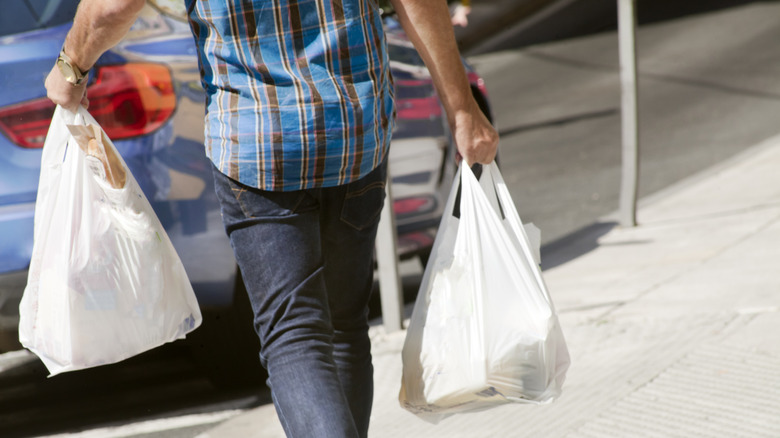
Let's get a show of hands for people who throw away plastic bags after one use (I'm shamefully raising mine). The lifespan of most plastic bags is just minutes long, and they're typically dumped after their primary purpose — carrying groceries — is served. This can have detrimental and even dangerous consequences for the environment on micro- and macroscopic levels. Plastic pollution permeates all sectors of the environment: agriculture, marine life, air, water sources, urban areas, and more.
Globally, around 500 billion plastic bags are used each year, with over one million used every minute. Despite being labeled as recyclable, only one out of 200 plastic bags end up at a recycling unit, leaving the vast majority to go to landfill sites. Once there, plastic bags break down at dramatically slow rates; it can take hundreds or even thousands of years for them to degrade. During that process, plastic bags fragment into smaller pieces called microplastics, which are tiny, harmful particles that pollute soil, water, and even air, causing them to enter the food chain and eventually, our own bodies.
But plastic bags are dangerous long before the breakdown process. Wildlife, and in particular, marine animals can mistake discarded plastic bags for food, clogging their intestines and leading to starvation and death. Additionally, the vast majority of plastic bags are made from non-renewable resources such as polyethylene and/or petroleum, which makes their production a key component in the depletion of fossil fuels and emission of greenhouse gases.
Plastic bags account for $100 billion in global ecological damages annually. Luckily, many countries — including the United States — have recognized this pervasive, worldwide issue and introduced environmentally-friendly solutions.
Solutions to reverse plastic bag damage
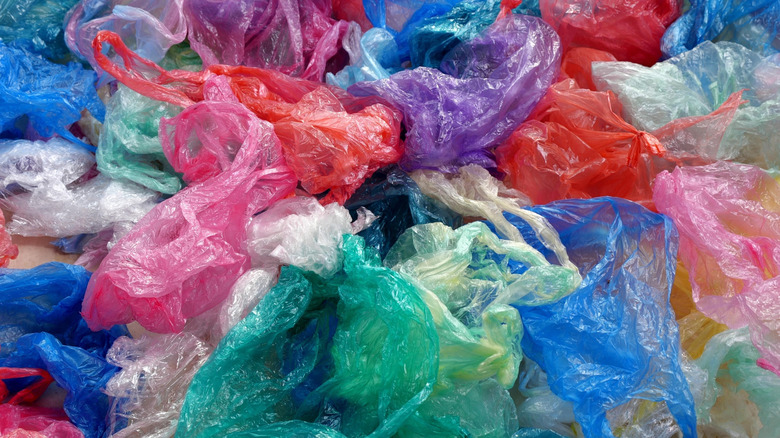
The dangers of plastic bags are globally-recognized phenomena. Several European countries and Japan have levied taxes and fees on plastic shopping bags in order to limit their production and use. In the U.S., there have been bans, fees, taxes, size restrictions, and PSAs on the local, state, and federal levels to reduce plastic bag use. Most recently, California banned the use of all plastic shopping bags in 2026. Studies have proven these restrictions produce desirable outcomes, with one study finding that these policies led to a 25 to 47% decrease in Stateside plastic bag debris.
Other solutions have been introduced to curb plastic shopping bag use and make grocery shopping greener. Producers have spawned biodegradable and compostable alternatives, yet even these have shown to have negative environmental effects without proper disposal. Many grocery stores sell branded reusable bags made from cotton and canvas to be used in place of the provided plastic bags, yet these, too, have their own environmental detriments (cotton requires a great deal of water to produce, and can't be composted).
Behavioral change might be the key solution to mitigate plastic bag use. Consumers often struggle to break the plastic bag habit, especially if they don't know about or have access to alternatives. Education on and awareness of the dangers might not only help us change our attitudes, but also might just save the planet. As each person uses about 83 plastic bags each year, that will be 83 less plastic bags that damage the environment micro- and macroscopically.