

After 80 Years, Minute Maid Is Discontinuing Its Nostalgic Frozen Juice

A childhood classic is set to disappear from the freezer aisle. The Coca-Cola Company, which owns Minute Maid, has announced its canned juice concentrates will be discontinued in the United States and Canada. I'll admit, I'm part of the problem: I've bought Minute Maid's frozen canned juice exactly once in my adult life. Still, it hurts to see the iconic juices go.
Like many Americans, I grew up on canned juice concentrate. As a young kid, I regularly watched my mom empty a frozen can into a plastic pitcher and add water. Sometimes, I'd help her mix the juice. There was a certain satisfaction in breaking the frozen concentrate apart with a spoon.
A Coca-Cola spokesperson told influencer and snack food savant @markie_devo that all five flavors — orange juice, lemonade, limeade, pink lemonade, and raspberry lemonade — will be gone for good by April. Fans of the sugary slush may still be able to find cans while store inventory lasts.
Fans turned to the comments to reminisce about the juices. For many, they were a childhood classic: "Noooooo," one commenter wrote. "The strawberry lemonade one was the best thing as a kid." "An end of an era is right!" wrote another. "My favorites growing up." Other commenters found new uses for the concentrates as adults. "Not the limeade! I use that for margaritas," read one comment.
Canned juice was an American classic
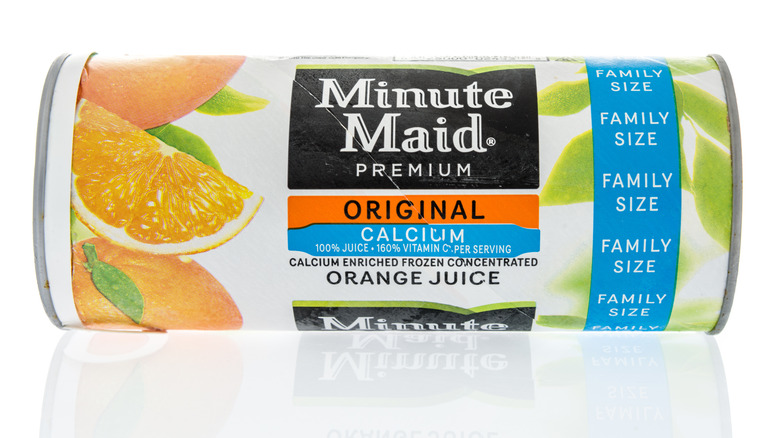
Frozen orange juice concentrate started as a World War II-era project from the National Research Corporation. The military supplied troops with lemon crystals for vitamin C, but soldiers would often skip the foul-tasting crystals. Researchers wanted to create an orange juice alternative, but by the time they developed a powdered orange juice concentrate the war was over.
Researchers kept refining the product, and frozen orange juice concentrate hit the market in 1946. The concentrate launched the Minute Maid brand which quickly became a hit among American families. Ads stressed the ease of preparation and the rich, concentrated orange flavor. Plus, the frozen cans lasted longer than fresh orange juice.
In 1960, Coca-Cola acquired the brand. It remained a breakfast table staple throughout the mid-20th century and experienced a revival in the '90s. Fans developed their own ways to enjoy the frozen juices, too. Some reduced the water for a stronger taste, while others ate the frozen slush straight from the can. American tastes have shifted toward fresh juice, though. Going forward, Coca-Cola plans to focus on ready-to-drink beverages.
Still, the classic cans won't be forgotten. In 2012, the National Museum of American History added a Minute Maid concentrated orange juice can to its collection. At least future generations will be able to study the juice as a part of history — even if they can't taste the sweet orange slush for themselves.