

14 Polish Foods You Have To Try At Least Once
Polish cuisine is an excellent example of food that crosses borders. Due to a history of border changes in Eastern Europe, much of the cuisine of Poland overlaps with the surrounding nations of Czechia, Slovakia, Hungary, Ukraine, and Lithuania. The dishes can be similar, but with regional differences and variations on the names.
With a history of war and varying governmental structures, much of what is considered traditional Polish cuisine was born out of poverty and food scarcity. This means humble ingredients like potatoes, other root vegetables, and grains often take center stage. It also means preservation in the form of drying, smoking, pickling, fermenting, or making alcohol is common. While traditional foods still hold value in Polish culture and cuisine, Poland has been experiencing a food revolution on par with other countries around the world, focused on celebrating local ingredients and updating well-loved dishes.
Because of this, many foods on this list can be found in their traditional form, or as a modern take from chefs and home cooks working to show that Polish food is just as trendy and delicious as other more celebrated European cuisines. Having married into a family with Polish heritage, I have learned how to make many of these dishes over the years. I love discovering family recipes from my mother-in-law or trying a new variation from a cookbook. Whether you're seeking the new or the old, here are 14 Polish foods you have to try at least once.
1. Pierogi
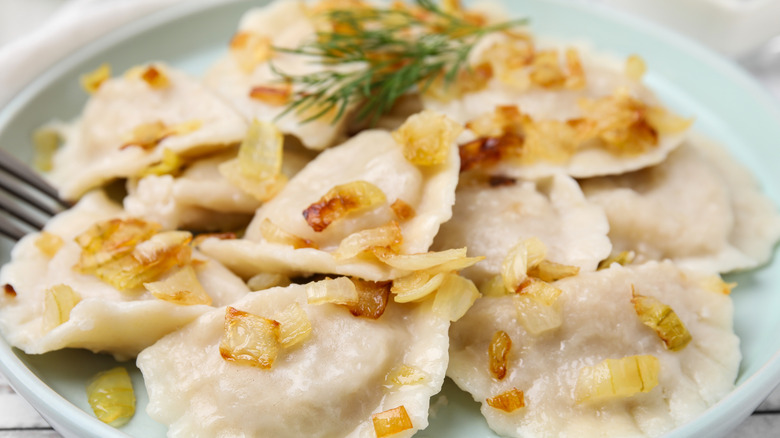
Pierogi might be the food most associated with Polish cuisine. The most commonly seen version is a small half-moon-shaped dumpling filled with potato, or perhaps potato and cheese, as in a pierogi ruskie. Usually served with a healthy amount of butter and sautéed onions, these are delicious, filling, and comforting. However, there is much more to the pierogi than potatoes.
Pierogi, at their core, are dumplings, of which many cuisines have some version. Due to influences from surrounding nations, pierogi come in many shapes, sizes, and flavors. Their fillings can be regionally specific, like fish pierogi in the northern coastal towns and cheese in the southern mountains. They can also be stuffed with meat, like knysze filled with barley and lamb. On the other hand, pierogi don't have to be filled, like sulki, which are little boiled potato and cheese dumplings, almost like gnocchi.
You can find pierogi boiled, steamed, baked, or fried. Each cooking method offers a unique texture and can be associated with a different regional style. Most grocery stores across the United States sell frozen pierogi, which is likely to be most people's experience of eating pierogi stateside. While these are delicious and easy to prepare, if you have a chance, give one of these other variations a try.
2. Pączki

Pączki are yeasted stuffed donuts with origins that go back to before Poland was its own nation. They are closely tied to the Catholic religion, which is a large part of Polish culture. These donuts can often be found in bakeries in the weeks leading up to Lent, because they were traditionally made to use up fruit, eggs, and sugar before the start of the Lenten fast. Classic fillings include rose petal marmalade, prunes, fruit jams, like raspberry, apple, and cherry, and a rich vanilla custard called budyń.
Today's pączki often include custard and fruit fillings, but many bakeries have taken the liberty of creating their own new and exciting flavors. Bakeries that sell pączki in the States often offer trendy flavors that appeal to locals. In Pittsburgh, Oakmont Bakery is famous for its pączki, which are only available in the weeks leading up to Lent. Each weekend, the bakery sells around 10,000 of these treats, with flavors like Pittsburgh cream (vanilla buttercream), peanut butter cream, and maple bacon.
Because pączki are often larger than the stuffed donuts we may be used to, they are especially indulgent. These sweets are a great excuse to find a local bakery that makes them and try a few flavor options.
3. Kielbasa and sauerkraut
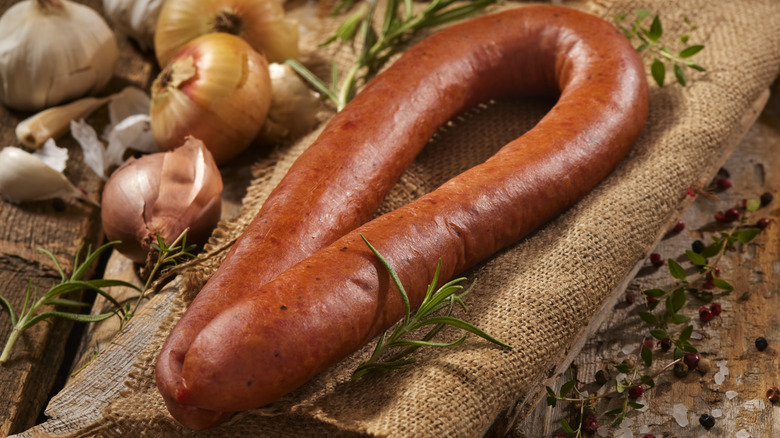
Kielbasa means sausage in Polish; therefore, kielbasa can really refer to any type of sausage in Poland. When speaking about kielbasa in the States, most people are referring to a smoked Polish sausage called kielbasa zwyczajna, usually made with beef or pork and spiced with garlic, black pepper, and marjoram.
Just like with pierogi, there are other types of kielbasa worth trying. Biala kielbasa, or white Polish sausage, is a fresh version of smoked kielbasa with similar seasoning. This sausage is great for grilling or sautéing and is often used in soups and stews.
In my family, we have a tradition of eating this type of kielbasa with sauerkraut on New Year's Day. Sauerkraut is cabbage that has been lacto-fermented for preservation. The process softens the texture of the cabbage, but depending on the length of fermentation, it maintains some of its crisp texture while becoming a little sour and more savory. If eaten raw, the sauerkraut contains probiotics that can contribute to a healthy gut microbiome. However, in my house, we usually enjoy it cooked. My grandma adds a quarter to the sauerkraut (after a very intense cleaning process), and whoever finds the quarter is said to have good luck in the coming year.
4. Golabki
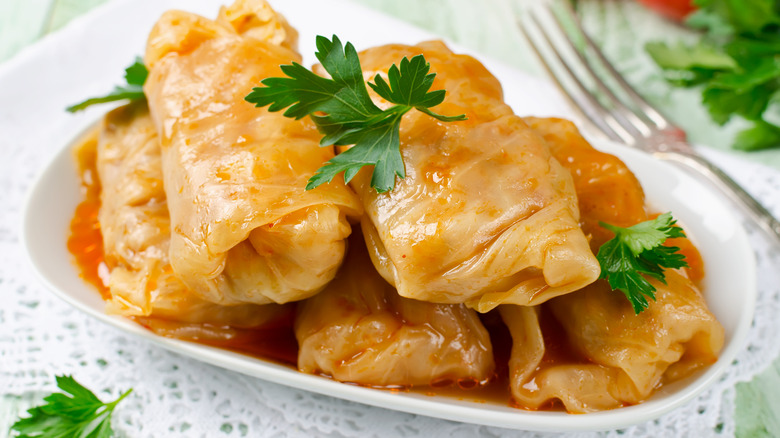
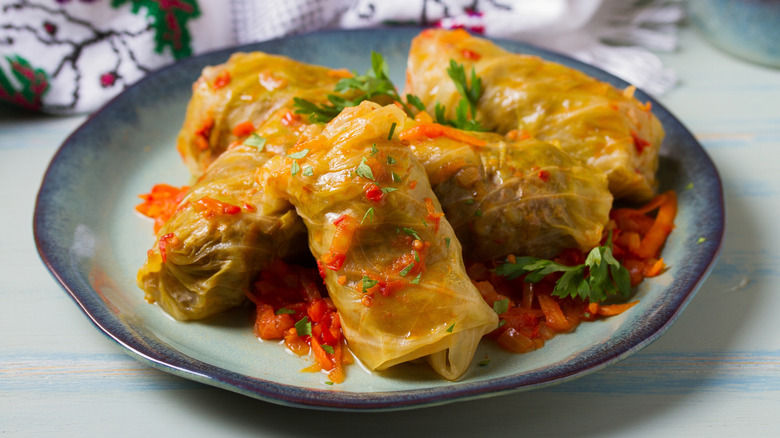
Golabki are stuffed cabbage rolls that can be found under many names throughout Eastern Europe and beyond, like holubky, holubtsi, plnená paprika, or golubtsy. In Poland, the cabbage leaves were originally stuffed with buckwheat and potatoes, as those were readily available food items for the lower and middle classes.
Today, most people make golabki with rice and ground meat, like beef, pork, or a mixture of both. The meat and rice mixture is wrapped inside parboiled cabbage leaves, which are then laid in a pot or baking dish. The whole dish is topped with a tomato sauce that flavors and softens the cabbage as it cooks. My favorite part is when the tomato sauce caramelizes and adds a rich, almost meatiness to the cabbage.
Golabki is a popular dish eaten around Christmas. Because it's time-consuming to prepare, my mother-in-law usually makes a large batch and freezes or shares half. If you enjoy spending time cooking with family or friends, making golabki can be a great excuse to have many hands working in the kitchen during the holidays.
5. Zapiekanka

Zapiekanka is a popular street food in Poland and can also be found late into the evenings after a night out. Born out of Polish ingenuity in the early 1970s, it is an open-faced baguette toasted with mushrooms and cheese, then topped with a tomato sauce akin to American ketchup. When baguettes were licensed from the French to be produced in Poland, and meat was scarce, this became a popular and cheap bar food. Fittingly, it's also referred to as Polish pizza.
The zapiekanka of today has taken on a new life. The base remains the same but can be topped with anything from fresh herbs like chives to vegetables like onions and pickles, or even meat like ham or kielbasa. In Poland, you can find a range from simple classic versions to others loaded with high-end ingredients. Some topping options at popular restaurants include bacon and smoked plums; ham, corn, and pineapple; or blue cheese and olives.
6. Bigos
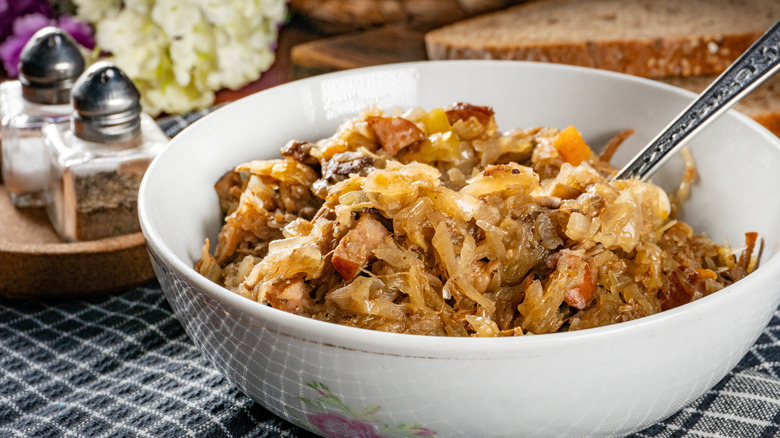
Bigos is a popular stew of slow-cooked meat and sauerkraut. It is one of the oldest Polish dishes and is historically so well-regarded that poems have been written about it. Like many other dishes, this stew varies across neighboring countries such as Lithuania and Hungary. It can also vary by household due to different regional ingredients and mixing of borders.
Traditionally, bigos was made as a celebratory dish after a hunt, which is why it is also known as hunter's stew. In these contexts, it would be made with game meats like venison or rabbit. Modern recipes use pork, lamb, or even chicken, which might be easier for home cooks to source. The meat is slowly cooked with sauerkraut, fresh cabbage, mushrooms, kielbasa, and red wine. The whole dish is flavored with prunes and juniper berries.
If these unique flavors aren't enough to entice your palate, bigos is worth trying for its textural contrasts. The broth is velvety and rich with succulent stewed meat, and the sauerkraut keeps its crispness through the cooking process. This hearty stew is perfect when paired with fresh bread or potatoes for soaking up the broth.
7. Żurek
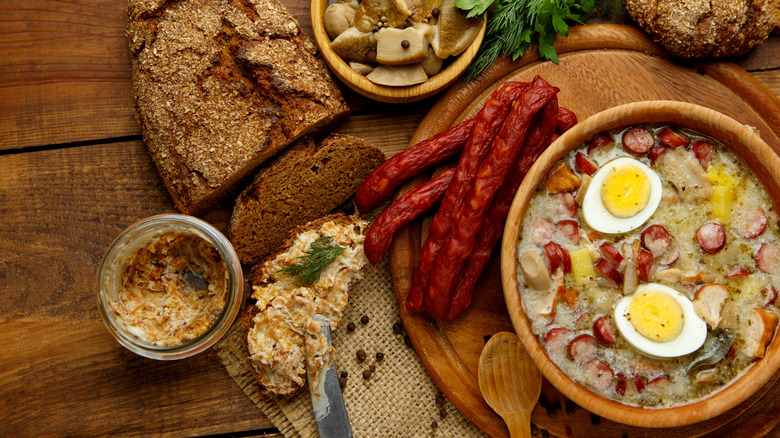
Żurek is a soup made with a fermented rye starter, or zakwas. If you have done any sourdough baking, the rye starter for this soup is very similar. It's made by mixing wholemeal rye flour with water and garlic, then leaving it to ferment for at least five days. The fermented rye gives the soup a sour flavor that is well-loved in Polish cuisine. The rye starter is added to a base of rosół (or clear broth), along with biala kielbasa, potatoes, and boiled eggs. It can also be served with pierogi and is often garnished with crispy bacon or herbs.
Żurek is traditionally served around Easter. Meanwhile, it is also sometimes referred to as Polish hangover soup, since the fermented starter is said to have healing properties. As a rich and hearty soup that will cure what ails you or warm you on a cold day, some people say there is nothing more Polish than a bowl of żurek.
8. Ogórki Kiszone
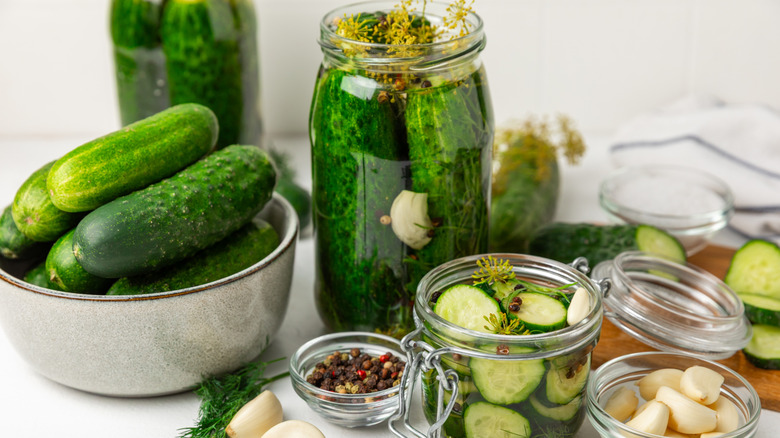
Ogórki Kiszone are Polish pickles preserved by lacto-fermentation. Rather than being brined in vinegar, the cucumbers are covered with a mixture of salt, water, and aromatics, then left to ferment. Depending on the desired flavor, they can ferment anywhere from one to six weeks. The aromatics added to the pickles make them stand out. For example, garlic, mustard seeds, horseradish, and bay leaves can be added to the saltwater brine along with a cherry, grape, or oak leaf. The leaf is said to maintain the crispness of the cucumbers through the fermentation process.
Pickles are served with many Polish dishes or as hors d'oeuvres before a meal. My husband often waxes poetic about the pickle plates that were always present at family gatherings when he was young. The briny, sour bite of the pickle cuts through the heaviness of some Polish dishes, which can be laden with meat and potatoes. These pickles are also a great accompaniment when drinking vodka.
9. Krupnik

Krupnik is a Polish honey liqueur made by adding honey and spices like anise, clove, nutmeg, cinnamon, and peppercorn to vodka and allowing them to infuse. Krupnik can also refer to a barley and vegetable soup, which I'm sure is also delicious and worth trying, but for now, let's talk about the drink. Also, this liqueur is not to be confused with mead, which is made by fermenting water and honey to make alcohol.
The most commonly found krupnik in liquor stores is Old Krupnik Honey Liqueur. This is a smooth liqueur that is sweet and warming from the addition of the spices. Like many Polish recipes, krupnik will warm you on a cold winter night. It is best enjoyed on the rocks to appreciate the smooth honey flavor, however, it is also a great addition to a winter cocktail. Try it with whiskey to balance the sweetness or add it to a hot toddy for additional spice and warmth.
10. Twaróg and Oscypek

Polish cuisine boasts unique regional cheeses that can be used in dishes like pierogi or eaten on their own. These cheeses are usually made with raw milk, which can make them more difficult to find in the United States. However, they are worth seeking out if you find a Polish or European market. The simplest of the cheeses is twaróg, which is a Polish version of a farmer's cheese. The milk for this cheese is cultured, or allowed to sour slightly, before the curds and whey are separated. This gives the cheese a slight sourness similar to crème fraîche, but it has a firmer texture. Most twaróg is sliceable but soft and versatile enough to be used to fill pierogies or in sweet cheesecakes.
Meanwhile, oscypek is a smoked sheep's milk cheese that originates from the mountains of Poland. This beautiful cheese is sold at Christmas markets and might be mistaken for a wood-carved ornament or decoration to the uninitiated. Due to the smoking process, it takes on an amber hue, and it's then carved with different designs. This firm cheese can hold its shape when grilled, which means it can be enjoyed with a little caramelization on the outside and paired with fruit jam for the ultimate combo.
11. Barszcz Czerwony
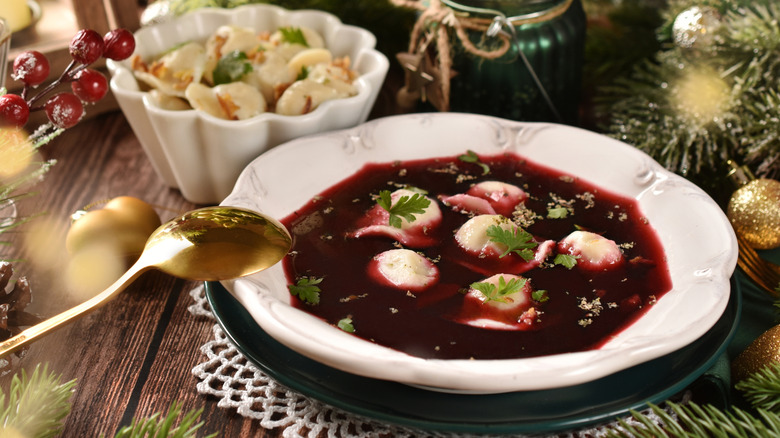
Barszcz Czerwony is the Polish version of red borscht. It starts with a clear broth, or rosół, made from vegetables. What gives this soup its distinct flavor is the beet zakwas, or fermented beet juice, that is added to the clear broth. Zakwas can also be enjoyed on its own as a beverage.
Barszcz czerwony is traditionally eaten around Christmas. In the Polish Catholic tradition, it is customary to refrain from eating meat or dairy during this holiday, so most versions of barszcz czerwony are vegan. However, some modern recipes served throughout the year use meat or cream in the broth or in dumplings that are added to the soup. The flavor is earthy and sour, and especially comforting when served with uszka, or little ears, which are tiny dumplings that look similar to Italian tortellini. They can be filled with mushrooms or sauerkraut to keep the dish vegetarian, or lamb for a heartier soup.
12. Haluski
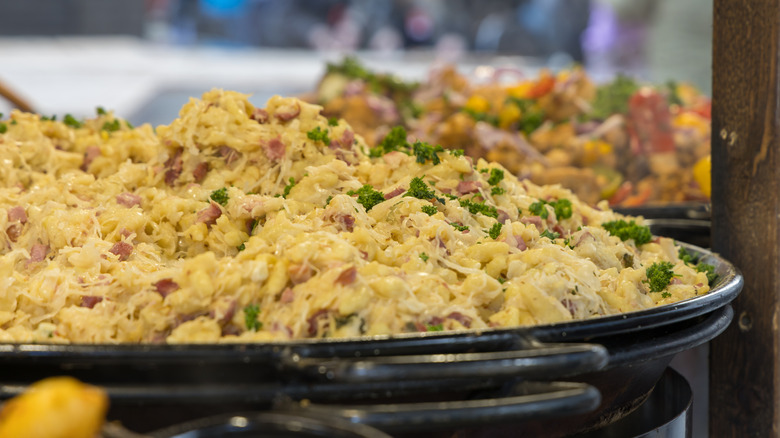
The first time I tried haluski was in a college dorm room after my now husband brought it back from a visit home. It immediately blew my mind. I never would have thought to pair cabbage with pasta, but it works so well. Haluski does not actually originate in Poland; its roots are found in surrounding nations like Czechia, Slovakia, and Hungary. That said, many Polish immigrants in the United States have adopted this dish, and it can be found on Polish menus in much of the Midwest.
Haluski also has regional variations. The version we make at home involves cooking thinly sliced cabbage and onions in plenty of butter until the onions start to caramelize. The sauce for the dish is essentially butter and black pepper. Once the cabbage has cooked down, we add egg noodles and stir until everything is coated in butter, onions, and cabbage. This dish is delicious as is, but sometimes we like to add bacon to make it even heartier. Other versions of haluski replace the egg noodles with spaetzle or potato dumplings. These are also delicious, just not what I have been eating for the last 15 years.
13. Pierogi Manty
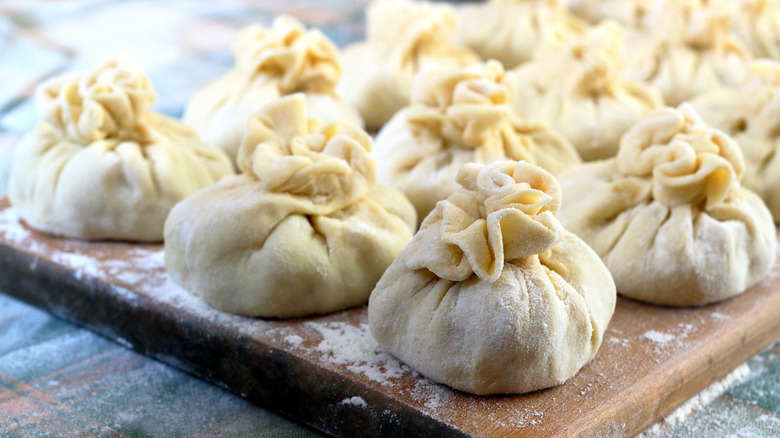
Pierogi manty are a Polish dumpling with influences that reach much further than the bordering nations. Manty have roots in Turkish cuisine as well as in central Asia, and look similar to Tibetan momos or Georgian khinkali. They are yet another example of the way cuisine travels and changes as it crosses borders and is replicated using local ingredients.
Pierogi manty are different from other pierogi in that they are steamed rather than boiled. This gives the dough a wonderful chewy texture more reminiscent of Chinese dumplings. Manty are more likely to be filled with meat and, when steamed, the dumpling holds in the liquid released during cooking to create a juicy, savory dumpling. There are sweet versions of pierogi manty as well that can be filled with twaróg cheese, sugar, and topped with fruit jam. Though this may sound like dessert to many, it may be served as a simple lunch in Poland.
14. Strucle z Orzechami or Strucle z Makiem
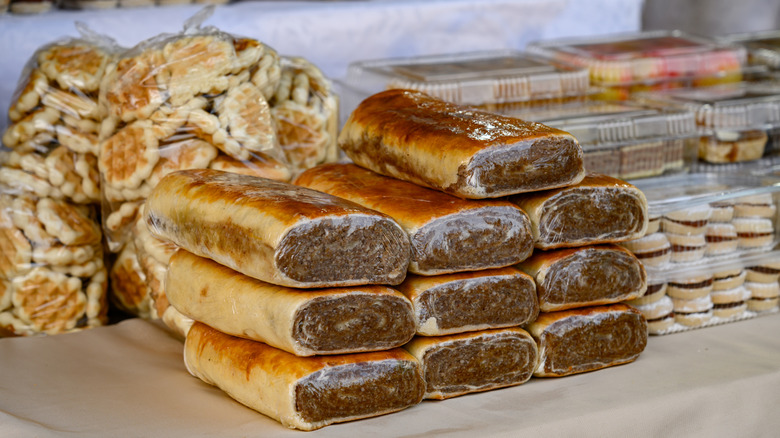
Strucle z orzechami, or nut rolls, are a pastry made with a yeasted dough filled with lightly sweetened ground walnuts. The mixture is spread onto the rolled-out dough, like when making cinnamon rolls. However, nut rolls are a much different pastry. Once the walnut mixture is spread onto the dough, the whole thing is rolled into a log and then baked before it is sliced. Once baked, the texture is soft and bread-like with a filling that is nutty and just barely sweet.
Strucle z Makiem, or poppyseed rolls, are made in much the same way. This flavor is more polarizing as the poppyseeds can be a lot more bitter than walnuts. Poppyseeds are very important to Polish culture, as they are seen as a sign of fertility. Folk remedies recommend eating poppyseeds as a way to enhance bodily fertility, as well as a way to improve success in farming.