

The 3 Days You Must Avoid Throwing A Cocktail Party, According To An Expert
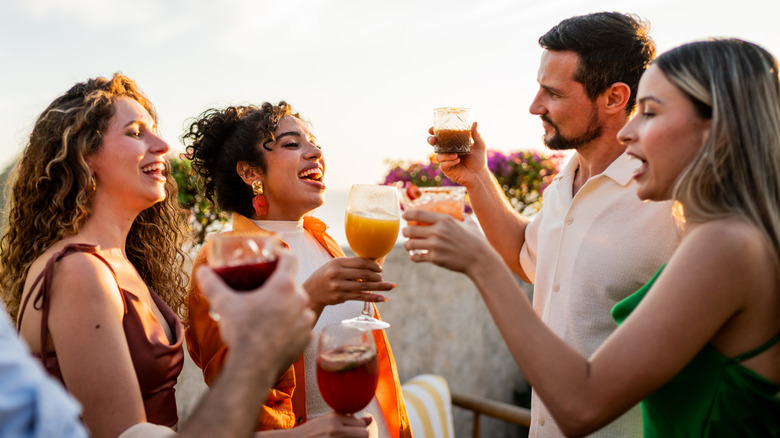
Holding a cocktail party can be a fun idea for entertaining within limited parameters (as opposed to a sit-down dinner party or full-on catered shindig). Still, there are certain things you'll need to know before you send out the invites, such as how many appetizers you're likely to need and what mocktails or other non-alcoholic options to have on hand for guests who don't want to drink (as well as transportation options for those who do, since the social host liability law means you may be held responsible for any accidents involving intoxicated guests.) Reneille Velez, an event planner who runs her own company called Gian Events, suggests that you also pay attention to the day of the week. Thursdays can be a bit iffy sometimes, but Friday and Saturday are the most difficult.
"They're not off-limits, but they're the most competitive evenings on the calendar," said Velez, "filled with longstanding dinner reservations, cultural events, family time, and personal downtime. Hosting during these windows requires a higher level of intentionality," Velez explained. Bougie neighborhoods in cities like Los Angeles may also have potential guests demanding a lot more from weekend gatherings. In Velez' experience, "A Saturday cocktail gathering often needs a compelling point of distinction — perhaps a rooftop setting, a live DJ at golden hour, or a thoughtfully layered sensory experience." In a less high-key city like Seattle, however, she'd focus more on the ambiance. If a weekend cocktail party is something you insist on, "The experience must simply rise to meet the expectations of the moment."
When should you hold your cocktail party?

When asked what days were best for scheduling cocktail parties, Velez replied, "Tuesday through Thursday offers the most refined balance between accessibility and engagement. For corporate gatherings, Tuesday and Wednesday feel effortless. Guests can transition directly from the workday into a social environment without the friction of competing weekend obligations."
Thursdays are clearly the swing days. They are really quasi-weekend days, and Velez admitted that this may make them more difficult to book, but you may be in with a chance if you ask far enough in advance. She also noted Thursdays have certain advantages: "For more intimate social gatherings, Thursday holds particular elegance — it carries the promise of the weekend while preserving the ease of a weekday. Attendance tends to be stronger, arrivals more timely, and the atmosphere more present."
As for the time, she said, "The most successful cocktail window — typically 5:00 to 7:30 p.m. — allows guests to flow seamlessly from professional obligations into a social experience without over-committing their evening ... There are financial considerations as well: Earlier time frames often provide stronger value in catering and beverage packages, allowing hosts to invest more thoughtfully in the guest experience."
Watch out for holidays

Holding a weekend cocktail party, while tricky, isn't an impossible feat to pull off, but there are certain weekends you'll definitely want to avoid. Three-day weekend holidays like Memorial Day, the Fourth of July, and Labor Day are among the worst dates to try to host a cocktail party — nobody wants to put on their fancy clothes and stand around sipping martinis and nibbling on hors d'oeuvres at a time when the vibe is more informal backyard barbecue, bathing suits, and beer. Thanksgiving weekend is also out since you're competing with Black Friday, football, family time, and travel arrangements. (The Sunday after Thanksgiving is among the busiest days of the year for airlines.) As Velez reminded us, "Even the most beautifully designed event struggles to compete with plane tickets, packed suitcases, and family tables. Thoughtful hosting includes knowing when not to ask for someone's time."
If you want to throw a cocktail party at a festive time of year, you can avoid one holiday entertaining pitfall by choosing a date that doesn't fall too close to the big day itself. A Valentine's-themed cocktail party could land on February 10, for example, while a Christmas-themed one should work on December 17. According to Velez, choosing the right date and time isn't the whole story. As she pointed out, "Invitation cadence is equally important. During busy seasons — particularly holidays or peak social months — guests require earlier notice and thoughtful reminders. Clear RSVP deadlines support precision in planning and signal that the event is carefully curated."