

Only Swap Sugar For Maple Syrup If You Do This Crucial Step
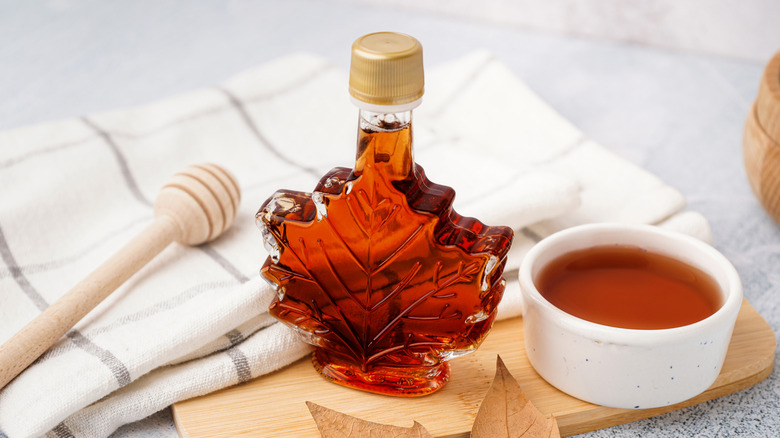
Liquid sweeteners, like honey, agave nectar, molasses, and maple syrup, offer alternatives to refined white sugar. They can save you from an emergency grocery run — and they have other benefits, too. Using liquid sweeteners in lieu of sugar can give your baked goods deeper, more complex flavors. Maple syrup is more versatile than you'd expect, and it's a great place to start if you're venturing into liquid sweeteners. Real maple syrup has a nutty, caramel-like flavor and offers a lower glycemic index than white sugar, meaning blood sugar spikes aren't as severe. It's also a source of antioxidants and minerals, especially magnesium.
Substituting one ingredient for another often requires a little skill and scientific know-how. To learn more, The Takeout talked to Scott Rodriguez, chief culinary officer for Perkins American Food Co. "You can substitute maple syrup for sugar, but it should not be done at a one-to-one ratio," Rodriguez says. "A good guideline is to use ¾ of a cup of maple syrup for every 1 cup of granulated sugar."
Rodriguez notes that you'll need to make other changes, too. "Because maple syrup is a liquid, you will also need to reduce other liquids in the recipe to keep the batter from becoming too loose," he says. Simply remove a few tablespoons of liquid that contribute to moisture (like water or milk, but not fats like oil or melted butter) for each cup of sugar you substitute.
How to bake with maple syrup
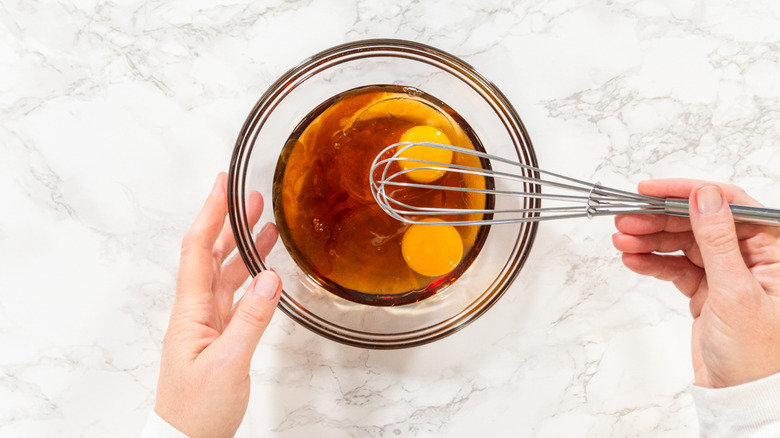
The measurements in your recipe aren't the only thing you'll need to take into consideration. "In terms of flavor, maple syrup creates a deeper and more complex sweetness, similar to the effect of browning butter," says Scott Rodriguez. Of course, you'll get a strong dose of maple, too – the darker the maple syrup, the stronger the flavor will be. Maple is often a plus, but may clash with delicate flavors like subtle fruits or vanilla.
It's important to use room temperature syrup, too. The volume of maple syrup changes with temperature, so fridge-fresh syrup could give you inaccurate measurements. Cold syrup can also cause ingredients like butter to seize up. "Using syrup straight from the refrigerator may also force you to mix longer than necessary, which can lead to over-mixing and can affect the texture, rise, and final consistency of many baked goods," Rodriguez notes.
You'll need to adjust the oven temperature as well. Maple syrup browns faster than granulated sugar, so Rodriguez recommends keeping your oven low. "Lowering the oven by about 25 degrees [Fahrenheit] helps prevent the syrup from over-caramelizing or causing the product to brown too quickly," he explains. Some swaps are simpler. "If you are substituting maple syrup for another liquid sweetener such as honey, agave, or corn syrup, you can usually swap at a one-to-one ratio," Rodriguez explains. If you happen to have maple sugar on hand, you can go with a simple 1:1 swap, too.