

San Francisco Is The Birthplace Of This Old-School Italian American Soup
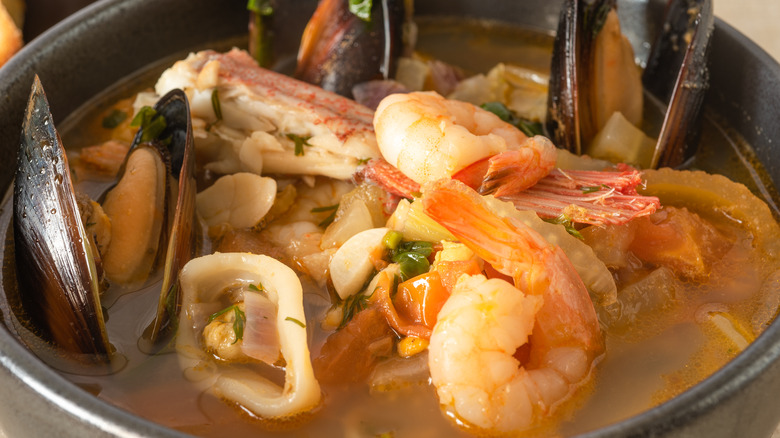
If you head down to Fisherman's Wharf in San Francisco, there are a few dishes you're bound to find. Creamy clam chowder is a big one, and most tables contain sourdough bread from Boudin. Dungeness crab and shellfish are also very common, with some showing up seasonally due to restricted fishing seasons. One dish that is always there any time of year, however, is cioppino. You'll likely never see this flavorful soup vanish from the wharf, due in part to the fact that it originated there, even though it's Italian in name.
When you order cioppino, you can be sure of a few basics. The broth consists of tomatoes and a few other vegetables in a white wine sauce, with some places choosing red wine instead. Cooked in this broth are fresh Italian herbs and a variety of local seafood such as shrimp, clams, mussels, fish, and crab. A toasted, crusty white bread, especially sourdough, is served with the soup for dipping. The flavor is herby, salty, lightly briny, and rich. The acids come through sharply, as does the garlic usually included with the vegetables, in a way that is bracing yet comforting when eaten piping hot. Beyond that, however, each restaurant has its own version that varies slightly, so you'll have to try a few to figure out which style you prefer.
This all may sound incredibly Italian in flavor and French in ingredients. It's true that the soup is very similar to bouillabaisse, a dish Ina Garten says calls too laborious for dinner parties, and it's also very time-consuming to make. Still, even though the dish doesn't come from Italy directly, it's fair to call it Italian based on its origins.
How cioppino came to be

While this menu item isn't from Italy at all, that doesn't mean we don't owe the invention of cioppino to Italians. In the mid to late 1800s, Fisherman's Wharf was known as Meiggs' Wharf. There, many Italian fishermen who had emigrated from Genoa set up shop and made themselves a home. At the end of a long day of fishing, a communal pot was often brought around by those whose catch was lean, and each man added something to it. If a fisherman had crab, they added a crab. If they had plenty of clams, in went a handful of clams. Peppers were also a must. By the time every fisherman had thrown something into the pot, it was enough to make a dinner that could feed everyone. One dubious piece of lore suggests the dish got its name from Italian fishermen calling "Chip in!" as they passed the pot around. Another suggests that it comes from an Italian word for "little soup," but we don't know for sure which story is true.
Cioppino is meant to use as much extra seafood as possible in an enjoyable way, similar to how The Feast of the Seven Fishes allows Italians to savor a variety of shellfish and ocean fare. In the early 1900s, the fishermen began to sell this soup to visitors, and it got somewhat of a reputation for being warm, filling, and unique to the wharf area. When the 1906 earthquake rocked San Francisco, a recipe for cioppino was included in a cookbook sold to raise funds for rebuilding. This is the first written recipe for the dish we have, and that cemented it into Bay Area history forever.
Make cioppino yourself at home
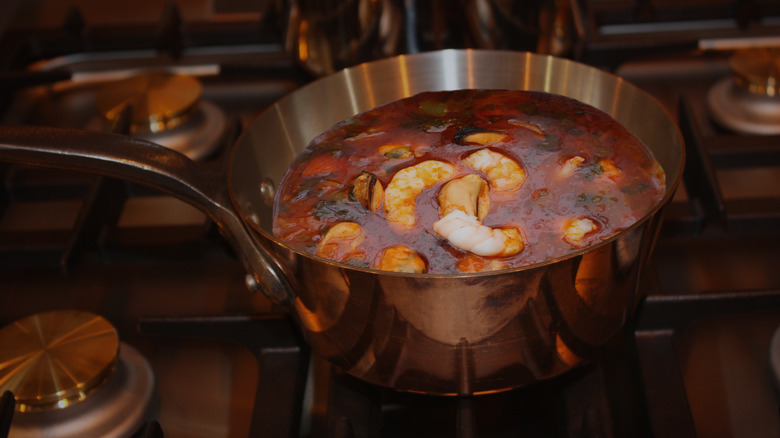
While a few brands, including Trader Joe's, have sold kits for making cioppino, it's now often a discontinued grocery store soup that you'll never see again. So, if you're not planning a trip to the city by the Bay any time soon, you'll have to learn how to make it yourself. Luckily, there are plenty of recipes out there to use.
If you want to go truly authentic, the original recipe from "The Refugees' Cookbook" says you need to start with a large, solid chunk of fish, preferably bass or other white fish. Put it into a pot with a can of tomatoes and some onions that have been sauteed in butter. Add two peppers, a large helping of clam juice, and a bay leaf, then boil it all for at least an hour. Add a dozen clams and continue cooking for another 15 minutes, then serve hot. This version is simple, clean, and easy, although it may not closely resemble many cioppinos served at restaurants in San Francisco.
If you want to try a more common, modern version of the old school soup, you'll have to add a few more things to the mix. White wine, garlic, and olive oil should be added to the broth, along with more herbs like oregano and fennel. Instead of just fish and clams, most recipes include shrimp and crab, though muscles, squid, and scallops are also customary. Most importantly, though, you want to select very fresh seafood, so whatever the catch of the day is should work fine. After all, that was how Italian Americans did it, so you might end up with authentic cioppino after all.