

The Bug Excretion That Coats The Candy You Eat
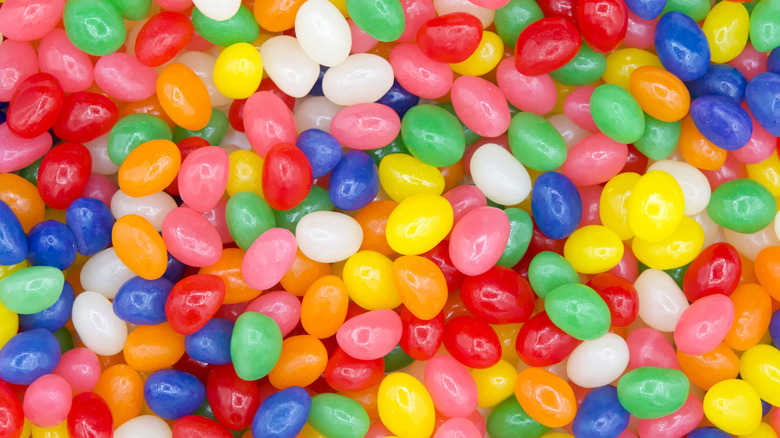
If you've ever admired the jeweled orbs of jelly beans, lusted over the Junior Mints at the concession stand, or swooned at an extra-shiny Cosmic Crisp apple at the grocery store, you might be a fan of bug goo. Specifically, a goo from the tiny lac bug that lives on certain trees throughout India and Southeast Asia. That's right, you've been unknowingly chomping down on shellac, a resin secreted by the female lac bug as she dines on tree sap. Food marketing being what it is, it's labeled way more discreetly on ingredient lists as "confectioner's resin" or "natural glaze," but the source is all the same: a sticky substance harvested from insects that's been used for centuries.
Shellac's use in food certainly isn't new. Cultures have used lac resin for more than 3,000 years, both decoratively and practically. In the confectionery world, shellac's job is simple and shiny. It creates a smooth, durable coating that keeps candies from sticking together or losing their sheen. That lovely little shine on jelly beans wouldn't exist without it, as shellac has long been used to maintain their glistening exterior. Beyond candy, shellac also coats pharmaceutical pills, coffee beans, citrus, and avocados. The resin is even embraced by the mainstream food world, as it's labeled GRAS (generally recognized as safe in foods) by the Food and Drug Administration and is even authorized for use in organic products. This is a bug juice that can do it all!
Shellac is one of the food industry's oldest tricks
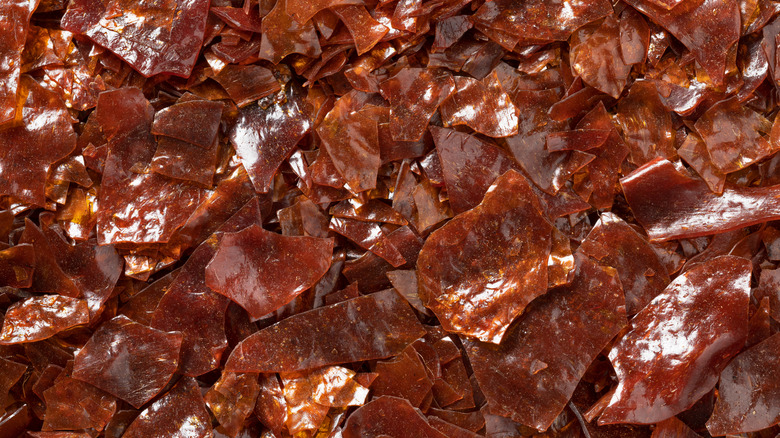
Whether you consider candy corn delicious or Satan's earwax, the confectioner's glaze that covers them goes on quite a journey before landing in your Halloween basket. After the female bug excretes her gunk, it hardens around tree branches as a protective shell. Harvesters then go in and scrape the resin from the bark, filter it, heat it, and refine it into delicate, amber-colored flakes. When dissolved in ethyl alcohol, these flakes become the shellac used in a wide range of industries: woodworking, pharmaceuticals, cosmetics, and some of the most popular Easter candies. In fact, the United States is one of the largest importers of lac resin.
Obviously, the ingredient is problematic for strict vegans or those avoiding animal products. Because the process involves killing the bugs to collect the resin, shellac isn't considered vegan, and many plant-based people look for candies made with alternative coatings such as carnauba wax, which is actually made from palm leaves. Perhaps most importantly, there are concerns about safe working conditions and the enforcement of fair labor laws for the people who harvest the resin. For now, it seems shellac isn't going away anytime soon, especially considering the ever-growing case for eating insects. It's certainly edible, widely regarded as safe for consumption, and used in such tiny amounts that most people never notice it. But now that you know, you might look at your favorite movie theater candy a little differently.