

The Ingredients That Give Mexican Candy A Bold Edge
We may receive a commission on purchases made from links.
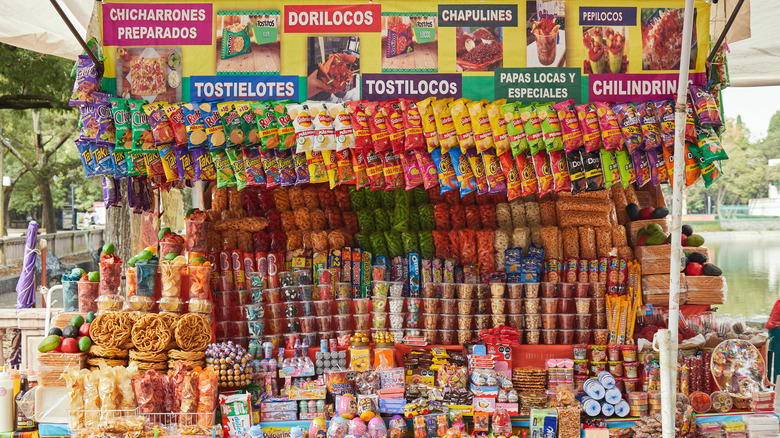
If you've ever visited Mexico, or a local Mexican corner store or market, you might have noticed that the candy aisle looks a little different from the one at your closest Walmart. Sure, the packaging is labeled in Spanish, but it goes deeper than that. Look carefully, and you'll find that the packets of gummies and hard candies in front of you are decorated with chiles, flames, tropical fruit, and tamarind pods. That's because Mexican candy often comes with a kick — specifically, the heat from spicy dried chiles, alongside the deep, almost umami flavor of tamarind paste — and often, a little lime. Don't worry, though. Mexican candy makers utilize chiles carefully to impart a range of flavors that aren't intended to blow your head off.
Dulces enchilados (AKA "spicy candies") often feature chamoy, too — a mixture of dried fruit (usually apricot), lime, chile, and a little sugar. Chamoy turns up all over the place in authentic Mexican cuisine. You can put Tajín on everything, but chamoy may be even more ubiquitous than the chile-lime seasoning. You'll see chamoy everywhere in Mexico; it's drizzled on fruit cups and poured into hollowed-out cucumbers (This is a wild combo, which is why it's called "pepinos locos"), and it drips from the rims of micheladas. So it's no surprise that over the years, candy companies have found innovative ways to use it, too. You might find chamoy as a flavor, a filling, or a dip across various types of Mexican candy, including Lucas Skwinkles Clásicos, ring-style lollipops, and hard candies. Other ingredients you'll find in a well-stocked Mexican candy aisle include peanuts, sesame, and of course chocolate or cacao — all of which are used in Mexico's heaven-sent mole sauces and pipians.
How Mexican candy got its spice
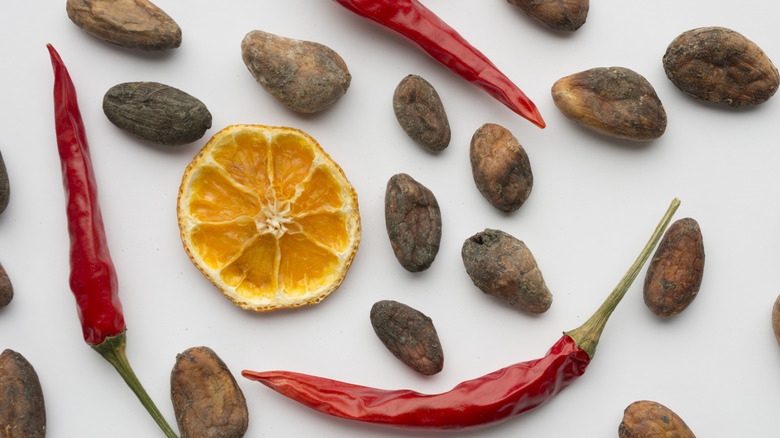
The story of Mexican candy starts before the Spanish arrived in the 1500s. Indigenous peoples kept bees and mixed their honey with corn and amaranth seeds to make alegrías, which are still very popular across Mexico. They also had access to early forms of chocolate; the cacao tree is native to the upper Amazon, but was cultivated across Mesoamerica by the Maya, Olmec, and Aztec people. The Aztecs made a drink of cacao, chiles, and other local spices, which likely served as the beginning of Mexico's love affair with the sweet, spicy, tart flavors that evolved into Mexican hot chocolate and maízy champurrado.
When the Spanish took power in Mexico, they began importing foods from home, opening trade with South Asia and the Middle East. This made sugar available in Mexico, which changed everything. Tamarind, limes, and mangos were also quickly adopted. Even chamoy is based on a salted dried apricot snack that Chinese immigrants brought with them to Mexico, around the same time.
A little later in the colonial period, a large portion of Mexican sweets were made by nuns in convents. These were elaborate, colorful, and sugar-heavy, and according to historical accounts, very popular. Some nuns were so skilled at sweet-making they went all "Is It Cake?" by presenting parishioners with realistic cuts of meat that turned out to be marzipan. This religious connection may have cemented the importance of candy in Mexican culture and daily life.
Modern Mexican sweets to tempt your taste buds
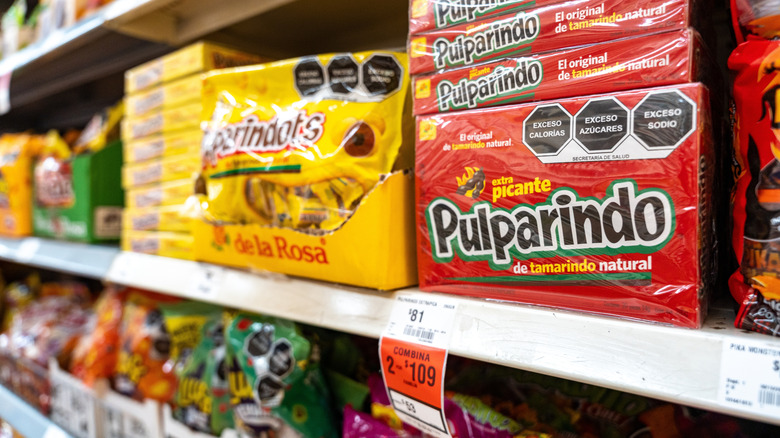
Once Mexico found its sweet tooth, there was no stopping the country's candy development. Those traditional spicy, tart, and semi-savory flavors were often incorporated in the sweets people enjoyed before they could ever pop in to Oxxo (Mexico's biggest corner store) for a bag of spicy mango gummies. They're found in treats like traditional crystalized fruit with lime; a goat milk caramel or simple dulce de leche called cajeta, which is sweet, rich, and earthy; and mango (fresh or dried) prepared with lime and chile. You'll still find all these snacks in Mexican markets and on street corners all over the country, but they've also made their way into packaged candy that otherwise resembles products you might find in the U.S. or Europe.
Some of my favorite Mexican candy includes Skwinkles bites filled with tamarind and dusted in chile and sugar; Skwinkles Watermelon Salsagheti, which comes with a sachet of tamarind sauce (These are so fun, and so messy); soft, chewy, tamarind Bola Pulparindín; and sweet-spicy candy powders like Miguelito Dulce en Polvo. The latter are designed to sprinkle over fruit, but they're also delicious poured straight onto your tongue like Pixy Stix. Of course, if you're used to Airheads and Skittles, Mexican candy is a whole new world. But next time you walk through the candy aisle and find dulces enchilados, why not start exploring it?