

Why Some Vegetables Are Healthier Cooked Than Raw
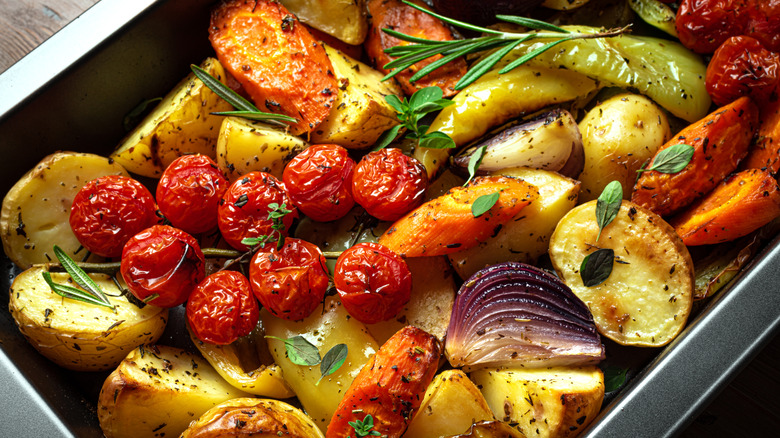
Raw food diet fads, like TikTok's raw meat trend, circulate the mainstream. These are popular under the belief that eating minimally-processed foods is healthiest. However, while this may be true for some foods, the idea that all foods are healthiest in raw form is a myth. The truth of the matter is: Many vegetables provide more nutrition when cooked. Now, in any form, consuming two to three cups of veggies daily is important, but if your goal is health consciousness take a closer look at why many popular vegetables should be cooked to some degree.
Like all living things, vegetables are built with cell walls. These cell walls store nutrients like vitamins, minerals, and antioxidants waiting to be released into the body through consumption and digestion. When vegetables are cooked, these cell walls break down, allowing the body to absorb the nutrients they have inside. As the veggies' cell walls break down, the vegetables become more easily digestible starting with the first step of digestion: chewing. Your body will spend less energy chewing cooked versus raw veggies, giving it a better chance of absorbing nutrients. Cooking also increases nutrient absorption by combatting the anti-nutrients found in raw veggies. Like their name suggests, anti-nutrients are compounds that obstruct the body's natural nutrient absorption process. Heat exposure minimizes their presence.
Some cooking methods are better at retaining nutrients than others. Steaming, roasting, and blanching vegetables are all recommended ways to cook vegetables for nutrient retention. However, as different vegetables contain different nutrients, there is no one-size-fits-all solution. Each veggie is unique, but some veggies like carrots and mushrooms prove to be "healthier" when cooked in some way.
A closer look at veggies worth cooking
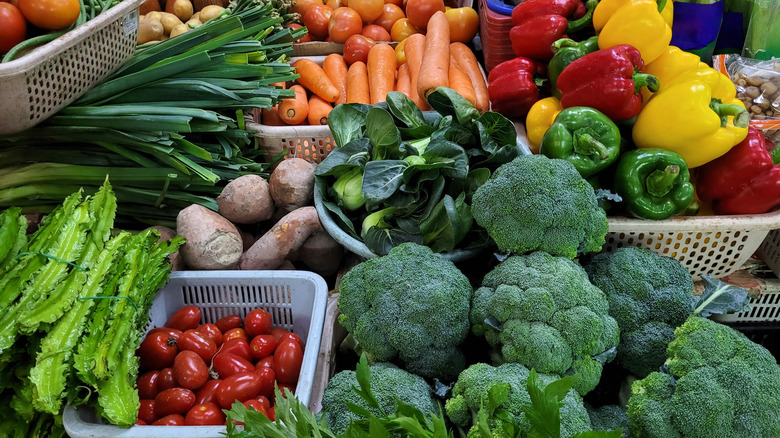
It's true that no matter how you cook vegetables, some nutrients will disappear. This is because certain nutrients are heat-sensitive and water-soluble. The trade off is that other nutrients become more bio-available through exposure to heat. Although vitamin C and B vanish when boiled, carotenoids actually increase when cooked. Broccoli has all three but is also high in glucosinolates which are converted into cancer-fighting compounds when digested alongside the enzyme myrosinase. Steaming broccoli preserves its myrosinase, thus activating the desired properties it naturally possesses. Similarly, cooking tomatoes decreases their vitamin C supply by approximately 29%, yet it increases the antioxidant lycopene (another disease- and cancer-fighting compound) by more than 50%. And, yes, in this context I am grouping tomatoes with vegetables despite the fact that a tomato is indeed a fruit.
Many vegetables are high in antioxidants including eggplant, mushrooms, green beans, and bell peppers. While the antioxidants in these veggies differ, the resulting effects from cooking are consistent. The antioxidants are released when cooked and they help break down free radicals (compounds that damage cells). Carrots contain high levels of beta-carotene, a compound the body converts to vitamin A and which improves the immune system and visionary health. While I'm sure many of us are guilty of looking at carrots as a ready-to-eat raw snack, the bio-availability of beta-carotene is higher when cooked (11% raw versus 75% cooked).
There are obviously pros and cons to eating vegetables in either their raw or cooked forms. What matters most is just eating them altogether — a little of one nutrient is better than none at all.