

Why Wine Bottles Have That Dent On The Bottom
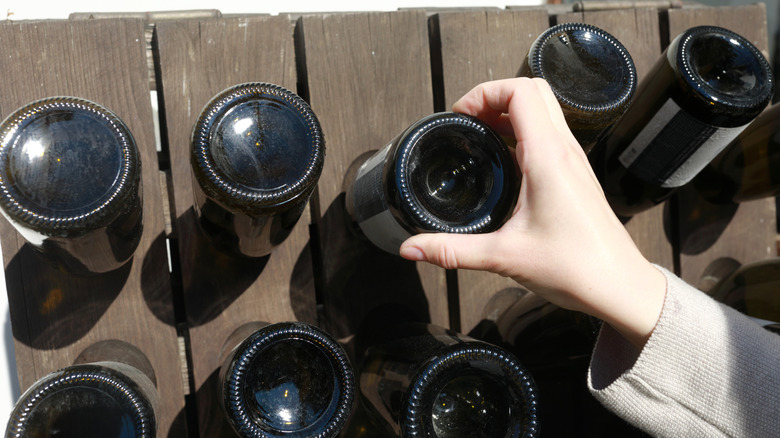
Waltzing around the wine section, you've probably noticed that not all wine bottles look the same. From Champagnes to Rieslings to port, the style of the bottles reveal a bit of history about how long humans have been stomping and fermenting grapes. And if you've ever wondered what that deep indentation on the bottom of some bottles was, wonder no more — it's called a punt. No football jokes here, but the punt is puzzling to many modern drinkers. Some believe it's a sign of quality; others think it helps wine age better or makes bottles easier to pour. The truth is pretty practical: the punt exists because of history, physics, and tradition — although its purpose has certainly evolved over time.
Historically, it all goes back to hand-blown glass bottles. Before modern manufacturing, wine bottles were shaped by blowing molten glass. Since this rudimentary process left uneven glass at the bottom of the bottle, there was a shift to pushing the base inward to hide any imperfections. As a bonus, winemakers felt the stable surface made the bottles stronger and less likely to break. Obviously, we're not blowing wine bottles anymore, but the punt endures for a few reasons, most notably, structural integrity. Sparkling wines need to withstand incredible internal pressure, as all those bubbles are pent up with nowhere to go. The punt helps evenly distribute that pressure, which is actually three times stronger than a car tire.
A punt doesn't guarantee a high-quality wine
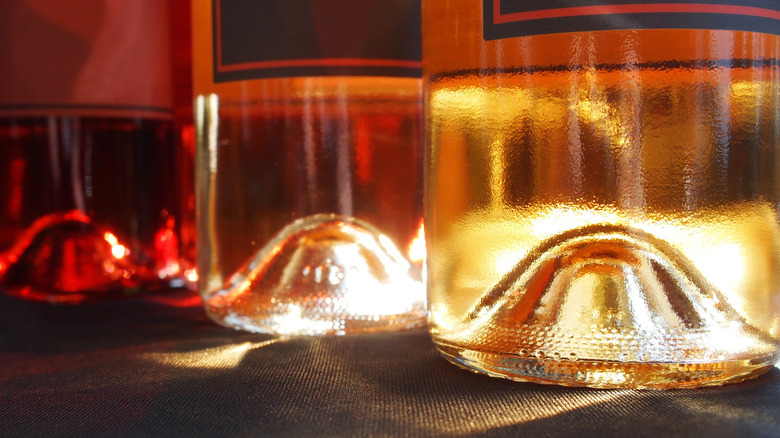
If you're trying to avoid the worst wines at the grocery store, it's important to know that the punt isn't an indicator of quality. There's an outdated belief that a deep punt automatically means the wine inside is better, but the wine world has undergone so many technological advancements that now many fantastic wines are bottled with flat bottoms. (Especially if they want to cut costs or use sustainable techniques.) Today, the depth of a punt is more often a stylistic or regional choice rather than a sign of superiority.
Of course, so much of wine packaging today is about marketing. It's no wonder we can't help but judge a bottle of wine by its label. The psychological tricks are real: consumers think heavier bottles with pronounced punts feel more substantial in the hand, which signals luxury to us dumb schmucks. Even though the glass itself has no effect on flavor, this has led some producers to exaggerate punt depth purely for the presentation. Still, with more producers focused on smaller carbon footprints and alternative packaging, your next pour might just come in a giant shareable wine can.