

Why Groceries Cost More When You Order Them With A Delivery App
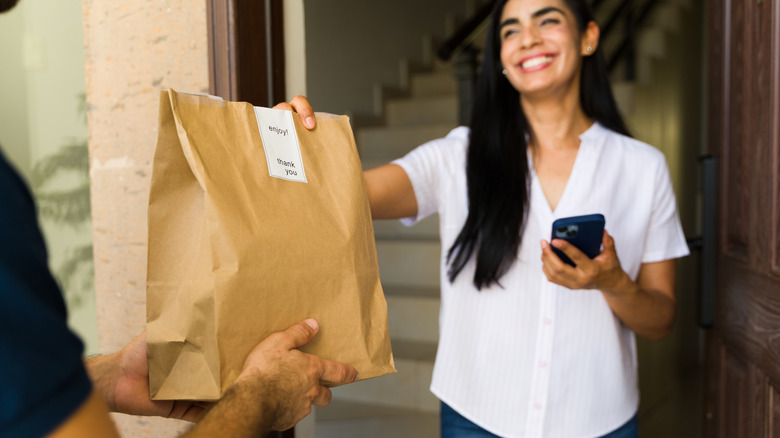
We all know by now that third-party delivery apps have crazy markups, whether you're ordering pad thai, paella, or pupusas. The same, alas, goes for groceries. If you've ever compared the price of an in-store gallon of milk to the same milk on a delivery app, you've probably noticed the difference. Those extra dollars aren't random. Grocery delivery can be a lifesaver, but that convenience comes with extra layers of cost. The reason is pretty simple: Both the retailers and the third-party apps raise prices specifically to offset all those pesky fees like labor cost, service, and delivery.
Delivery app fees are an even bigger ripoff than you might think, especially if you live in a large city. And the extra cost often comes from whether your grocery store has partnered with third-party apps or not. Instead of absorbing those costs, stores and apps often quietly pass them along to consumers by inflating their prices online. Then there's the whole slew of extra fees that don't exist when you shop in person. And from delivery fees to those mysterious service fees, they've all increased in the past few years. Those labor costs add up behind the scenes. When you order groceries through an app, you're not just paying for delivery, you're paying for someone to walk the aisles, pick out produce, handle substitutions, check out, and haul everything to you. On top of all that, a recent investigation found that Instacart has been using AI to manipulate grocery store prices.
Third-party apps often mark up prices
Let us not forget the tip, which, while important to the driver, is also part of your total cost. By the time your order arrives at your door, your little $80 grocery run could have easily turned into $120. And yet, there's one more factor we're all guilty of that can lead to higher grocery bills. That delightful ease of tapping items into a cart can lead anyone to impulse buy add-ons (ice cream! candy!), and those damn algorithm-prompted "suggested items" can be more expensive than what you originally chose. Nobody really needs groceries in 15 minutes, so why do we keep doing it? Blame our pandemic eating habits, hobbit lifestyles, and always feeling "time-poor."
Groceries delivered to your front door comes down to convenience, which is obviously the core appeal of delivery apps. But that convenience isn't free. Higher product prices, added fees, labor costs, and platform markups all contribute to why groceries cost more when they're delivered. And for too many delivery drivers, people suck and don't tip. If you're truly in a time crunch, skip the third-party services. Most major grocery stores offer their own delivery services (and free pick-up) for way, way cheaper. Having groceries delivered is a premium many shoppers are willing to pay, so it's worth understanding just exactly what you're paying for every time you place an order.