

The Secret To Freezing Quiche For The Best Flavor
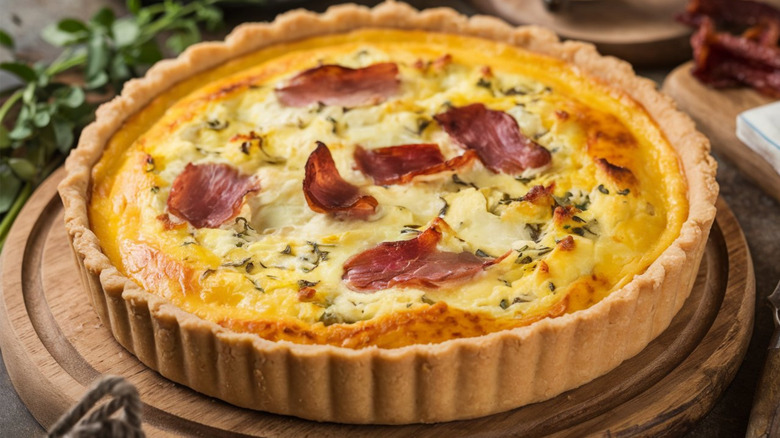
Quiche has quite a lot going for it — it's economical, easy-to-make, and even has famous fans including Alfred Hitchcock (he was quite fond of quiche Lorraine) and King Charles (who commissioned a special quiche for his coronation festivities). Yet another reason to appreciate quiche is that it's very meal prep-friendly if you prepare it properly. Edmund McCormick, who runs a natural food additive company called Cape Crystal Brands, explains: "Quiche freezes well ... The secret to quick-frozen, tasty, and smooth quiche is to chill it as quickly as possible."
By "chill," McCormick doesn't mean to plop the quiche in the freezer straight away. Instead, he advises refrigerating it for two or more hours before covering it tightly, first with plastic wrap and then foil, or enclosing it in an airtight container. The reason, he says, lies with science. In layman's terms, he tells us: "Eggs are a protein matrix that becomes harder when reheated, and too much water leads to a gritty consistency. ... [Wrapping] helps prevent ice crystals, which weaken a custard base and dull flavors, forming during freezing."
Baked or unbaked? Whole or sliced?
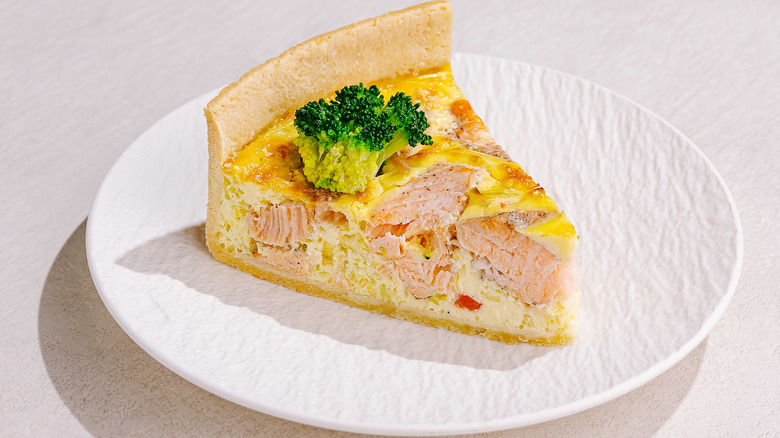
If you're preparing a quiche in advance of a party, you may need to freeze it whole. You should do so after baking it, though, since Edmund McCormick says, "Freezing a raw quiche works, but the egg custard mixture separates more easily when thawed, especially those high in cream." If you absolutely must freeze an unbaked quiche, he advises to place it in the freezer uncovered, then wrap it once it has solidified. Cook it from the frozen state instead of thawing it first.
If you're dealing with leftover quiche, it's best to cut it into individual portions before freezing. Not only is it more convenient to reheat single servings on an as-needed basis, but McCormick explains that there's a scientific reason why you should be doing this. "Freezing individual slices of the quiche will provide a better consistency," he said. "Freezing smaller portions will cause faster freezing, resulting in a smaller ice crystal formation. This will help in retaining the structure of the custard." If you want to store all of the frozen slices together, "flash-freeze" them like the professionals do. This can be accomplished by freezing them uncovered on a tray for several hours. Once each slice is frozen solid, you can then transfer all of them to a resealable bag or an airtight container.
When and how to reheat frozen quiche
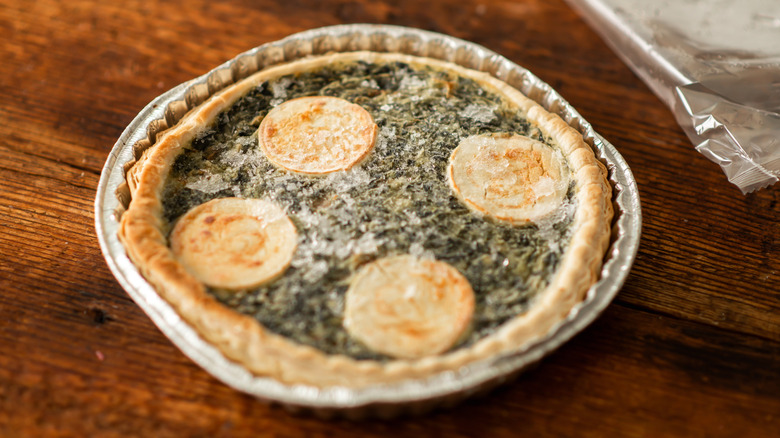
While the USDA assures us that frozen foods never really go bad, Ed McCormick says quiches are more delicate and will noticeably drop off in quality after a few months. "After that, oxidation processes and the growth of ice crystals result, even if the quiche is still within the edible range," he said. "Eggs and dairy are the most perishable when it comes to freezing."
When reheating the quiche, you may be tempted to microwave it for fast results. If dinner in a hurry is your priority, do what you need to do. If maintaining the quality of the quiche comes first, though, McCormick advises baking it in the oven at 325 to 350 degrees Fahrenheit. (An oven-adjacent appliance such as a toaster oven or air fryer will also work.) In his experience, using the microwave heats eggs unevenly, which can make them tough and gritty.
McCormick suggests covering the quiche with foil and removing the covering during the last few minutes so it can crisp up a bit. You can also bake it uncovered and use strips of foil to protect the crust. Baked quiches can be reheated from frozen. A whole one may take about 15 to 45 minutes to heat up, while a slice could be ready in as little as eight minutes.