

Swap Heavy Cream In Soup With This Creamy Cheese For An Instant Upgrade
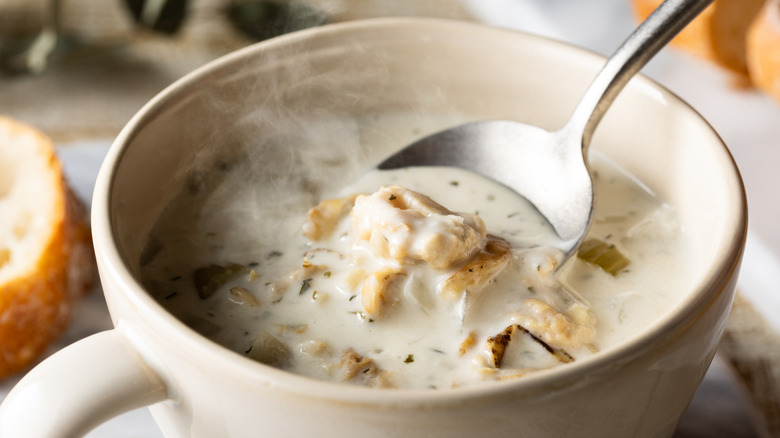
Some of the most satisfying soups are made with cream, but another way to achieve an equal amount of richness is by subbing in the flavorful cheese known as Boursin. (It's an actual brand, not a variety, hence the capitalization.) Boursin is a soft, spreadable cheese flavored with herbs and other seasonings and has been around since 1963. In its native France — a nation of fromagephiles, if ever there was one — it was the first cheese ever to be advertised on that country's national television. Ed McCormick, a food science formulator consultant with the food additive company Cape Crystal Brands, is a fan of Boursin. As he tells The Takeout, "Boursin is a smart and underappreciated stand-in for heavy cream in soups once you know what to expect from it."
He further explains its usefulness in soup by saying, "Substituting Boursin for the heavy cream adds body, dimension of flavor, and seasoning in one step. Heavy cream adds body but no flavor. Boursin adds fat and cheese protein emulsifiers to stabilize the soup, plus garlic, herbs, or pepper, which would otherwise have to be added in separate steps." He also notes that soups made with Boursin may also be thicker than ones made with cream due to the fact that cheese is better able to bind water molecules. As for which soups will benefit the most from the addition of boursin, McCormick says, "It is a depth enhancer that is particularly useful for vegetable or puréed soups that sometimes end up being insipid." With Boursin, these soups' flavor will instantly become more complex.
How best to add Boursin to soup?
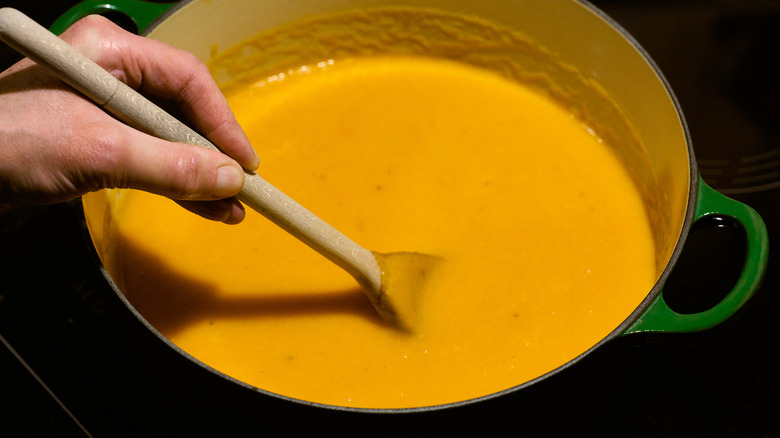
Before you begin making a Boursin-based soup, you first have to determine how much of the cheese to use. Ed McCormick advises that a standard 5.2-ounce container should be enough to replace anywhere from ¾ to 1 cup of heavy cream, but also cautions, "Begin with half the wheel, taste, and adjust." You may also need to make some other tweaks to the soup's seasonings, such as reducing or omitting any salt or garlic from the recipe.
Additionally, you shouldn't add the cheese to the pot too soon. According to McCormick, "Boursin should be introduced close to the end of the cooking procedure. This is because high heat causes young cheese to curdle. This pulls the cheese apart." (This is true of cream as well — no dairy product takes well to boiling.) He recommends reducing the heat before stirring or whisking in the cheese; you can do this when the soup is at a simmer or after you've turned off the burner. If you freeze your creamy, cheesy soup for later, the proper way to reheat it is on the stove over a low flame for slow, even heat. Should you find that your soup does separate, though, you can always try whisking in an ice cube. The resulting drop in temperature may be enough to uncurdle the liquid.
What Boursin flavors match which types of soup?
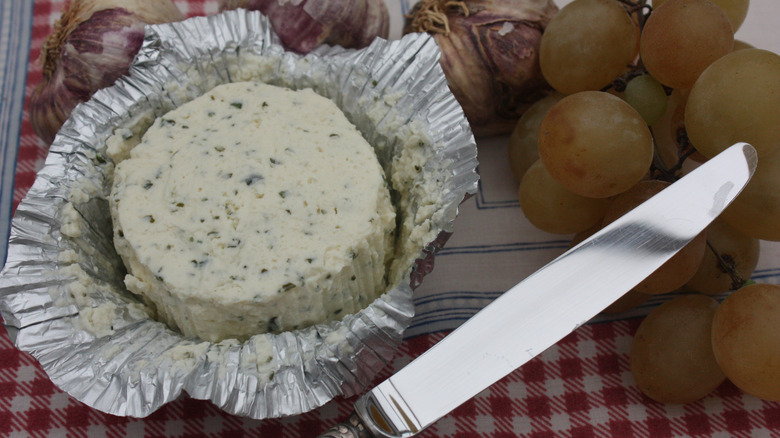
Boursin currently offers a variety of different cheese flavors, including garlic and fine herbs, shallot and chive, cracked black pepper, and hot honey and roasted garlic. Ed McCormick considers the first one to be the most versatile — it would add spectacular depth to our cream of mushroom soup, but he also recommends it with soups that feature cauliflower, chicken, potatoes, and leeks. (The two last-named ingredients are integral to vichyssoise, the classiest cold potato soup.) He prefers the shallot and chive for seafood and vegetable soups, and suggests using the cracked black pepper in soups made with beef, lentils, or root vegetables.
A black truffle and sea salt Boursin would lend a gourmet touch to just about anything, while the caramelized onion and herbs could work in a creamy onion soup, and the basil and chive in tomato soup. Even the lemon and dill variety could work in Polish pickle soup (aka zupa ogórkowa) or if you wanted to add a creamy element to the lemony Greek chicken soup known as avgolemono. You might want to save both the fig and balsamic and hot honey and roasted garlic ones for spreading on crackers, though. As McCormick cautions, "I would steer clear of sweeter and novelty flavor combinations in soups because the flavors may clash when heated. It is always best to opt for the ones that substitute the aroma of stocks that are typically built slowly."