

This Is Why Some Jalapeños Are Spicier Than Others
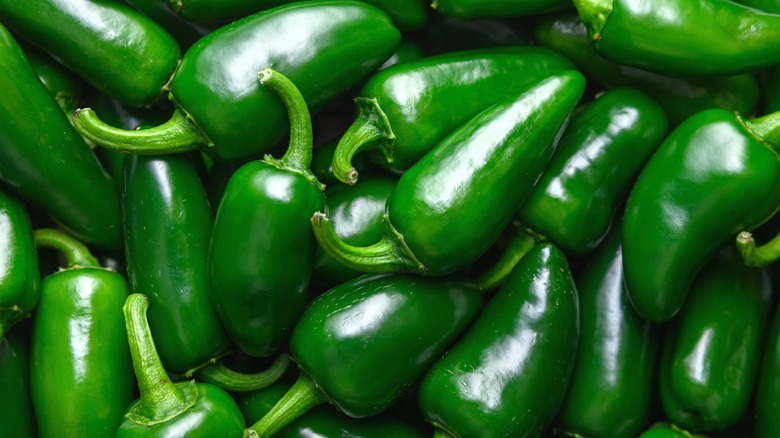
The funny thing about jalapeño peppers is that they're never quite at the heat you expect them to be. You might bite into a jalapeño popper expecting a blast of satisfying heat, only to end up with a vaguely grassy flavor on your tongue. Or you might chop some peppers up to add a little texture to your pico de gallo, then find out on your first mouthful of nacho that it packs a heavier punch than you thought it might. The Scoville rating for the jalapeño pepper can range from 2,500 to 8,000 units — a pretty wide range for a commonly used pepper. Why is there such a disparity? There are a few different reasons, involving growing conditions, ripeness, and plain old genetics.
You may have heard that jalapeño peppers are much less spicy than they used to be, thanks to agricultural scientists breeding plants to prioritize a milder flavor. While this is true to an extent, that doesn't mean you can't find some seriously spicy jalapeños out there — although the ones you might buy at a grocery store will generally be on the mild side, you can find heirloom jalapeños that pack some real heat, perfect for your chile-filled salsa.
Ripeness, stress, and other factors
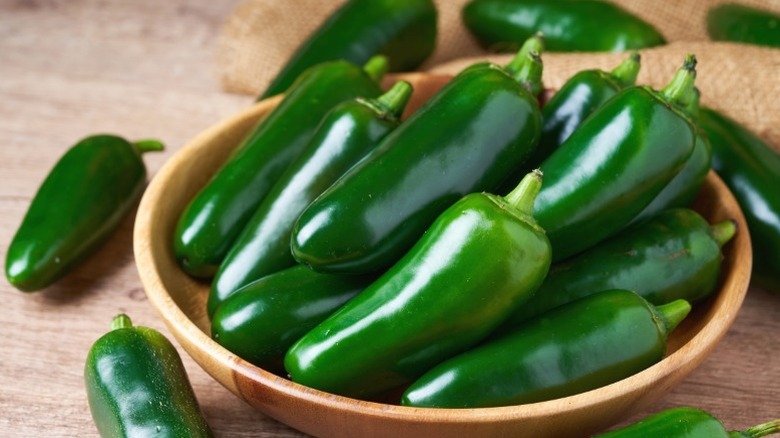
There are a few other ways some jalapeños end up hotter than the rest, too. Ripeness, for instance, is a factor: if you happen to find a red jalapeño pepper, that means it's more ripe than its green counterpart, and as such usually more spicy. (With that said, though, they're also usually a bit sweeter than green peppers, so it's just a matter of what kind of flavor you want to prioritize.) Not only that, but growing conditions will also affect a jalapeño's heat level — if the plant isn't watered enough, or if it's suffered through extreme temperatures, it might end up developing more capsaicin, therefore becoming more spicy.
If you want to be sure you're getting as spicy a pepper as possible, you should be on the lookout for stretch marks or other stressors on the outside of the fruit. It's not quite a perfect tell, but generally speaking, you're going to be getting more heat from a pepper with those sorts of striations — it's the difference between some seriously popping jalapeño poppers and some flat fried disappointments, like the kind we'll never order again from Arby's.