

The Difference Between A Colander And A Sieve And When To Use Them
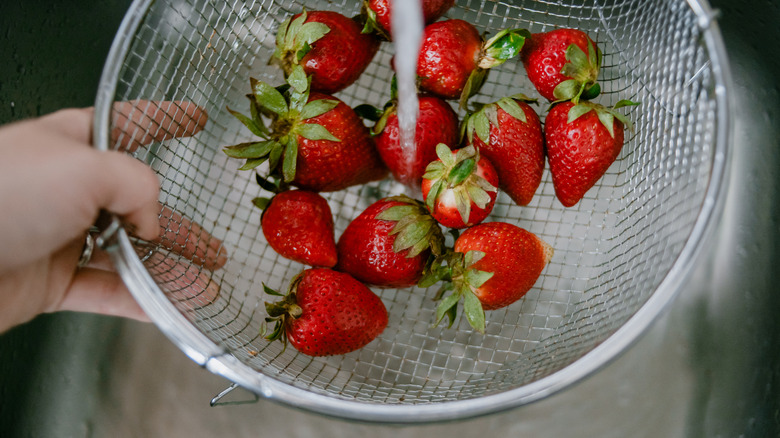
Food strainers come in a variety of shapes and sizes, but there can be some confusion about the differences between two specific types: colanders and sieves. Colanders have large holes and are perfect for rinsing produce, straining canned beans, and draining liquid quickly. They come in many sizes with or without a base. Having a base (or even feet) allows the colander to sit in the sink, so you don't have to balance a heavy, hot pot in one hand and a colander in the other just to strain pasta. They're usually made of lightweight stainless steel, but can also be made of plastic or silicone.
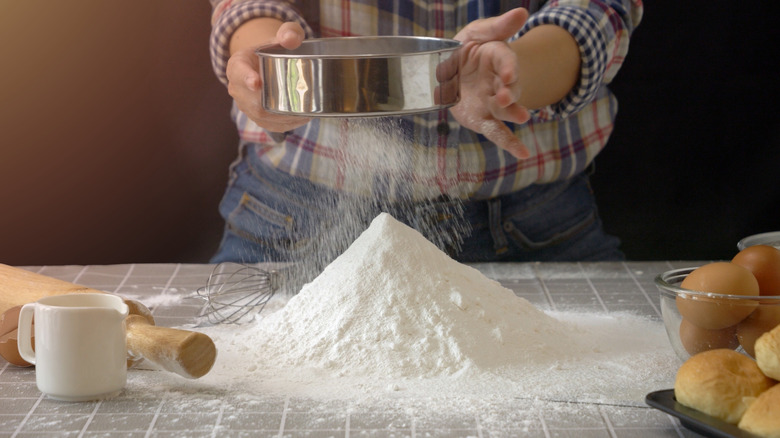
Sieves, on the other hand, are mesh strainers with more narrow holes, making them perfect for aerating baking ingredients, rinsing smaller food items like rice, and smoothing out liquids like purees, fruit curds, soups, and stocks. Baking ingredients like flour are compacted, so by sifting them using a sieve, you add air and eliminate lumps, yielding fluffier baked goods. Fine mesh sieves, such as a chinois (conical shape), are great for removing tiny particles from foods that should be smooth, like raspberry seeds from a puree. You can use a spoon, ladle, or spatula to gently press the liquid against the mesh to help strain it. Just watch your pressure because you don't want to break or misshape the netting (been there, done that).
Unique ways to use strainers
In addition to rinsing and draining, a heat-resistant colander can also serve as a steaming basket for vegetables. As Sur La Table instructs: "Simply place the colander over pot filled with water that's lower than the bottom of the colander. Cover with a lid and let the steam do its trick." A colander can also moonlight as a proofing basket. Save decision fatigue when perusing bannetons online because the secret to the best homemade bread is already in your kitchen. Line your colander with a lightly floured towel first, so there are no air holes, before plopping your dough inside and covering it with another towel or a shower cap.
Sieves are the magic gadget behind a clever hack that makes frozen butter instantly spreadable — grate the stick of butter with the back of a sieve to soften it quickly. Be warned: no matter what you use a sieve for, they can be aggravating to clean if you don't do it properly. The best way to clean a sieve is to take care of it as soon as you're done using it. The longer the food particles sit in the mesh, the more difficult they are to remove. If anything gets stuck, use a scrub brush to gently dislodge it, and ensure you rinse it on both sides. Some sieves are dishwasher safe, but be sure to still clean them by hand immediately after use. Now that you learned there are many ways to use colanders and sieves, let this knowledge breathe new life into the tools you already have.