

The Fire Safety Tool You Should Always Keep In Your Kitchen
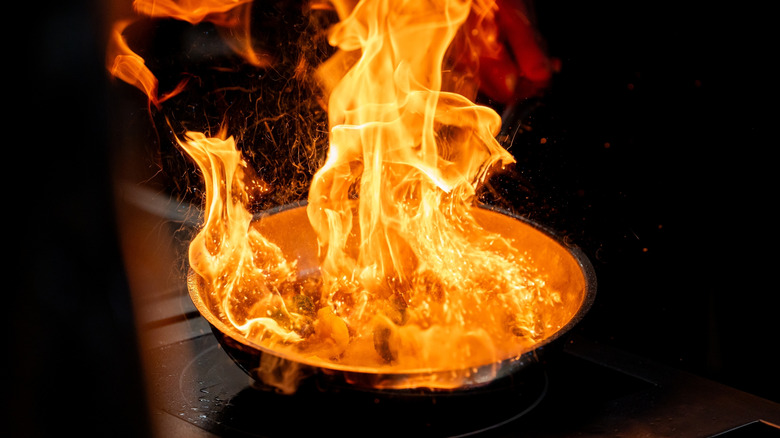
According to FEMA, cooking accounts for 48.7% of residential fires in the U.S. This isn't to say cooking is totally dangerous, but it means when you're cooking, you should be cautious and extremely attentive — most cooking fires start because the meal was left unattended. Surprisingly enough, electric ranges had the highest number of fires compared to gas ranges. But regardless of the type of range you're using, you should absolutely be prepared for the worst-case scenario. And the best way to be prepared is to have a fire extinguisher in your kitchen.
However, not just any fire extinguisher will do, as they are rated for various factors and various uses. For most home kitchens, all you need is the standard Class ABC fire extinguisher. These are designed for most types of common household fires. They usually use some kind of carbon dioxide or dry chemicals to smother the fire. The size of the extinguisher matters as well. It is recommended to keep a five-pound extinguisher in your kitchen, as this should be big enough for most household fires. You can also buy a Class K fire extinguisher that's rated for putting out fires involving animal fats and cooking oils, but these are primarily used in commercial kitchens and might be excessive for your home.
Precaution and knowledge are the best forms of prevention
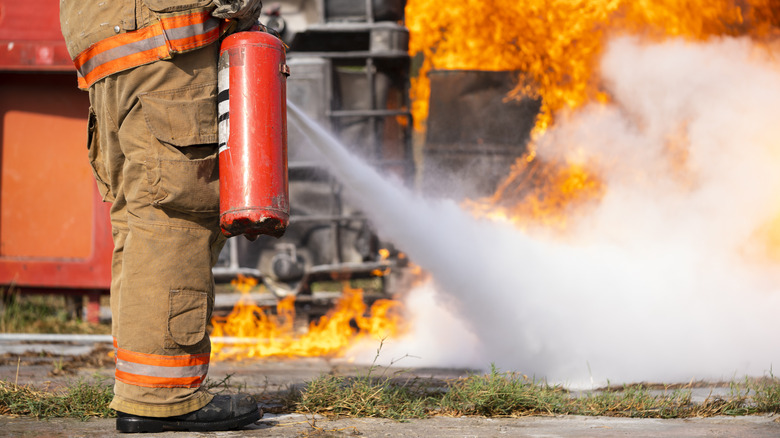
One of the best ways to prevent a fire is to learn how to avoid mistakes that can lead to a grease fire. Also, as if hot plates and stoves weren't enough to worry about, there are actually several ways to cause a fire with an air fryer! As many folks will say online, the problem isn't just having an extinguisher, it's also knowing how to use one. It seems straightforward, but it can actually be tricky, especially if you're panicking from the fact that a fire has started in your kitchen.
Luckily, FEMA has good advice on what to do. Using the mnemonic phrase PASS should help: Pull the pin with the nozzle aiming away from you, aim low, squeeze the lever slowly and evenly, then sweep the nozzle side to side. Per FEMA's extra set of advice, if you really are worried and want training, contact your local fire department and see if they host trainings.
Additionally, realize that water isn't always the right choice when dealing with kitchen fires. Throwing water on a grease fire, for example, can result in a dangerous explosion. Instead, you need to smother the flames with a lid or the proper fire extinguisher. And while some food is considered fancy when set on fire, flames in your kitchen always pose a danger. Be sure to have a fire extinguisher on hand to keep your home safe.