

There's A Right And Wrong Way To Slice Cheese – And You're Probably Doing It Wrong
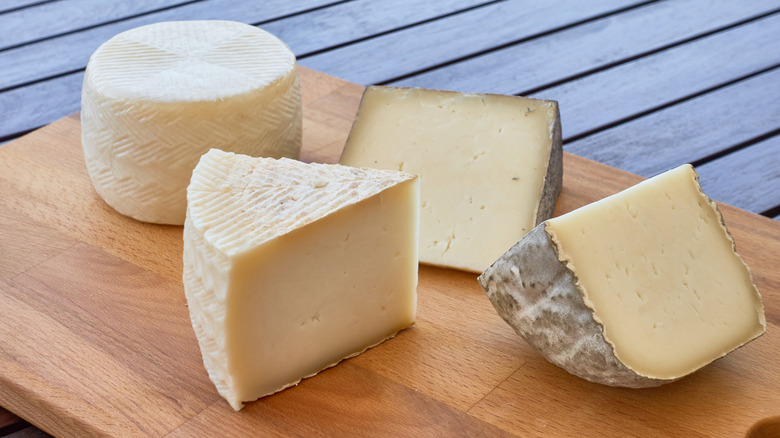
An elevated display of cheese requires some care and precision. Whether you're putting together a breathtaking charcuterie board or hosting a wine and cheese event, the production is a labor of love. Harder cheeses like sharp cheddar are often cut into strips, wedges, or cubes with pairings like dried fruits, crackers, and balsamic pickled grapes that'll upstage the rest of the cheese board. That's just the beginning of what you need to know to create a gourmet cheese platter, though. There's actually a right and a wrong way to slice cheeses, and you're missing out on a whole realm of flavor if you do it wrong.
For advice on how to correctly slice cheeses, we turned to Molly Browne, education director at Dairy Farmers of Wisconsin. She explained the key to the perfect slice of cheese is to get a bit of every layer of the cheese into each piece, from the center all the way to the outer edge.
"Cheese is not uniform throughout; it develops flavor and texture gradients as it ages. Microbial activity is highest near the rind, which often results in stronger aromas and greater complexity. Including the full cross-section ensures that you experience the cheese as the maker intended," Browne explained. "The differences between the middle and the edges aren't flaws; they're signatures of the cheese's aging process, craftsmanship, and style. The fullest, most representative experience comes from enjoying every layer."
Tips for selecting and slicing cheese
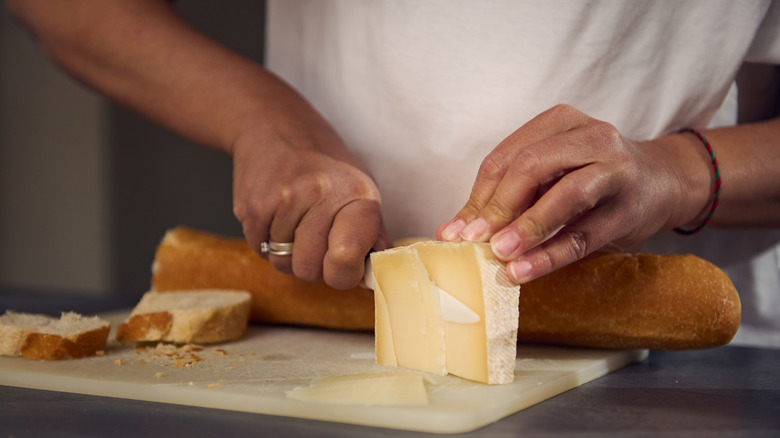
You don't have to visit a specialty market to get a great selection of gourmet cheeses, unless you're looking for a fun little shopping adventure. There are plenty of great varieties at your local grocer, like the 12 best cheeses you can buy at Aldi. Just make sure the cheese you get isn't pre-sliced — that's one of the common mistakes to avoid when prepping cheese. Wait until the last minute to slice everything as well so you can avoid a display of droopy cheese. Molly Browne explained, "When cheese is sliced too early, the exposed surfaces begin to oxidize and dry out, especially with firmer cheeses, while softer varieties can slump or lose their structure."
To perfect the presentation, you should also use the right kind of knife to slice each cheese variety and make sure they're at room temperature. Serving cheese cold is a cheese board mistake that leaves you with flavorless cheese. Using the wrong knife can degrade the texture and presentation of the cheese and create a sloppy-looking platter.
"Soft cheeses stick and tear on solid blades, aged cheeses crumble if the knife isn't sturdy enough, and washed-rind cheeses smear under too much pressure," Browne explained. "For the best presentation and flavor, wedges should be allowed to come to room temperature before slicing and then cut closer to serving time with knives suited to each style. This ensures clean cuts, proper texture, and the fullest expression of the cheese."