

5 H Mart Food Court Items You Need To Try And 3 You Should Avoid

We may receive a commission on purchases made from links.
Han ah reum. It loosely translates to "hug" in Korean. That was the name of a small grocery store which opened in Woodside, Queens in 1982, serving locals in the neighborhood and little else, at first. It must have been pretty good at what it did. Because 40-odd years later, Han Ah Reum has become H Mart: a giant, multinational supermarket chain with billions of dollars in annual revenue and nearly a hundred locations from ocean to ocean –- recently going over the Atlantic to the U.K. as well.
People of all backgrounds now flock to H Mart for both Asian and non-Asian products. And all those different customers get to enjoy the panoply of vendors in H Mart's food court. Along with variety here, you get convenience and accessibility. There's no intimidation for the uninitiated, and no need to study up on your Korean restaurant etiquette — although it can never hurt. With all the different choices (and grocery shopping to get done), which eats are worth your time and moolah? We visited the popular location on the border of Woodside and Long Island City, in Western Queens, to sample some of the offerings on tap. Here are the ones that are worth taking a customer number ticket for, and a few that you're better off passing on.
Need to try: Spicy Tuna Triangle Kimbap at Kim Ga Nae
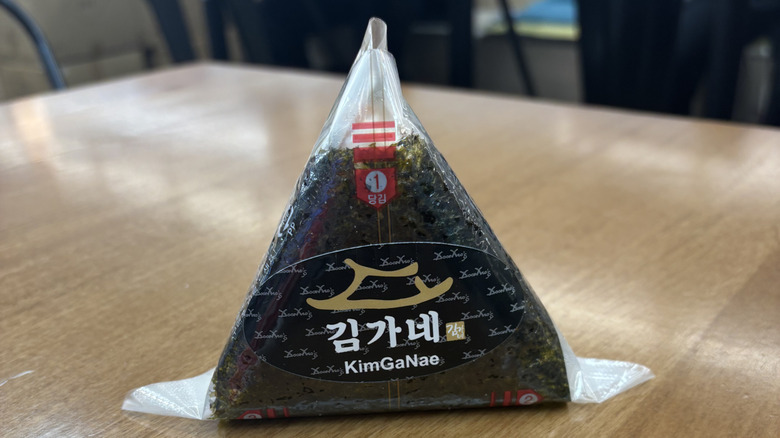
Kimbap is simple fare. Rice, a seaweed wrap, whatever additional filling you want, and blammo, you've got a kimbap. (This illustrated kimbap map can help you out too, if need be.) And, as with any case, the simpler the food, the more the ingredients stand out –- for better or worse. What would you rather have: a perfect tomato soup or an erratic bouillabaisse? And which of those is the better name for a jazz fusion band? Okay, forget the last question. Let's just focus on the food.
Kim Ga Nae is an eatery that hails from Flushing –- one of the Asian-dominated neighborhoods of The World's Borough. It brings a passion for Korean comfort food and provide tasty eats to all ages. The restaurant also loves its K-dramas, and desires to bring all the featured, iconic foods from those wildly popular Seoulite shows right into your grateful face. That commitment to delectability is reflected in its humble, pre-made, cellophane-wrapped triangle kimbap, infused with spicy tuna. It should be an afterthought, and would be forgiven for being so. Instead it's a highlight. At $6, it's a perfectly packed, saliently cloaked pillow of savory yumminess. You're getting sticky white rice sandwiching a paste-like dabbing of hit-you-in-the-mouth spicy tuna. Sure, when you try to open the plastic wrap it's nearly impossibly not to lose some of the microscopically thin seaweed skin meant to house it all. In fact, the gim becomes more a part of the packaging than the meal. But this is a small inconvenience for a big-time cozy snack.
Avoid: Bulgogi Triangle Rice at Dduk Dabang
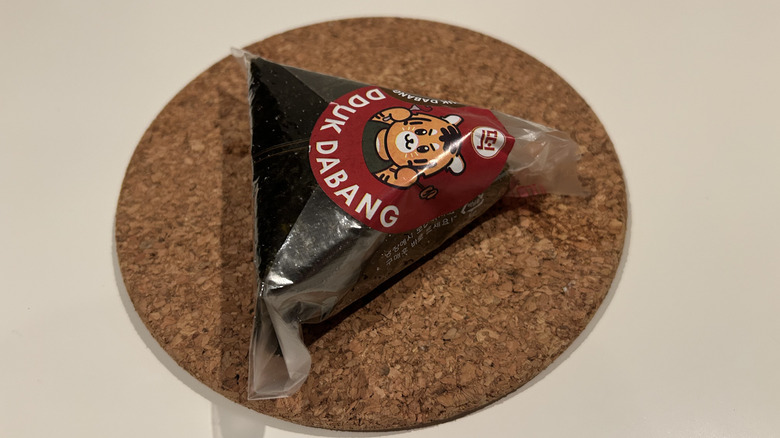
Not all kimbaps are created equal. Although bulgogi and rice is an evergreen, fundamental Korean combo, it can go as wrong as mediocre macaroni and cheese, or a soggy burger and fries. Two components that should be reliably good together, even at their worst, but somehow turn out to be not so great and even less satisfying.
Dduk Dabang, known for its widely enjoyed, crazy long topokki noodles, are a normally yummy go-to for a shopping trip intermission. It specializes in Korean street food, and customers especially love the Korean popcorn chicken, rice cakes, king squid topokki, and big bomb rice, among others. But if you find yourself wanting a quick yet substantial, compact but filling savory treat, you can do better than the bulgogi triangle rice.
Although it's an inexpensive nosh — at only $3.49 — it has neither the flavor blast nor the texture journey other menu items, like the ones mentioned above, offer. The dried chewiness of the bulgogi –- normally a boon when it's presented in other dishes — does not act as a good foil for the enclosed, equally arid rice, or vice versa. Combine that with the papery feel of the seaweed wrap, and you're basically getting a taste bud dynamism equivalent to that double Spiderman meme: same on top of same. Granted, the bulgogi itself can fill you up, as it's a fair helping of beef for the size. But in a H Mart food court that's busy with an array of aromas and tastes, you're better off treating yourself to something else.
Need to try: Matcha Einspänner at L'Ami Bakery & Cafe
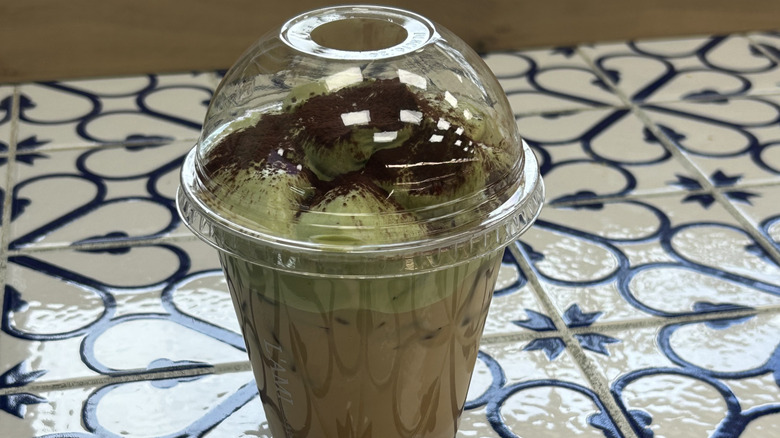
You can tell right away when a bakery just isn't trying. The pastries are obviously wholesaled. The coffee is a machinated afterthought. The workers are just begging for their shifts to end. And you don't get that warm, fuzzy feeling of possibility when approaching the display case. Well, the good news is L'Ami Bakery & Cafe is not one of these places.
This matcha coffee drink from L'Ami is dual-layered in both presentation and culture. The Frenchy sounding cafe, purveyed by Koreans, has a number of tasty offerings behind the glass. So it's no surprise one of its more popular beverages is a well-calibrated, cleanly delineated, caffeinated delight. L'Ami takes an Einspänner –- a classic Viennese coffee drink –- and tops it with matcha foam in an aesthetically pleasing, golden-ratio manner. The garnish is Valhrona chocolate powder, which provides just enough of a sweet kick without over-enrichening things, and the espresso used is freshly extracted.
You can get it with or without ice, though the counter staff recommended the iced version based on popularity. They were right. It's delicious, refreshing, and gives you a multi-tiered taste experience. Maybe the best part? It's only costs around $5. Considering that it's hard to find a basic cappuccino at a coffee shop these days for less than $7, this feels like a steal. But don't worry, it's not. No need to run from H Mart security, questioning life decisions. Just enjoy each sip.
Avoid: Passionfruit Green Tea at Gong Cha
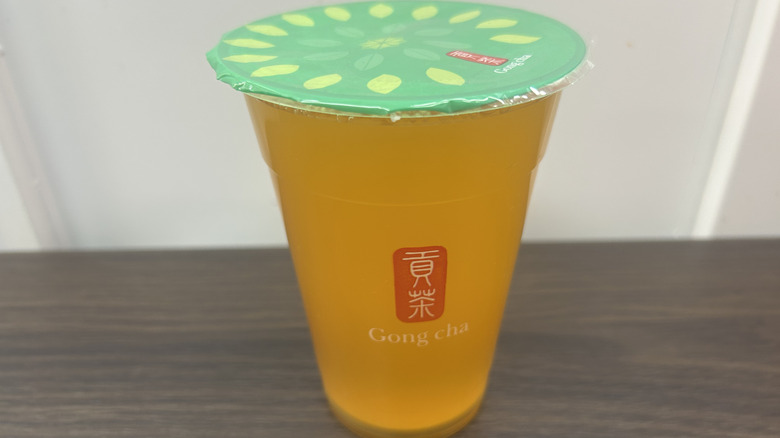
Ten dollars is nothing to sneeze at. Yes, in a way, that amount is less valuable than it has possibly ever been. It can barely get you a pair of dollar-slices at a NYC pizzeria nowadays (which lacks sense in both mathematical and nomenclatural ways). On the direct flipside of that, it actually makes ten dollars matter more, because everything's so expensive that every single penny matters. Thus, 1,000 pennies is a precious haul to give up. And yes, pennies don't exist anymore or whatever is happening there, but you get the point.
Pulling up to Gong Cha – the popular tea purveyor from Taiwan –- at your local H Mart, you will see something on the menu. It will be called a passionfruit green tea because that's exactly what it is. It's green tea and it's passion fruit. It sounds harmless. It sounds low stakes. It sounds like a pressure-free, humble enjoyment in this crazy, overwhelming world. Thing is, you're scanning your card and realizing you're dropping more money on it than you would a bus or train trip, or maybe three tacos, or perhaps a carousel ride. Even a fun memory in one of H Mart's own photo booths. But what you're getting in return is a cup of green tea with some passion fruit juice. End scene. Customers have apparently raved about it. To each their own, but it's possible they just love either passion fruit or green tea so much that they'll forgive Gong Cha's underwhelming offering. This writer sorta can't. Keeping the 10 bucks sounds much better.
Need to try: Tofu Boy at Rice Boy
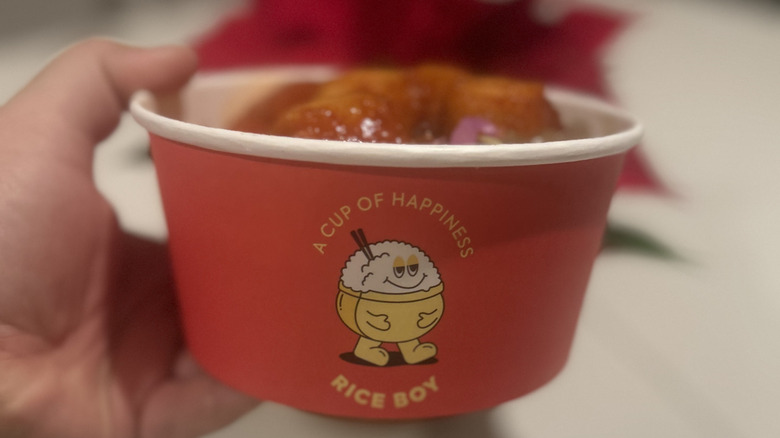
Tofu is an incredible thing. Yes, it makes technical sense in terms of being a coagulate of soybean moisture, shaped to a desired texture. But it's a sum that's more than its, um, part. And, for especially those in the West, it's an ingredient we're still learning how to use. A pure vessel of flavor, tofu acts as a humble conduit for any palette stimulant under the sun. But like Fannie Brice in "Funny Girl," tofu can also be the star of its own show, despite doubts from its mother's card-playing friends.
Rice Boy takes the bouncy vehicle that is tofu, lathers it in a sweet and savory orange paste, and balances it out with crunchy slaw, sticky rice, and glass noodles. It's a small tub of happy, with sides of mirth, delight, and glee. Rice Boy is all about giving you a full, smiling belly. Period. The mascot is literally a bowl of rice falling into a food coma. If that intellectual property doesn't become your spirit animal, Korean food is just not for you. And to boot, a Tofu Boy will only run you $10. Compare that to the equally-priced meh-fest that is the passion fruit green tea from Gong Cha and it's a blowout. Mercy rule goes into effect. That's like paying the same amount of money for a French bulldog that you would a goldfish. In short, the Tofu Boy is a lot of (muk)bang for your buck.
Need to try: Cookies & Cream Donut at Goldmiss
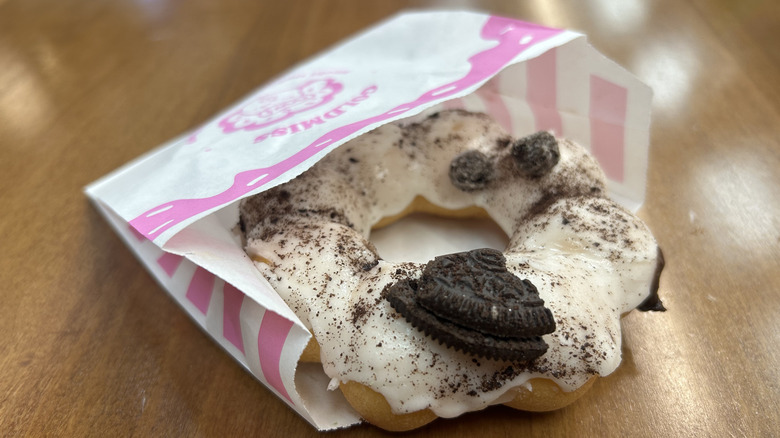
There are so many admirable aspects of Korean culture, at least from a Western outsider. Their contributions to, not only world cuisine, but music, film, and contemporary art, is gigantic. Much of it seems to come down to an embrace of both sophistication and cultural populism. They can operate on the cutting edge yet are unafraid of making something that's spreads shameless joy without pretension. A perfect microcosm of that: the cookies-and-cream mochi donut from Goldmiss.
Goldmiss specializes in two things above all: Korean-style hot dogs and mochi donuts. What are mochi donuts? Glad your mind asked. They are donuts made with a special kind of rice flour called mochiko that creates a fun, buoyant texture. After biting into a mochi donut, you might not settle for the maddeningly inconsistent Dunkin Donuts or even the beloved Krispy Kreme again (and no, I'm not washing my mouth out with soap for saying that).
That goes doubly so for biting into the cookies-and-cream Goldmiss offering. It looks like an edible, gaudy bracelet, with its beaded ring shape and creamy glaze. The chocolate cookie powder dashed over the top is perfectly calibrated. It's not overdone, nor does it need to be. And for $3 per donut, it's very hard to pass by the Goldmiss stand without ignoring the siren call of the ordering kiosk. Give in, Odysseus. Give in.
Avoid: Jjajangmyeon at Kyodong Noodles
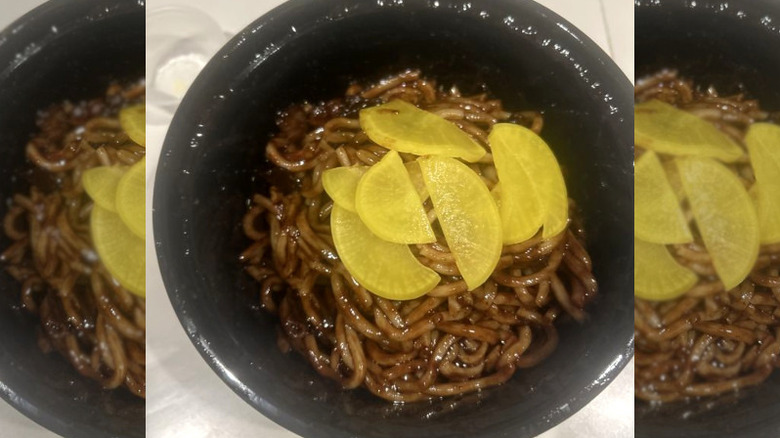
Texture preference can be like artistic taste. You could just love ABBA. You could just love Rachmaninoff. You could just love Kazakhstani dombra pop. And, regarding texture, you could just love the same squishy mouth-feel multiplied by four. This is where the jjajangmyeon from Kyodong Noodles falls short. Although a popular dish in general, with the black bean sauce over thick noodles often providing a sweet gooeyness that is redolent of dessert, Kyodong's version is just too monotonous from start to finish.
Thing is, it goes the traditional route as far as making the dish: chunjang black bean paste for the savory and bitter notes, stir-fried with mixed vegetables, sugar, and diced pork. Tried and true. But for some reason Kyondong's food court version just doesn't have enough flavor balance, as the pork seems to get lost in the sweetness. And the veggies just add to the overwhelming starchiness of the meal.
The best thing about this jjajangmyeon is the pickled danmuji that it comes with. Yes, it's simply a small plastic cupful of brined yellow radish, but it outshines the Rothko-black noodle mush it supports. No surprise it's one of the most popular Korean side dishes. It's a scene-stealer, in the tradition of Christoph Walz or Allison Janney. Unfortunately the headliner doesn't cut it. For $13, it'll fill you up, sure. It's not a skimpy dish. But chances are it'll leave you yearning for different flavorings.
Need to try: Galbi Tang at Namudol
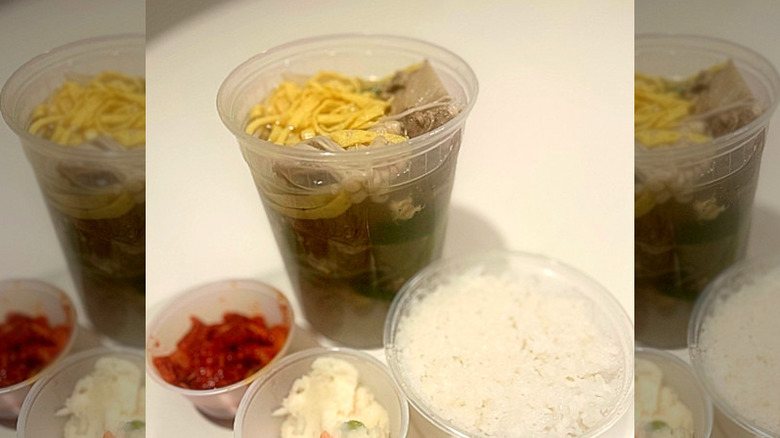
Whether you're coming into H Mart from an outside chill, have a bit of a cold nagging you, or just crave a soup that makes you want to close your eyes and bathe your face in its steam, Namudol should be your first stop at the food court. Another Flushing original, Namudol is a Korean eatery with a slightly higher price range and degree of refinement than most of the other food court options, respectively. Sporting an open kitchen concept, Namudol likes its customers to witness the cooking in action, welcoming them in. Well, there's nothing more welcoming than its wonderful galbi tang. The short-rib soup is straightforward Korean comfort food of the highest order, and Namudol does it oh so well.
If someone took a Jewish grandmother and a Korean noodle master and shot them out of cannons directly at each other, the result would probably look something like Namudol's galbi tang. It has the nourishment of a chicken soup with the soul of ramyeon — and we all know the kind of delicious soulfulness ramyeon possesses.
At nearly $20, it's not the biggest bargain in the world. But you won't feel cheated. It comes with a delicious mashed potato salad, white rice, and a killer, smokey, spicy kimchi that you almost regret loving so much (tip: keep something milk-based nearby to soothe the glorious tongue pain). Mix it in with the soup for a nice bite or enjoy it solo on the side. It only adds to the all-around pleasure of this brothy goodness.
Methodology

Spending an afternoon at the Long Island City H Mart (one of eight in Queens and Long Island, and 13 in the NYC area) –- while getting a little grocery shopping done as well –- a number of food court items were sampled. Researching the many commenters, reviewers, and posters touting their favorite drinks, snacks, and meals from this location, I chose a handful of recommended offerings, spread across as many different vendors as possible. The review criteria was based on not only the obvious, such as taste, texture, and portion size, but presentation, joy factor, and cost. And although the entire gastronomic excursion did a number on this my stomach, I regret nothing and simply started the next day by doing some cardio.