

The Specific Bread And Butter Etiquette To Know At Fine-Dining Restaurants

If you're lucky enough to be eating at a fancy schmancy restaurant, perhaps one with multiple Michelin stars, there's some social protocol you ought to follow. In a fine-dining setting, even something as simple as eating bread comes with its own etiquette. While the debate rages on about whether we even deserve "free bread" at restaurants anymore, bread service is likely to remain at upscale restaurants. That said, knowing the right way to handle bread and butter can prevent an awkward moment. When it comes to minding your manners, there's no better person to ask than Nick Leighton, Emmy-winning journalist and co-host of the podcast "Were You Raised By Wolves?" We put him to the test, asking just how exactly should we be eating bread?
"It's not an apple," Leighton advises. "Don't just take a big bite out of your roll. Break off a small piece and butter as you go." But be careful how you butter that bread. Always use the communal butter knife to put a small amount of butter onto your own plate first. Leighton elaborates: "Don't butter your bread in mid-air. Keep the bread on the dish as you spread." Leighton admits that every bread service can be a little different. He jokes, "Etiquette isn't a total monster. If you have a hot biscuit right out of the oven, you're indeed allowed to butter the whole thing." However, when the bread arrives, resist the urge to eat it until everyone at the table has also been served.
Never bite directly into a whole bread slice or roll
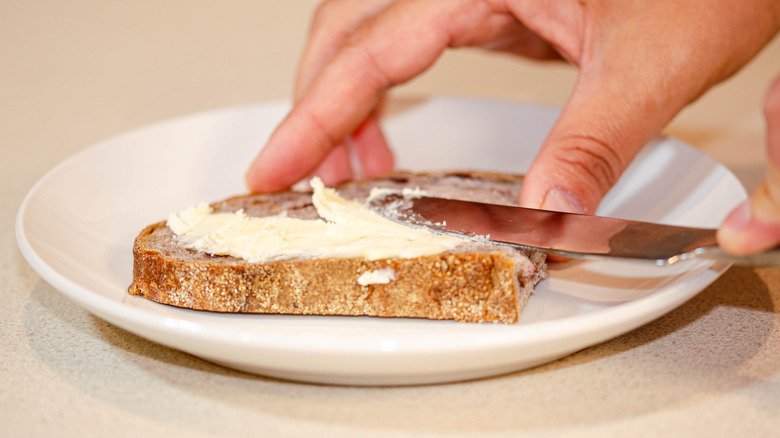
Eating your bread in small, bite-sized pieces with your fingers keeps the process neat, elegant, and reflects traditional European dining customs. No matter how hungry you are, "Eating small pieces keeps things tidy and doesn't make you look ravenous," according to Nick Leighton. At extra-formal restaurants, bread is considered an accompaniment rather than an appetizer, not meant to be enjoyed until the first course or between courses as needed. If the bread is presented in a shared basket, proper etiquette is to take the piece closest to you and pass it to the right. Don't dig through the basket with grubby little fingers looking for the perfect slice. Also, use the serving utensils provided to grab one. If none are present, you may use your fingers, but take only your portion and pass the basket to keep the service flowing.
Don't be that guy who takes the last piece of bread without asking first, either. If the butter or other spreads arrive late, wait for them rather than beginning without those little accompaniments. Some fine-dining restaurants will serve bread with compound butters, flavored spreads, or olive oil with balsamic. The same rules apply: Spoon a small amount onto your own plate, then dip or spread in small, neat portions. But mostly, try to have fun — even high-end fine dining can be approachable and entertaining. Still, whether your rules of dining etiquette come from movies or a home tutor, this is one manner you'll want to keep in mind.