

How To Know When It's Okay To Eat With Your Hands At A Fine Dining Restaurant
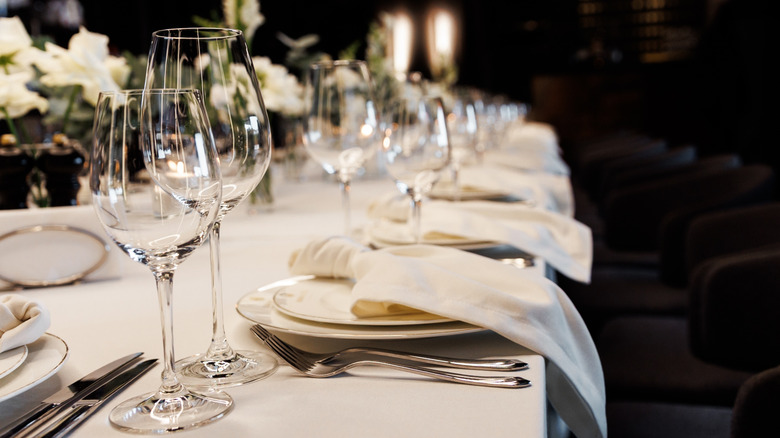
Etiquette is a secret passion of mine and this question is one I've seen discussed often: When it comes to fine dining, when is it okay — if ever — to eat with your fingers? We spoke with Giulia Macchia, founder and creative director of The Finer Things, and Nikki Sawhney, etiquette consultant and director of the New England School of Protocol, about when you can eat with your hands and how to properly and politely do so.
"Whether eating with your hands is acceptable depends on the occasion, the venue, the host's cultural background, or the country you are visiting," Sawhney said. Sometimes, the answer is clear — it is expected that you eat dry bite-sized items like canapés or petits fours with your hands. Same with the bread, but it has its own etiquette: break off a piece of the bread, butter a bite, then eat it. Do not slather it in butter and chomp on it like toast.
The type of cuisine is key, and within that, there are caveats. For sushi, nigiri, and sashimi, chopsticks are a must — do not ever use Western utensils. "If you absolutely cannot manage chopsticks, then hands become the better fallback, but be careful with the soy sauce and do not spray it everywhere," Macchia instructed. (Here's how to hold chopsticks properly.) In Western cuisine, "Grilled asparagus or French fries, for example, may be acceptable, whereas asparagus in a sauce would require a knife and fork," said Sawhney.
How a restaurant sets the tone for proper etiquette
How the table is set is your guide to understanding what's expected. Look at your utensils and follow one of the seven rules of dining etiquette we learned from movies: start from the outside and work your way in. For smaller bites, if the restaurant prefers you use a cocktail fork, it will provide one. "So if we see that there is no tool, there is possibly no reason to use one," Giulia Macchia said.
Alternatively, "if the kitchen serves something in a formal setting and the tool is impossible to use because of how the piece is prepared, then the kitchen has made a mistake and you can send the dish back," Macchia said. Restaurant guests should not wrestle with food.
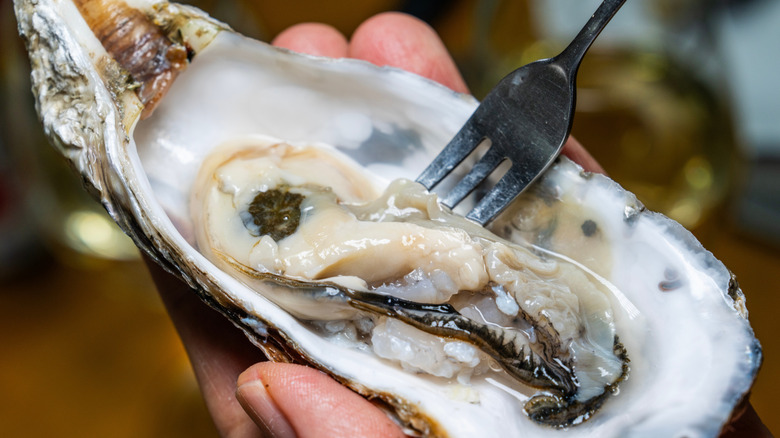
For crabs and lobsters, the restaurant should provide picks and crackers. Oysters on the half shell are lifted with and eaten by hand. If you need to loosen the oyster from its shell, use a fork. "For shrimp with tails, I would say it is better to remove the tail with a fork and knife, especially if it is saucy," Macchia advised. The only exception is if it's clearly being served as a finger food. "It is crucial, especially for service providers, to understand that the kitchen and the service must put guests in the best position to eat their food without embarrassment," Macchia said.
Proper techniques to follow when eating with your hands
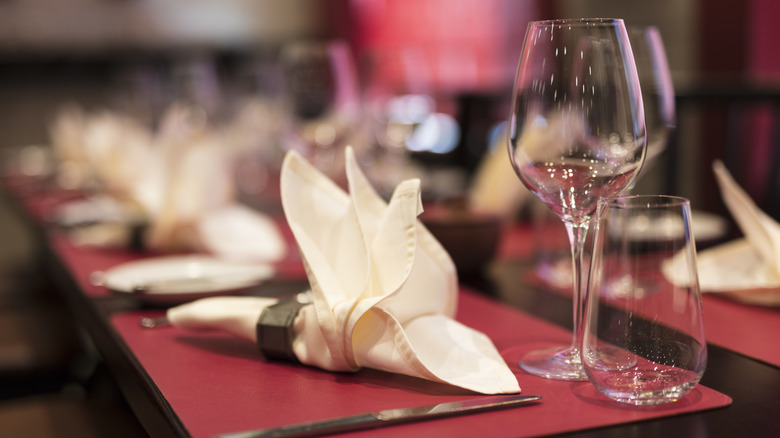
"As an Indian American, eating with my hands has been an important part of my culture and upbringing," Nikki Sawhney shared. But there is a technique that should be followed. To neatly eat with your hands when appropriate, gather the food with the tips of your fingers and use your thumb to guide the bite into your mouth, she says. Do not use the entire palm, Giulia Macchia added. "We take one bite at a time, because even a small bite can look huge if someone is trying to chew an entire piece too enthusiastically," she said. And, above all, "Licking fingers is not done. Never. Ever."
If you eat with your fingers, your napkin will probably get more use than it would if you were using your fork and knife. Regarding napkin etiquette and what to do with yours at the next fancy dinner, "We use the napkin to clean our mouth and hands with light dabs, not dramatic wiping because we have not just finished changing oil in our car," said Macchia.
At its core, etiquette is about consideration. "But it is always fluid," Macchia explained, "and its aim is to put everyone in a comfortable situation." Sometimes eating with your hands is the better option in situations that would call for the opposite.