

The Old-School Snack That Had Kids In The '70s Eating Like Astronauts
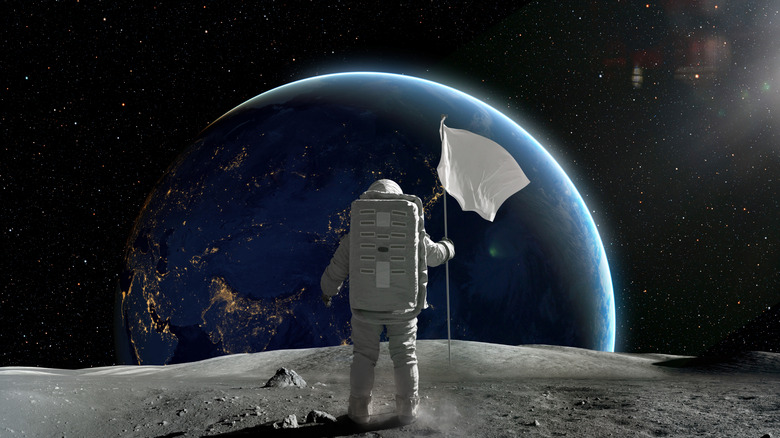
3-2-1 blast off! The '60s brought space exploration to the forefront, and with this came a desire to introduce space-themed products into the stratosphere. Pillsbury — whom we all know and love for its delicious cinnamon rolls, crescents, and cookies – teamed up with NASA to produce a snack for astronauts on expedition and wannabe explorers alike: the bluntly-named Space Food Sticks. Whether you were 8 or 80 years old, you presumably thought outer space was cool during this era, thus making Space Food Sticks an iconic snack in your state.
How did this galactic goodie come to be, you ask? NASA pitched Pillsbury an idea to create a meal astronauts could eat with their helmets on. This idea came with many conditions: the food must fit through the tiny airtight hole of an astronaut's helmet, must be free of contaminants (for fear of getting the astronauts sick), and must not produce crumbs (that could disrupt the spaceship's technology and performance). Space Food Sticks met all criteria, began accompanying astronauts on expeditions in the late '60s, and became commercially available in 1969. The nutrient-dense snack came in numerous flavors such as chocolate, caramel, and peanut butter, and can be thought of today as one of the world's first energy bars (in cylindrical form, of course).
Space Food Sticks' decline and lasting legacy
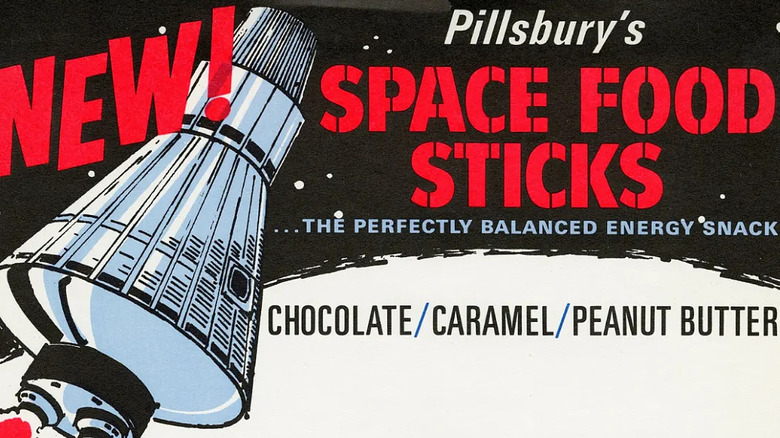
Pillsbury marketed Space Food Sticks with an outer space angle, advertising its value for astronauts alongside galactic images on the boxes. However, when Pillsbury realized consumers found eating space food unattractive, it dropped the word "space" from the product in 1971 and plainly referred to it as Food Sticks. Focusing on its nutrition, Food Sticks was rebranded as a convenient, compact snack when on the go that promised energy and nourishment. While the astronaut version was about 8 inches long, the earthlings received sticks about half that size.
Although the snack was discontinued by the mid-1980s, many '70s kids still reminisce about it today, dotingly remembering their time as pseudo-space explorers. While the snack ultimately did not do well commercially, the production of Space Food Sticks influenced vital food safety measures still used today. Recognizing that existing protocols in the 1960s were not enough to keep astronauts safe from toxins and bacteria in food, Howard Bauman, then-chief food technologist at Pillsbury, developed what is now known as the Hazard Analysis and Critical Control Point system (HACCP). Snacks like Space Food Sticks were then produced in clean-room environments to ensure their safety.