

14 Christmas Cookies From Around The World That Will Sweeten Your Holidays
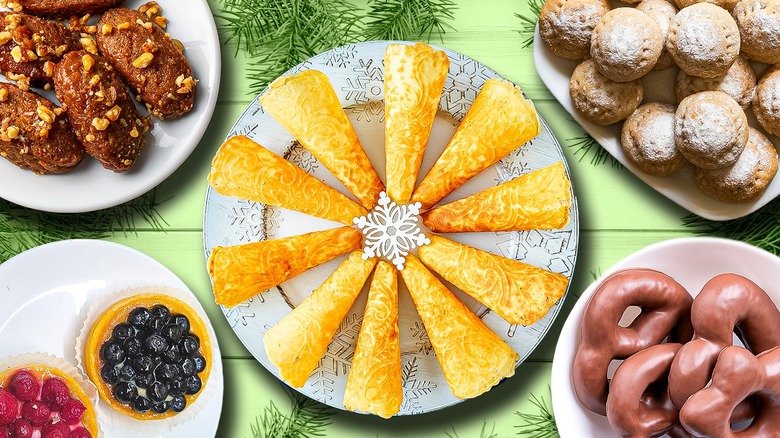
Cookies have long been synonymous with Christmas. As the weather chills, the baking supplies come out and the welcoming scents of sugar and spice waft through the house. This tradition traces back to the Middle Ages, when solstice festival feasting began to overlap with Christian holiday traditions. Add to that a spice influx by way of the East, and the classic Christmas treat was born. Over time, traditional cookies morphed from hard biscuits designed to weather long winter months to the modern-day variations we know and love.
In the United States, the tradition calls to mind tins filled to the brim with cut-out sugar cookies and spiced gingerbread men. But this is just the tip of the iceberg. Take a trip around the world and you'll find that "Christmas cookie" means something a little different everywhere you go. Some of these cookies are soft and chewy, while others are thin and crispy. Some lean heavily on spices, while others are sugary sweet. But all of them will help you spread a little more cheer this holiday season.
1. Cuccidati (Sicily)
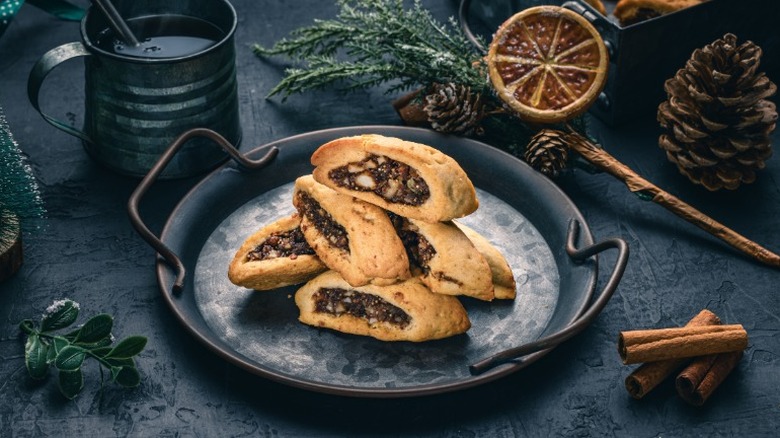
These little cookies are everything Fig Newtons wish they were. Cuccidati are Sicilian fig-filled cookies, traditionally baked around Christmas time. Shaping varies, but the most common variation is a cylindrical cookie with a flat bottom. The real beauty of cuccidati lies in its flavors, which reflect the rich history of the Italian island. The filling is made using a combination of figs, raisins or dates, and nuts, ingredients common to many Middle Eastern desserts and likely influenced by Sicily's period of Arab rule.
Other common additions, like honey, citrus, and cinnamon, lend these bite-sized treats an even greater depth of flavor. The filling is encased in a soft dough made with shortening or butter. After baking, they're often topped with icing and colorful sprinkles, though they can be left plain as well. While cuccidati are traditionally made at Christmas, they also reappear to adorn St. Joseph's day altars. These cookies take a little extra time and love to make, but they're well worth the effort.
2. Lebkuchen (Germany)
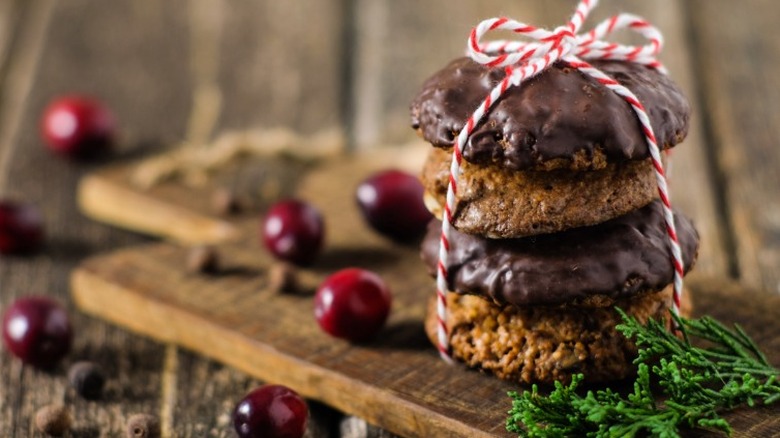
One of the oldest Christmas cookies is gingerbread, though not exactly the people-shaped cookies you might be thinking of. Lebkuchen are similar to the gingerbread popular in the U.S., but have a few key differences. Firstly, the term "lebkuchen" encompasses many different types of German gingerbread, which differ in their ratio of nuts to flour. The most popular variation is Nürnberger Lebkuchen (or Elisenlebkuchen). They were first created by medieval German monks and baked on communion wafers to prevent the dough from sticking. Nowadays, the dough is baked on specialty wafers called Oblaten.
These chewy, circular lebkuchen contain almonds and hazelnuts with little to no flour. In fact, Nürnberger Lebkuchen is required to be made up of at least 25% nuts, with the best ones far exceeding this number. The batter also traditionally includes marzipan and candied orange peel, flavors that distinguish it from other types of gingerbread. After baking, the cookies are dipped in a thin layer of icing or chocolate, adding just the right amount of sweetness.
3. Rose Cookies (India)
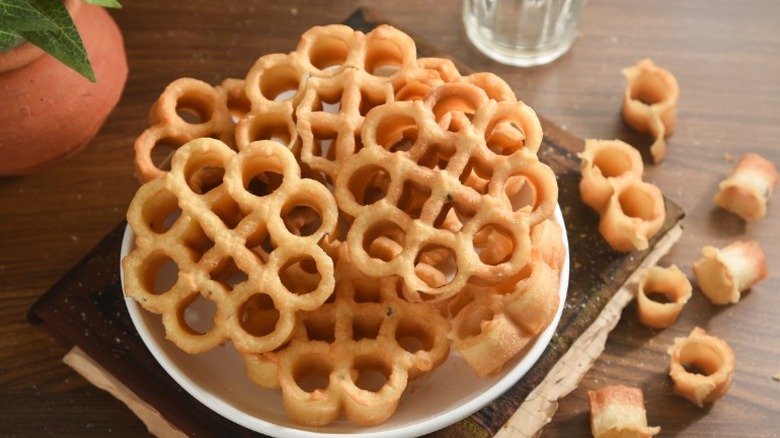
Rose cookies are not cookies in the traditional sense — rather than being baked, these desserts are fried. Variations exist in cultures around the world, including in the South of India, where much of the country's Christian population is located. In Goa, rose cookies go by the name "rose de coque," and in Kerala, they're known as "achappam." But despite the name differences, Christians in these states all enjoy the intricately shaped fritters to ring in the holiday season.
The batter is made with rice flour and coconut milk, which differentiates it from the popular Scandinavian rosette cookies that rely on all-purpose flour and whole milk. After the batter is prepared, the iconic rose shape is achieved by using a special mold to fry each cookie. The mold is dipped into the batter and then into hot oil, before being taken out to allow the rose cookies to crisp to perfection.
4. Melomakarona (Greece)
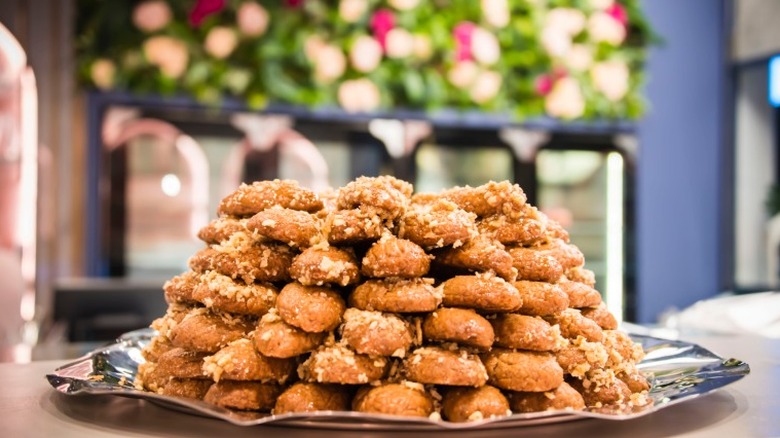
If you're a fan of Greek loukoumades, also known as the world's first doughnuts, then you'll love these festive Greek cookies. Like loukoumades, melomakarona feature honey as a starring flavor. You'd be hard-pressed to find a Greek home or store around Christmas that doesn't have a batch baking in the oven. While there are variations, traditional melomakarona dough is made with a mixture of semolina and all-purpose flour, along with honey, cinnamon, and clove. It's also vital to use olive oil along with vegetable oil to achieve the traditional flavor.
The freshly-baked cookies are soaked in a citrus-infused honey syrup and can be topped with crushed nuts for serving. The best part about these cookies is that they taste amazing and are relatively simple to make. You can easily churn them out in big batches if you have lots of mouths to feed. Since melomakarona are also eaten during Orthodox Lent, they happen to be dairy-free and egg-free, so they can be enjoyed by even more friends and family.
5. Krumkaker (Norway)
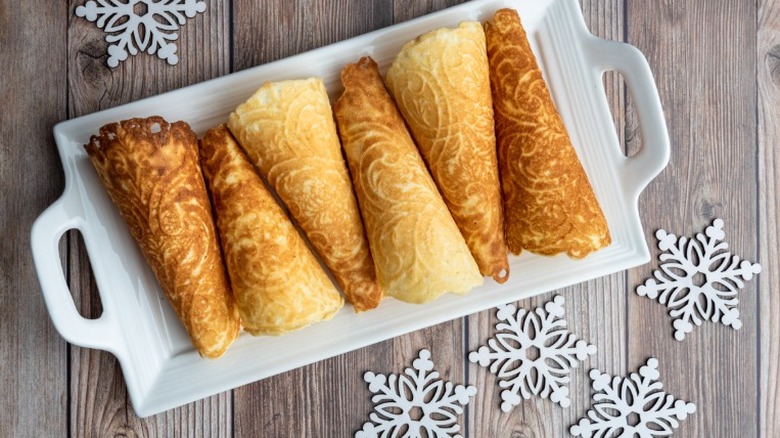
While these Norwegian desserts may look like a waffle cone just waiting to be topped off with a healthy scoop of ice cream, they are actually a traditional Christmas cookie. These cookies are thin, crisp, and rolled into a cone shape while still warm (much like a waffle cone). Krumkaker are thought to be around 1,000 years old, originally made over open fires before stovetops came into existence. The traditional batter is simple: just a mixture of eggs, flour, sugar, and butter. However, you can tweak the recipe to add extra spices such as cardamom and nutmeg.
The key to the perfect krumkake is using a specialized iron to cook the batter. These irons have intricate designs laid into them so that each cookie comes out imprinted with a beautiful pattern. Once the batter is cooked, a cone-shaped mold or any cone-shaped object you have on hand can be used to shape the cookie. Krumkaker can be filled with whipped cream, berries, and yes, even ice cream.
6. Sand Tarts (United States - Pennsylvania Dutch)
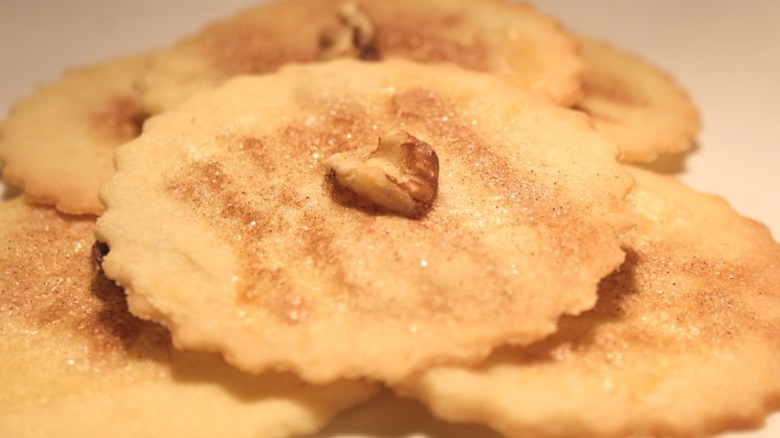
During this trip around the world, we're making a quick pit-stop in the U.S. to check out one classic Amish food that you really need to try. But don't worry, these cookies aren't your average sugar cookie. You may have never heard of sand tarts, even if you grew up in the United States. However, they are a popular holiday tradition among the Amish, Mennonite, and wider Pennsylvania Dutch communities.
Though the basic ingredients are reminiscent of a normal sugar cookie, they're meant to be as thin as possible, resulting in a crunchy cookie that all but melts in your mouth. Since the recipe is so simple, it is a great baking activity for young children. They can be cut with cookie cutters and decorated with icing and sprinkles, which is especially fun for families. Another common garnish is to sprinkle the finished sand tarts with cinnamon sugar and place a pecan or walnut at the center for extra crunch.
7. Hojarascas (Mexico)
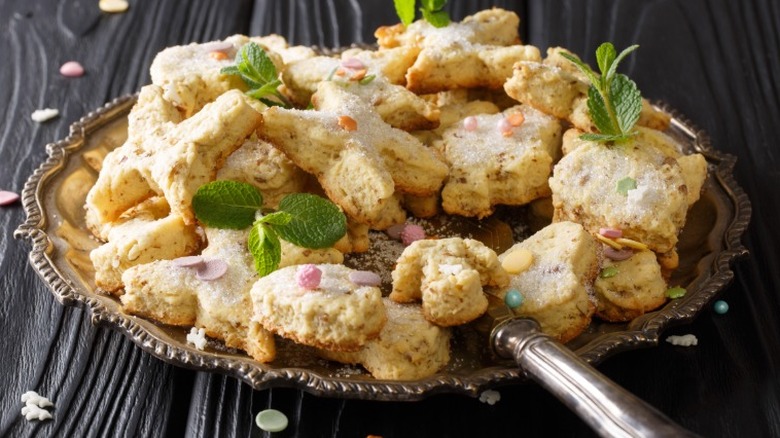
Hojarascas are simple yet delicious Mexican-style shortbread cookies that are a staple during the holiday season. They combine the soft, crumbly texture of shortbread with the warming flavors of cinnamon sugar for a treat that pairs wonderfully with a warm cup of Café de Olla. These cookies can be found at many family Christmas celebrations or as an offering during Las Posadas, a traditional recreation of Mary and Joseph's journey to Bethlehem from the Bible.
You can easily customize these shortbread cookies by cutting them into various shapes. Often, they're stars, but they can also be cut into any of the other classic Christmas shapes you might use for a sugar cookie dough. Another way to elevate these cookies and achieve a more traditional flavor is to use Mexican cinnamon sticks rather than ground cinnamon. They're softer than your average cinnamon stick and easy to grind, giving your cookies the depth of flavor they deserve.
8. Kolaczki (Poland)
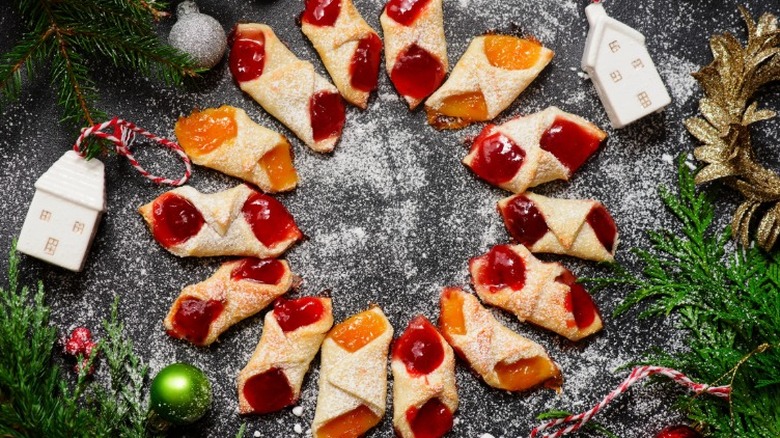
These next cookies are so good that they're not only popular in Poland, but also in countries like Austria, Russia, and Denmark. However, specifically in Poland, kolaczki are a staple leading up to Christmas, in both homes and stores alike. They are made with a cream cheese-based dough that bakes up nice and flaky, almost like a cross between cookie and pastry dough. The cookie is most often filled with a fruit filling like raspberry or apricot, but you could also opt for a nut or cream cheese filling.
Part of what makes these little treats so special is their shape. The dough folds over the filling to resemble tiny envelopes. The secret to getting the dough to stay in place is to add a small amount of water to the joining points to secure them. Though it may take a little more delicacy than making the signature indent in a thumbprint cookie, in the battle of fruit-filled cookies, this one might just be the winner.
9. Licorice Tops (Iceland)
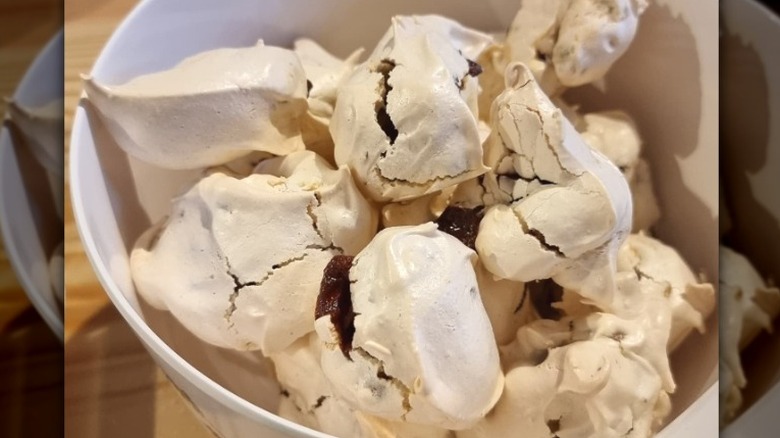
Walk into any Icelandic store in search of a sweet treat, and you'll stumble across a plethora of licorice-flavored products. Many of Iceland's sweets, even chocolate, come paired with a healthy dose of licorice root. You can even get your hands on licorice ice cream. Though the reasons for Iceland's licorice obsession aren't immediately clear, it does explain one of the country's traditional Christmas cookies. Lakkrís toppar, or licorice tops, are a meringue cookie filled with chocolate chips and chocolate-coated Icelandic licorice.
Licorice tops are unlike any American Christmas cookie. The meringue base makes for a crisp exterior and chewy middle, and the chocolate pieces add a rich, creamy layer. The flavor is unique, and the texture makes the eating experience satisfying. Even if you consider yourself a licorice hater, give these cookies a chance. Icelandic licorice and American licorice are not the same. In fact, many kinds of American licorice don't actually contain licorice root but rather are flavored with anise. Even people who normally hate licorice have found they love Icelandic licorice just as much as the locals do.
10. Andalusian Alfajores (Spain)
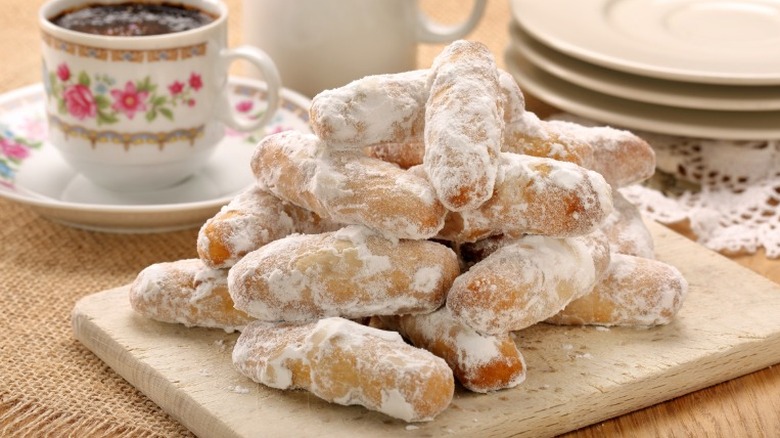
Alfajores are best known as soft shortbread sandwich cookies filled with creamy dulce de leche, popular in South America. However, there's another version of alfajores that you may not be familiar with. Andalusian alfajores, as their name suggests, originated in the Andalusia region of Spain and have been around since at least the 14th century. They are traditionally made for Christmas, especially in Medina Sidonia, where they are one of the city's most famous treats.
This no-bake cookie is made with honey, nuts, breadcrumbs, and spices like cinnamon and cloves. These flavors are indicative of the Moorish influence in the area. Though South American alfajores evolved from these cookies, it's clear they don't share much else in common besides a name. There's a long history to no-bake cookies like these Spanish alfajores, but the general appeal is that it's easier and quicker to whip up a batch when you don't even have to turn on the oven. Andalusian alfajores combine tradition and convenience, and during the holidays, that little bit of time saved could be just what you need.
11. Speculaas (The Netherlands)
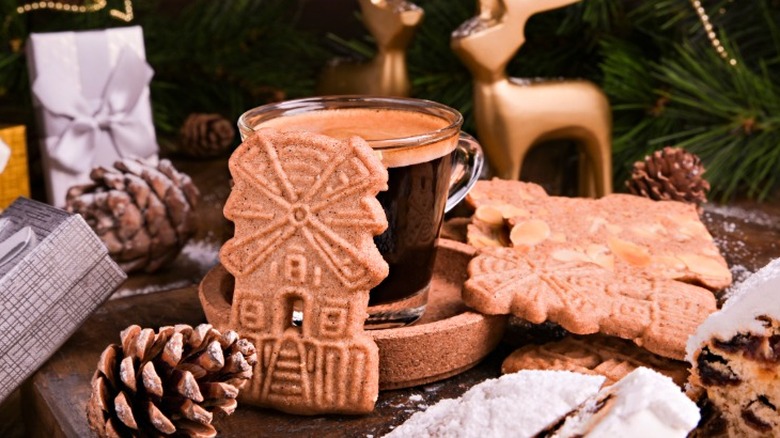
After Biscoff became the cookie of the skies, a welcome sweet treat offered to passengers on long flights, it took off in popularity across the world, inspiring all kinds of products from Biscoff spread to Biscoff ice cream bars. But the origin of this cookie actually traces back to another type of cookie. Speculaas is the original spiced cookie from the Netherlands, and became popular in the 17th century. Belgium later developed its own version of speculaas called speculoos, and eventually Biscoff came along too.
Speculaas have a deeper flavor thanks to the heavy spice content in the dough. Typically, you'll find cinnamon, nutmeg, and cloves, and other common additions include ginger and cardamom. Speculaas are served on St. Nicholas Day and for other holiday celebrations, often cut in traditional windmill and snowflake shapes to add a pop of whimsy to the dinner table.
12. Paciencia Cookies (Philippines)
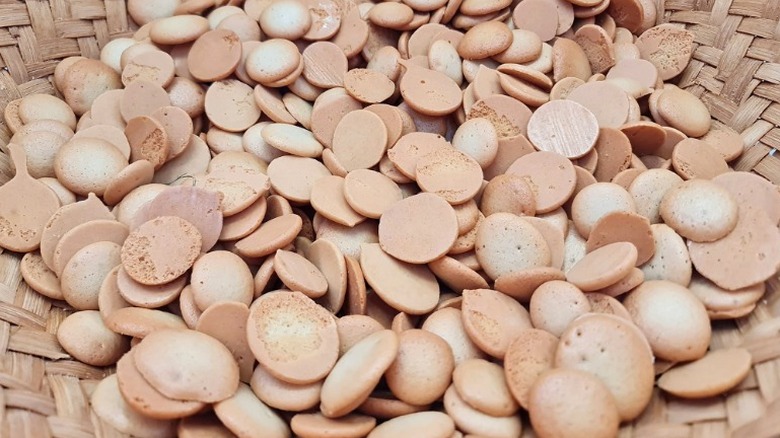
Meringues aren't just a Christmas tradition in Iceland. As it so happens, mini meringue cookies known as paciencia are a staple during the holiday season in the Philippines. The name, meaning "patience," could refer to the process of making meringue. Thankfully, the ingredients for these cookies are very simple and easy to access for most. The basic recipe consists of egg whites, sugar, flour, baking powder, and vanilla extract. The result is light and crispy with a subtly sweet flavor that makes it hard to stop at just one.
The key to mastering these cookies is getting the meringue just right, and patience is essential to achieving the glossy, stiff peaks these cookies require. Once you have that, the rest is a breeze. Though the flavor and texture of paciencia hold up on their own, you can also choose to add other flavors like calamansi, lemon, or cookies and cream. The cookies can even be colored to match the particular occasion you're celebrating.
13. Kahk (Egypt)
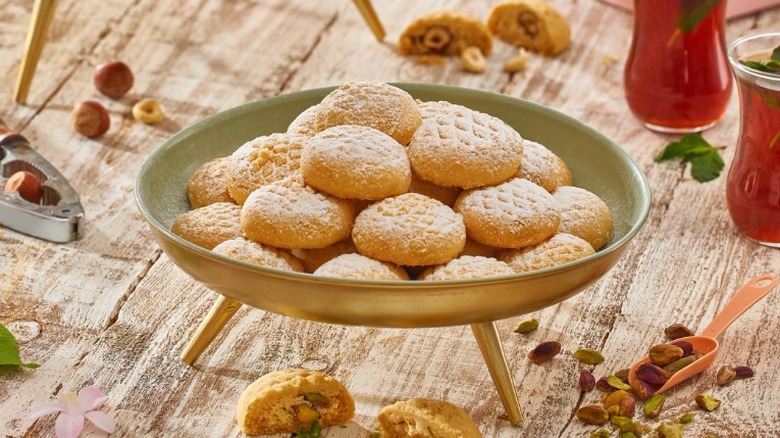
Egypt's Christmas looks a little different than the typical U.S. celebrations. While December 25 is celebrated and decorations can be found leading up to that date, many Egyptian Christians are part of the Coptic Orthodox Church. Following the Julian calendar, Christmas is celebrated on January 7. On this day, families gather to celebrate, exchange gifts, and indulge in sweets, such as kahk.
Kahk are not just Christmas treats; they're also commonly eaten at Easter and Eid al-Fitr celebrations throughout the country. However, for much of the Christian population, the cookies are deeply associated with gathering with family and celebrating their rich cultural heritage. The base dough contains flour, sesame seeds, sugar, and occasionally cinnamon. The cookies aren't too sweet, but a dusting of powdered sugar gives them a perfectly balanced sweetness without being overpowering. Sometimes kahk is stuffed with date paste and nut fillings made with pistachios or walnuts that complement the subtle flavor of the cookie.
14. Springerle (Germany)
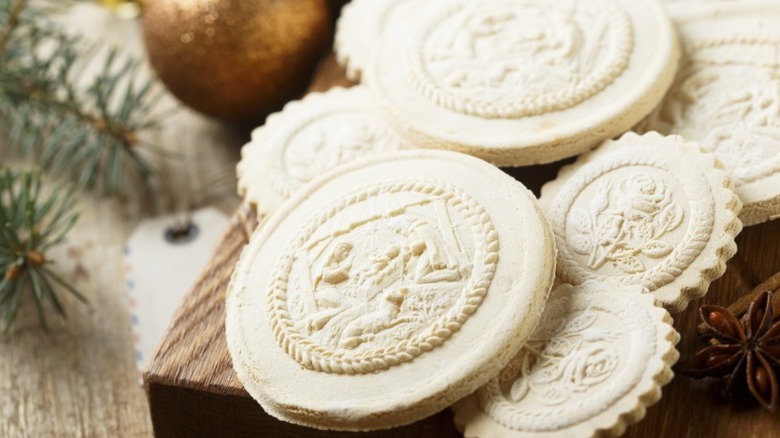
The award for the most beautiful Christmas cookie goes to Germany's Springerle. These cookies don't even need icing to make a statement. The dough gets its flavor from a combination of anise seeds and oil, but the real treat is that each biscuit is embossed with intricate designs made using specialized molds. A single plate of Springerle could hold anything from animal and fruit still lifes to detailed townscapes. These elegant cookies have a long history, originating in southern Germany around the 14th century, and are often made during religious holidays as celebratory treats.
Aside from their striking designs, the cookies are also unique. The dough is traditionally made using baker's ammonia, or hartshorn, instead of baking powder as a leavening agent. This is a key ingredient to achieving the airy, honeycomb-like texture characteristic of Springerle. Rather than spreading in the oven, these cookies rise upward, leaving behind lots of air pockets for a crisp bite. Authentic Springerle do not contain fats like butter, another factor that contributes to their distinct texture. For the best flavor and texture, let the cookies rest in an airtight container with an apple slice for three to four weeks. Not only will this enhance the flavor, but it will soften them up and make them all the more enjoyable.