

When You Should Actually Cook Your Canned Tomatoes
We may receive a commission on purchases made from links.
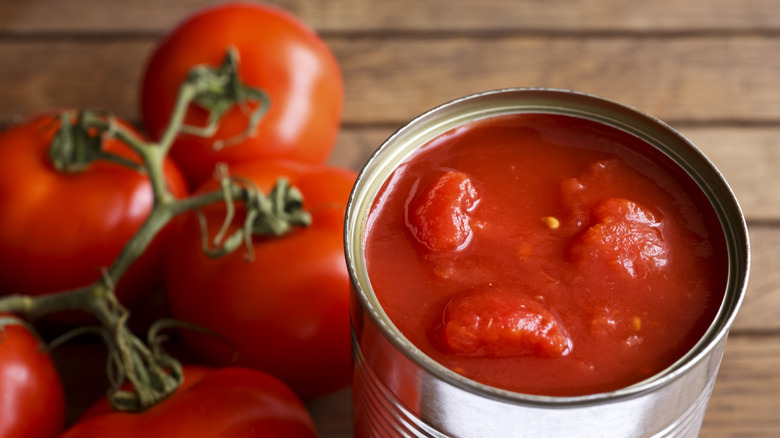
Although conventional wisdom would have it that fresh foods are always better than canned ones, there are a few notable exceptions, with canned tomatoes being right at the top of the list. Even professional chefs use canned tomatoes, since they're always in season and make for more consistent results than using fresh but flavorless winter tomatoes. They can't be swapped out for fresh tomatoes in all recipes, however — no one wants a canned tomato caprese salad, and canned tomato salsa cruda is also not the best idea.
The reason is that canned tomatoes nearly always need cooking in order to develop their flavor. (Additional cooking, that is, since canned tomatoes are already cooked as part of the preservation process.) Straight out of the can, these tomatoes tend to be bland, but according to YouTube cooking creator James Delmage, heating " ... contributes to and changes the flavor, especially if you're cooking them along with other ingredients."
Delmage, who also co-authored a cookbook called "Sip & Feast: Family Favorite Recipes," noted that canned tomatoes absorb some of the essence of the garlic, olive oil, salt, and basil he uses to make his homemade marinara sauce. "Likewise, using canned tomatoes to make a Sunday sauce, or gravy, which usually contains pork ribs, sausage, braciole, or any combination thereof, tends to meld the flavor of the tomatoes with the meats as they simmer for hours over low heat," he added. Even if they're cooked without such additions, the heat alone helps to evaporate some of the excess liquid and concentrate the tomato-y taste.
The one (partial) exception to the rule
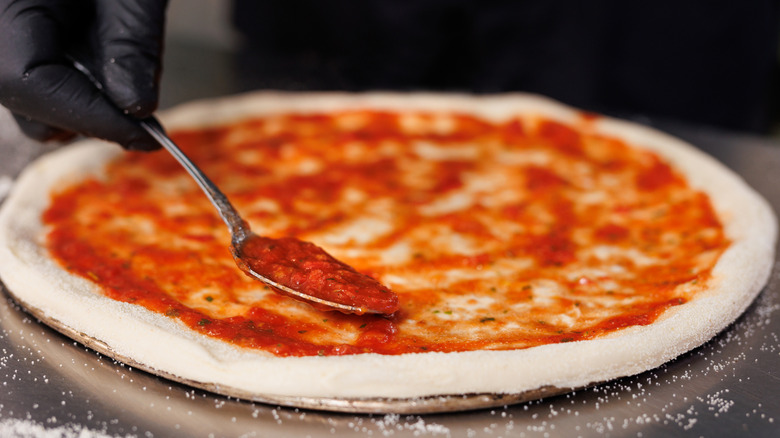
Nearly every time you open a can of tomatoes, you'll be dumping it straight into a cooking pot, but there is one notable exception: a recipe such as our no-cook crushed tomato pizza sauce. Sure, some pizza sauce recipes do call for cooking the tomatoes (which are nearly always canned), but as James Delmage explained, this step really isn't necessary. In fact, it can make for a more muted sauce, as the tomatoes would essentially be triple-cooked: once while being canned, another time while the sauce is simmering, and a third go-round in the oven.
Delmage himself is a fan of minimalist pizza sauce, telling us, "All that's needed, and, really, all that's used for New York-style pizza, is good-quality canned tomatoes and a little salt. The only cooking the tomatoes see is when they're in the oven. I don't cook [the sauce] before placing it on the pizza dough." Of course, the heat from the oven, not to mention the proximity to cheese, pepperoni, or other toppings, is sufficient to change the nature of the tomatoes.
In fact, it could be argued that the oven makes all the difference. The type of pomodoro crudo sauce that's served over cooked pasta and never sees the inside of an oven is typically made with summer-ripe fresh produce instead of canned tomatoes, since the latter don't taste their best without any heat.