

How To Render All The Unappealing Fat From Canned Corned Beef
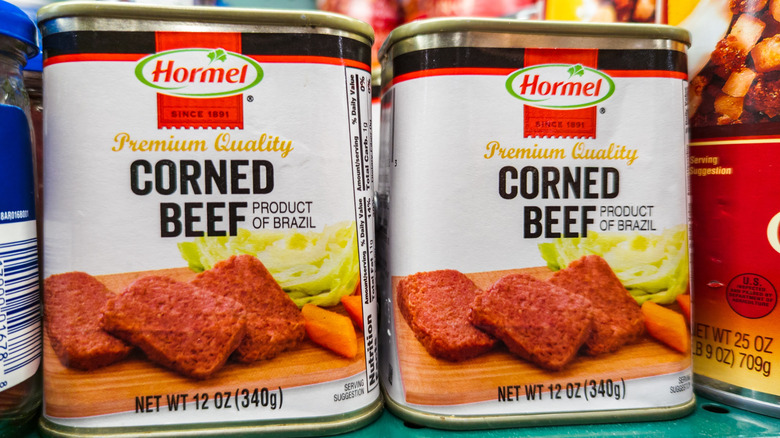
Corned beef is a great wintertime dinner, especially if you're hosting. It's warm and filling, and it pairs well with all kinds of home-cooked comfort foods like mashed potatoes, old-school Southern-style biscuits, and apple pie. The downside is that it's made from beef brisket, a cut of meat that's notoriously fatty (the "corned" in corned beef references the seasonings) — and all that fat sticks around when it's time to eat.
We wanted a few tips on how to bid that unappealing fat goodbye forever, so we reached out to Corey Small, executive chef at Oasis Bar & Bistro, for some suggestions. He said there are multiple ways to render the fat from canned corned beef, and they all hinge on one concept: "The goal is (to use) gentle heat that melts the fat without browning or breaking down the meat too quickly," Small said.
A very popular way of removing fat from corned beef is to heat the unopened can in simmering water for about 10 minutes, until everything inside is warm enough to melt the fat. Then, open the warm can and drain off the liquid fat. However, because the fat in canned corned beef is emulsified throughout the meat, it won't separate as easily as fresh rendered fat, Small said. "It won't remove everything, but it does make the meat easier to sauté later without swimming in grease."
The best ways to remove fat from canned corned beef
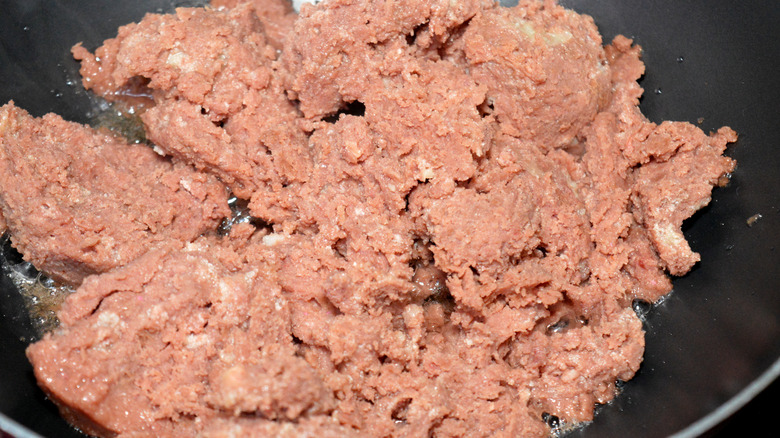
Chef Corey Small pointed to two methods that render fat from canned corned beef more effectively than heating an unopened can in simmering water: pan-rendering and oven-rendering. Both methods spread the corned beef out on a flatter surface and use heat to draw the fat from the meat. Pan-rendering uses a skillet to heat the corned beef over medium-low until the fat becomes liquid. If you're using the oven, spread corned beef on a cookie sheet and bake it for 10 to 15 minutes at 375 degrees Fahrenheit. In both cases, remove the fat as it pools with a spoon or paper towel, or drain it away from the meat.
The best part about both of Small's fat-rendering methods is that you're able to save the liquid for other culinary projects. It's a great flavor agent for all kinds of dishes, like in a beef wellington pot pie. "A lot of the corned beef's depth lives in that fat," Small said. "You can fry potatoes or onions in it, use it as the base for sautéed cabbage or callaloo, or even spread a little on toast in the same spirit as beef dripping in the U.K."