

The Worst Store To Buy Milk From If You Want To Save Money
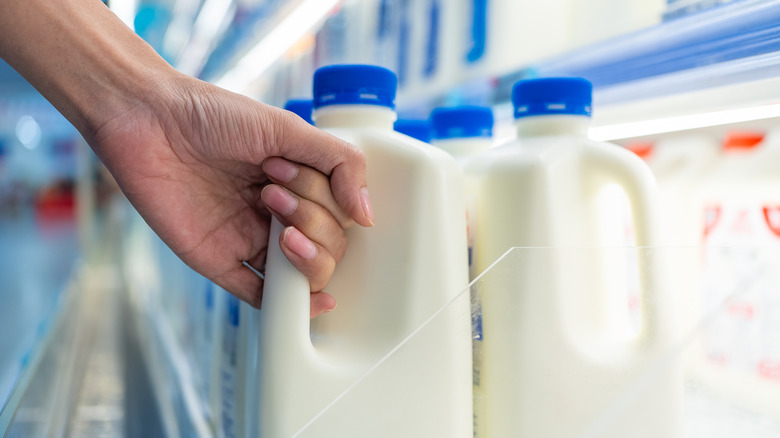
Whole Foods' reputation as an expensive grocery store has earned it the nickname "Whole Paycheck," and its milk prices aren't exactly changing that any time soon. Rising grocery prices are changing the way people shop; consumers are price-checking just about everything. I've joined in on the price-checking and compared the cost of Whole Foods' 365-branded whole milk to other retailers. Keep in mind, these prices reflect my Oregon location. A gallon of Whole Foods' 365 whole milk rings up at $4.39 here. When compared to other private store labels like Walmart's Great Value at $3.46 for a gallon of whole milk, Whole Foods looks considerably pricy.
Other stores like Safeway sell their Lucerne whole milk for $3.79 a gallon, while the same milk from Good and Gather has a price tag of $4.19, proving that it's not a grocery item you should be buying at Target either. To label Whole Foods as expensive and leave it at that, though, isn't exactly fair. The grocery chain's higher prices are likely because Whole Foods only sources its milk from farms that are within close proximity to the communities it serves. As a certified organic grocer, the farms that provide dairy to Whole Foods are organic family farmers who specialize in pasture-raised dairy. Whole Foods' focus on quality products and serving the community in more ways than just selling goods can come at a higher cost. But while the health food store focuses on quality, other chains are focused on efficiency.
How other grocery chains keep milk costs low

Grocery chains are bottling their own milk, and it's creating a moral dilemma among many consumers. Stores like Walmart and Safeway have managed to keep milk prices somewhat low, at least in comparison to Whole Foods. Though, Whole Foods' high prices make sense from a community support perspective. Meanwhile, companies like Walmart and Safeway own and operate their own milk processing plants to cut costs and eliminate any middlemen. Rather than partnering with the brand Lucerne, Safeway owns the company. This allows the grocery chain to mitigate production costs and keep in-store prices low.
Similarly (though, on a grander scale), Walmart began opening its own milk processing plants in several states. This allows Walmart to maintain control over processing, packing, and distribution rather than hiring outside companies. While this is a way for the companies to save money and increase profit, it can be harmful to milk producers who were already in the area and can no longer compete with the low prices of a large grocery chain. While most people want to help their communities thrive and would rather see local businesses and farms do well, the cost of milk at grocery chains like Whole Foods is still difficult to justify when so many Americans are already cutting corners wherever they can to save money.