

Why You Shouldn't Throw Out Your Shrimp Shells After The Meal Is Finished
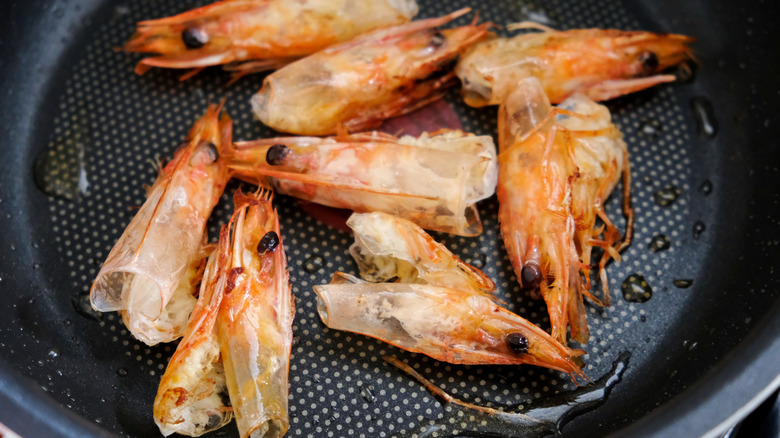
Shrimp are delicious whether they're boiled, baked, or fried. It can be a point of pride to shell and prep them yourself, although you tend to end up with a lot of fishy-smelling waste. But wait before you throw away all those heads and tails! You can cut down on shell waste simply by throwing them into a pot of water. Just as you should keep crab shells after eating, you should keep shrimp shells to make seafood stock.
A few of you might be wondering what exactly a stock is. It's similar to broth, but rather than relying on meat to create savory flavor, stock uses a mixture of bones, organs, and various spices. This liquid ingredient is nutrient-rich and versatile in making everything from soup bases to gravy. For seafood stock, clam shells, fish bones, cracked crab shells, and shrimp shells are a great way to get rich, umami results.
To attain your shells, you should generally save ones that are uncooked, but cooked ones are okay. Just make sure you don't keep shrimp shells that have been sucked on or are covered in sauce. Once you've cooked up some stock with your shrimp shells, you can make use of it for some amazing seafood chowders and pasta sauces, or freeze it for future cooking projects. While some people eat shrimp tails, the stock method is a far more appetizing way of using them. What's more is that making stock is incredibly simple and doesn't take long.
How to make savory seafood stock
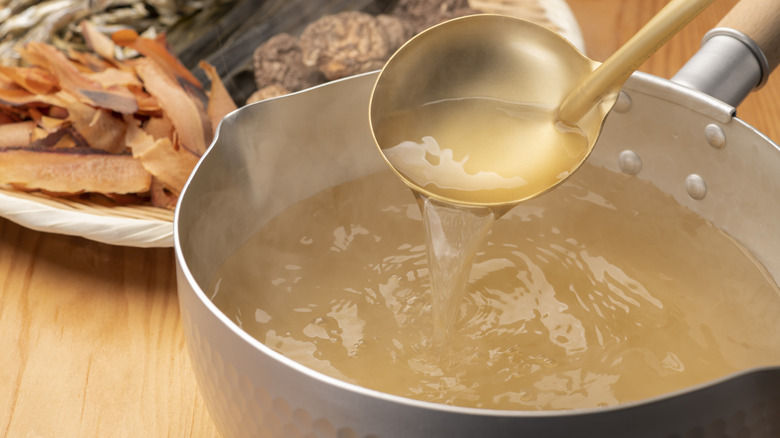
First, save your shells in a bag in the freezer, whether they're from hand-peeled raw shrimp or tails from shrimp cocktails. Leaving the heads on shrimp during BBQing can help you end up with shells that lend a smoky taste. Once you have a pound of shells or more, place them in a deep pot. Add some vegetables such as carrots, garlic, onions, and celery for extra flavor. Don't forget a bay leaf, too. You can even throw in a little tomato sauce for a more tart result. Fill the pot with water until everything is covered and boil for about half an hour. In some cases, you can boil for up to two hours, but overcooking can make the flavor very mild. After that, use it right away, store it in the fridge for up to three days, or freeze it for up to three months. If all this sounds a little fishy, pun intended, keep in mind that even Bobby Flay saves his shrimp shells for stock (via Food & Wine).
If you want to make your stock extra tasty, there are a few more ingredients you should add. Combining chicken stock with your seafood stock can give it a richer flavor. A little dashi can bump up the umami flavor while boosting the seafood taste as well. If you like a little spice, include some Old Bay and whole peppercorns for a stock that's perfect for clam chowder. Your stock can also be used as a base for paella, an ingredient for fondue, or as a marinade for meats. So, while you can leave the tails on your shrimp and munch them, you might want to try creating stock instead.