

Why Becoming A Bartender At TGI Fridays In The 1970s Was So Difficult
When you think of TGI Fridays, you probably think of loaded potato skins, Long Island iced teas, and servers bedecked in buttons and pins. I'm all too familiar with this chain, as it was my very first job in senior year of high school. I was awful at it. Drunk moms hit on me, and it's now closed down. But before TGI Fridays became known for its whiskey glaze and endless struggles with bankruptcy, it was actually the premiere place to work as a bartender and server.
By the 1970s, TGI Fridays had grown from a bar in Manhattan to a small but respected chain, one that pioneered women's nights, happy hours, and adventurous cocktails. It was hard to get a job there, though: Bartenders underwent six weeks of training, and they had to prove they could make, from memory, 468 different drinks. Then, when they were hired, they'd be tested repeatedly on their skills, such as free pouring perfect drinks. They also used fresh juice for their cocktails, and some locations grew their own herbs in a garden.
TGI Fridays was spearheading the idea that working as a bartender was fun, exciting, and took an immense amount of skill. It's wild to think that the chain is basically why being a bartender became a skilled, craft-oriented job. But that all changed in the 1990s, when the company was sold several times and became a corporate, publicly traded enterprise. The extensive training went away, the flair went away, and the chain slowly became a shell of what it once was.
The legacy of TGI Fridays' bartending tradition lives on
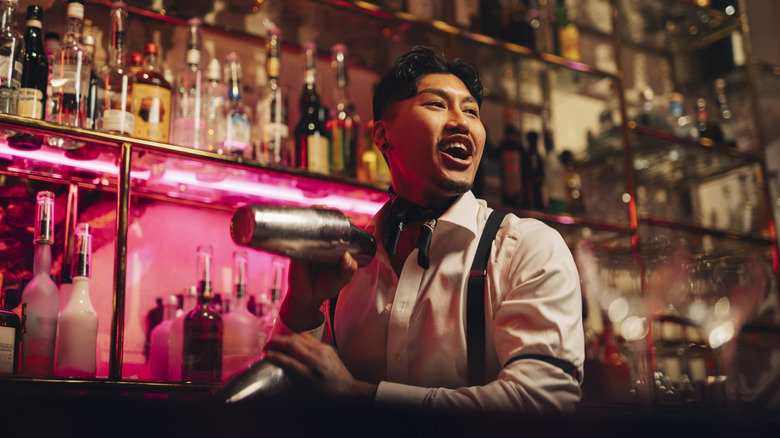
While Red Lobster is having a bit of a renaissance after its downfall and bankruptcy, TGI Fridays hasn't quite figured out what it's going to do next. And although we've analyzed the restaurant's confusing attempts at relevancy (really, TGI Fridays? Sushi?), we still don't know what it will do next. Bizarre corporate retooling aside, this chain has left an indelible mark on bartending as we know it.
For example, the setting of the film "Cocktail" was actually loosely based on the first Manhattan location of TGI Fridays. The company also helped pioneer bartending competitions. When the company was still heavily invested in flair, they realized they could hold "flair" bartending competitions. This started in the late 1980s; competitors would be judged on not just their drinks, but the way they poured them.
While the World Bartender Championship was little more than a marketing ploy, helping to standardize bartending lent the entire profession credibility. It's hard to think that a struggling suburban chain made such an impact, but, without TGI Fridays, we probably wouldn't have seen the revival in craft cocktails that we did in the 2000s. The company's future isn't certain, but its lasting impact sure is.