

Should You Be Buying Wagyu At Costco?
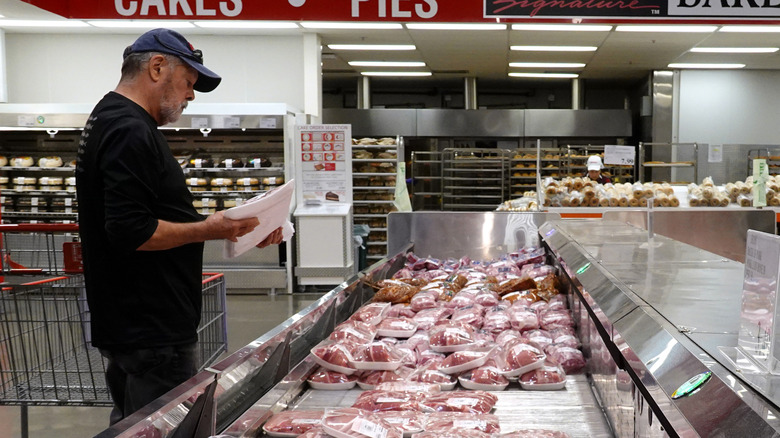
Fancy foods have a distinct lifecycle. They start as foodie status symbols, then creep into the public consciousness as an aspiration. Demand grows until cheap, low-quality versions start to crop up in supermarkets and fast-food joints.
Case in point: Wagyu beef. In the early 2000s, Wagyu beef was nearly impossible to buy stateside. Now, Wagyu is known as the best of the best, and it's used as a way to market overpriced burgers and dubious steaks. Even Arby's has gotten in on the game. These days, savvy shoppers tend to eye Wagyu with suspicion. Sure, we all love Costco — but do we trust its Wagyu steaks?
The Takeout talked to Matt Abdoo, Executive Chef and co-founder of Pig Beach BBQ. Abdoo confirmed that yes, Costco is a solid place to buy Wagyu steak. "Costco sometimes offers American Wagyu at a price point that's more accessible than what you might find elsewhere," says Abdoo. "If it fits within your budget, it can be a great option to cook at home."
American Wagyu is an oxymoron: Wagyu literally means "Japanese cow." The term typically refers to beef from one of four different Japanese breeds. Most American Wagyu comes from Angus-Wagyu crossbreeds, which produce leaner steaks. Japanese Wagyu steaks occasionally crop up at Costco, too — including A5 steaks, considered the best of the best. Since Costco sells a few different types of Wagyu, it's important to know what you're buying.
Not all Costco Wagyu is created equal
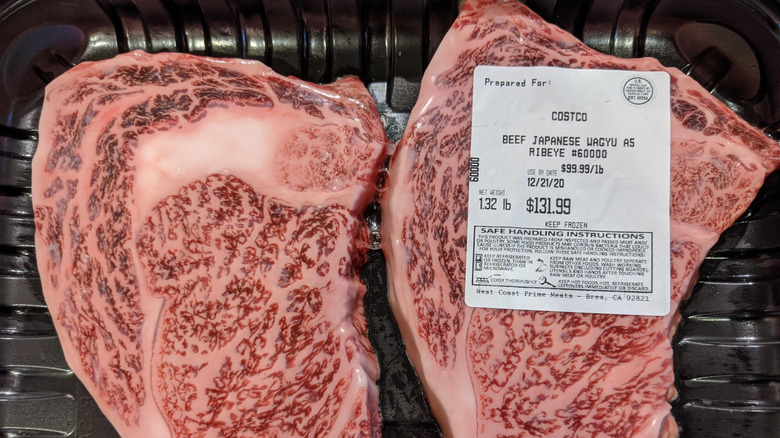
While the Japanese government regulates Wagyu beef, traditionally, there were no specific regulations for Wagyu beef in the US. That's starting to change, though. In 2025, the US Department of Agriculture introduced a new "Authentic Wagyu" label. Beef bearing the label must come from purebred Wagyu cows.
If you don't see the "Authentic Wagyu" label, your American Wagyu likely comes from an Angus-Wagyu hybrid. Still, you can expect fattier meat and finer marbling than you'd find in standard American beef. "American Wagyu typically stands out because of its higher level of marbling, meaning more internal fat throughout the meat," Matt Abdoo explains. "That marbling leads to richer flavor and a more tender eating experience."
While you can expect a solid cut of meat from the American Wagyu sold at Costco, you're not necessarily getting the same sort of steak you'd expect from Wagyu shipped straight from Japan. That's not necessarily a bad thing, though. Since most Americans are used to leaner steaks, the rich, buttery texture of Japanese Wagyu can be too much for the American palate.
If you do find fancy Japanese cuts at Costco, keep in mind that you're likely getting a Costco-size portion — even if it looks like a single steak. Since Wagyu is so fatty, it's typically served in small portions. That single steak could likely feed several people.