

The 11 Grocery Store Staples That Are Different In The UK
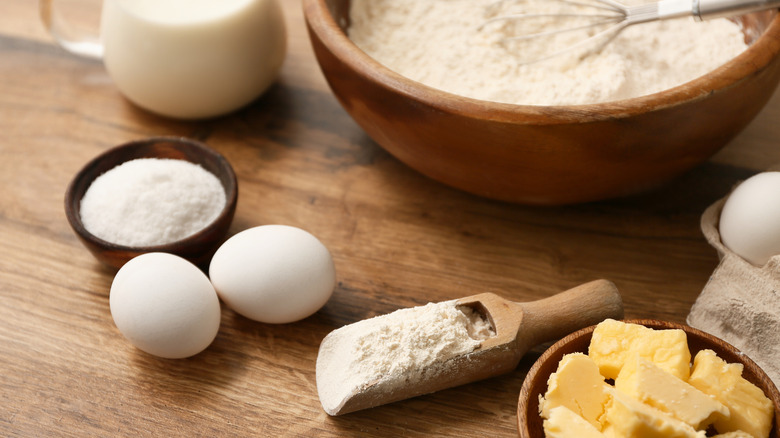
You can expect some grocery store staples to be the same in every country. When you pick up a bag of flour or a pack of butter, for instance, you probably imagine the contents are identical everywhere. However, some grocery store staples are different in the U.K. compared to the U.S. In some cases, it's just an interesting quirk that doesn't make much difference. Other times, these differences can change the way a recipe turns out.
I've spent time in the U.S. and work as a food writer for American publications, but I live in the U.K., where I was born and raised. This gives me insight others might not have into the differences between certain foods in these two parts of the world. I know that if a recipe calls for self-rising flour, this isn't the same as the self-raising flour I can pick up from Tesco, and I'm aware there's a real reason a cuppa never tastes the same when I'm in North America.
I'm about to walk you through 11 grocery store staples that are different in the U.K. Perhaps you're simply reading because you're interested in the differences. Great; you might learn something new. But, if you're an American trying to follow British recipes, this could help you avoid sunken cakes or puff pastry that doesn't puff.
Flour
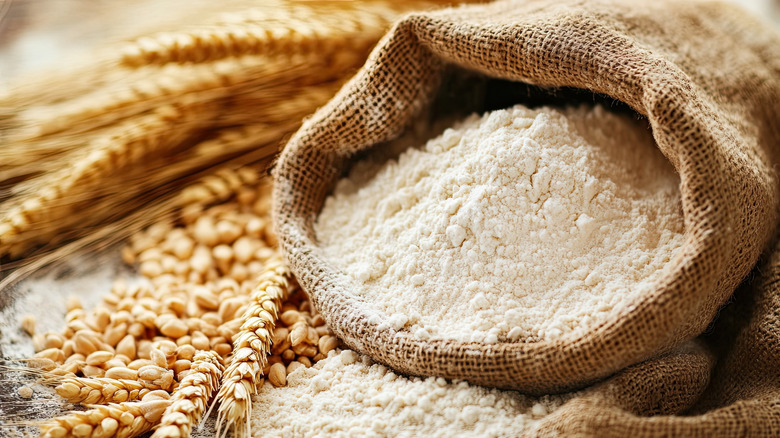
If you like to bake, flour is the basis of almost every recipe. You might assume flour made from wheat is virtually the same in every country, but there are some notable differences. In some cases, this could change the outcome of your bakes, so it's worth learning what's up.
In the U.S., all-purpose flour is the go-to for most bakes (bread aside). The U.K. doesn't have AP flour. Our equivalent is called plain flour, but it isn't quite the same. Plain flour has around 9% to 10% protein content to AP flour's 10% to 12%. A higher protein content means more gluten and a sturdier crumb. So, any American recipe tested with AP flour on the higher-end of the protein scale is likely to come out differently. The U.K. has another go-to flour: self-raising. This contains raising agents, so there's no need to add baking powder or baking soda for certain recipes. However, it differs from American self-rising flour, which also contains salt. Luckily, you can substitute self-rising flour with AP or plain flour, baking powder, and salt.
Another difference is all flour in the U.K. is unbleached. I only discovered this a few years back when making a sourdough starter. The instructions advised using unbleached flour, and I realized I had no idea whether or not my flour was bleached. I searched it up, only to find the agents used to bleach flour are banned in Britain. Bleaching can change the ways flour absorbs liquids, and even the way it tastes, so whether or not you use bleached flour makes a difference.
Sugar
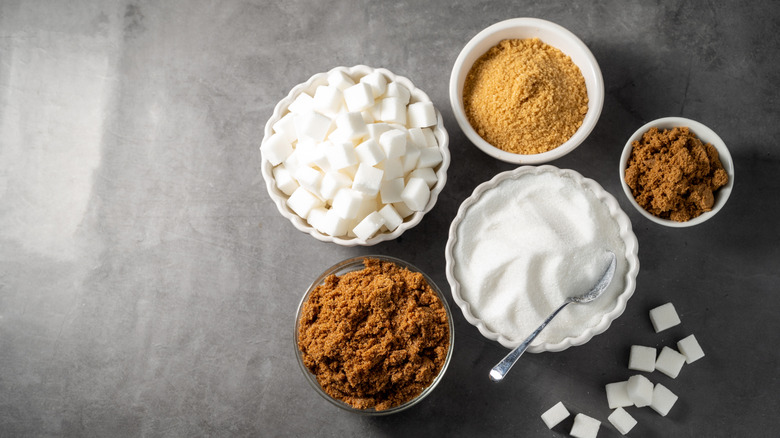
You might be surprised to know that even sugar isn't identical across the pond. Although it doesn't make a huge difference in most cases, Americans might be confused when encountering a British sugar aisle. Luckily, there are equivalents for most products, even when they go by different names.
What some folks in the States don't know is that a lot of white sugar isn't technically vegan. As part of the way American cane sugar is processed, it's filtered through charred animal bones. In the U.K., however, this isn't the case. Much of our sugar comes from sugar beets rather than sugarcane — many people prefer this as it's locally grown. But even cane sugar sold in the U.K. isn't processed through bone char. Then there's the question of turbinado sugar. This isn't something you can find on British supermarket shelves. What we have instead is demerara sugar, which is more or less the same thing. Both are unrefined sugars, but demerara is a little lighter, with a more subtle flavor. You also see caster sugar in British sugar aisles and in lots of baking recipes. This is the same as superfine sugar. It's a smaller-grained form of granulated sugar that melts into baked goods more easily. Lastly, if you're looking for confectioner's sugar or powdered sugar in the U.K., you're out of luck. You can buy it, but it's known as icing sugar.
Eggs
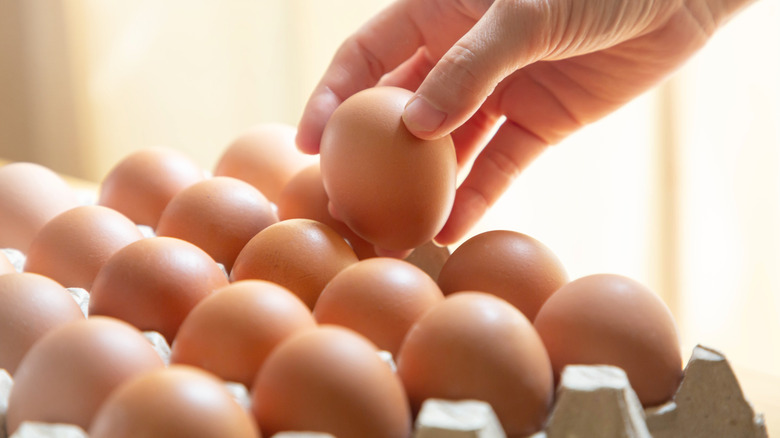
Eggs in the U.K. are largely the same, but they're sold on ambient shelves rather than in the fridge. This may seem odd to Americans, but it's part of some wider differences and how they connect to food safety concerns. In a fried egg food safety story back in the 1980s, British eggs were said to be rife with salmonella, and eating undercooked eggs (such as sunny side up) was against government guidance. This resulted in a vaccination program for chickens and the "British Lion Mark" being printed on eggs, giving them a best-before date and letting them be easily traced to the farm of origin. This was so successful that in 2017, British eggs were declared practically free from salmonella, meaning eating them raw or undercooked is safe. By contrast, the U.S. Food and Drug Administration still recommends cooking eggs until they're firm due to the risk of salmonella from undercooked eggs.
Part of the reason for the increased salmonella risk — and the reason American eggs need to be refrigerated — is that they're washed in a more intense way. This removes the cuticle from the egg, which offers some natural protection against the growth of bacteria, such as salmonella. If you're in the U.K. and you see eggs on the shelf rather than in the fridge, don't worry. It's perfectly safe for them to be kept at room temperature due to the protection offered by the intact cuticle. And don't be afraid to lick brownie batter from the bowl, either.
Butter
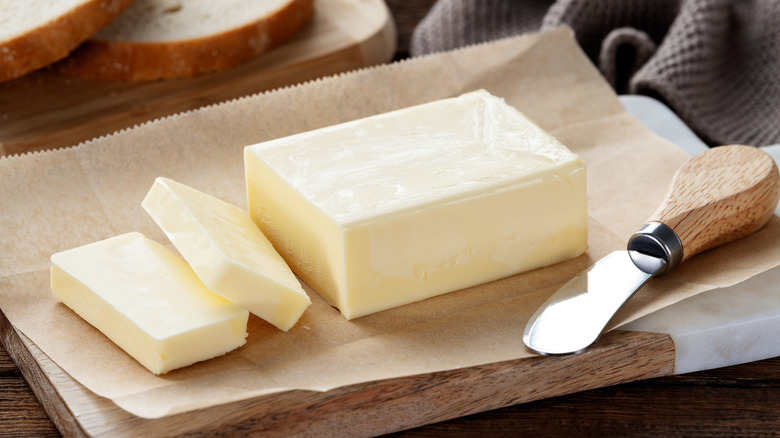
It wasn't until my early 20s, when I started to get into baking, that I realized there was a difference between British butter and American butter. Part of this difference is the way it's sold, which can be rectified with access to a kitchen scale, but more importantly, the butter itself is slightly different — and this can affect the way recipes turn out.
European butter, including British butter, has a higher percentage of butterfat than American butter. In the U.S., butter has to be at least 80% butterfat, but most brands hover around the 80% mark because it's more cost effective to make. European butter, on the other hand, must be between 82% and 90% butterfat. This makes the butter richer and creamier, but it also affects the way baked goods turn out, particularly laminated pastries such as croissants and puff pastry. Plus, the European market favors grassy, tangy flavors while U.S. butter tends to be sweeter and milder.
The way butter is sold differs, too. Rather than being divided into sticks, butter in the U.K. comes in blocks of 200 to 250 grams. This means I always need to get the scales out when making American recipes that call for a stick of butter. But that's okay; us Brits prefer the accuracy of kitchen scales for baking. Another difference in the way we use it: Butter is a staple ingredient in sandwiches in the U.K. It was strange to learn most Americans don't butter their bread for sandwiches.
Cheese
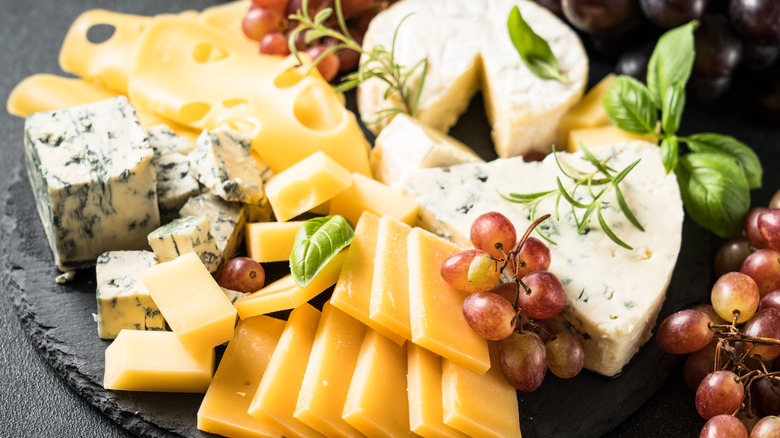
The cheese aisle in the U.K. might look quite different to what you're used to in the U.S. Part of this is the availability of certain cheeses; some cheeses banned in America are perfectly legal across the pond. There's also a difference in how some staple cheeses appear. A federal law is the reason Epoisses cheese is banned in the U.S., along with a range of other cheeses. Any raw milk cheese aged for less than 60 days is illegal to sell in America. So, cheeses such as Brie de Meaux and certain varieties of camembert and blue cheese aren't available in the U.S., whereas you would find them in U.K. stores.
One of the other differences you might spot is down to humble cheddar. It's just as popular in the U.K. as it is in the U.S., if not more so — in Britain, it accounts for over half of annual cheese sales. The notable difference is it's always a creamy off-white color, never orange. The orange hue is added to a lot of cheddar in the U.S. as a throwback to another time. It used to be that cows grazing on rich pastures produced a deep yellow, almost orange cheese. So, back in 17th-century England, crafty cheesemakers dyed their cheese a deeper color to get away with using cheaper milk. While this trend went away in the U.K., it made its way to America with early colonists and stuck around. Today, annatto is used to dye cheddar orange.
Milk and cream
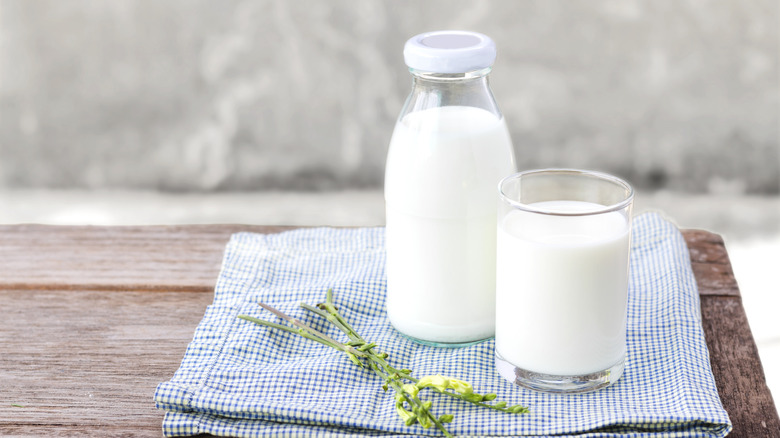
Look for milk and cream in the U.K. and you're going to find some differences compared to the U.S. Some of it is just in a name, but there are also differences in fat content. There are also some types of dairy products that are exclusive to either country. This can make it hard to find exactly what you're looking for.
Starting with milk, both parts of the world call the highest fat milk typically available whole milk. The difference is that British whole milk has a minimum fat content of 3.5%, while American whole milk's minimum fat content is 3.25%. You can't find 2% milk in the U.K., but the alternative is known as semi-skimmed milk and has a 1.7% fat content. Skimmed milk, or fat-free milk, is much the same in the U.K. and U.S. (almost all the fat is taken out).
What you should know before you buy half and half is that it isn't a thing in the U.K. This may be because of the wider trend of drinking milk in coffee rather than cream, coffee creamer, or half and half. Heavy cream in the U.S. has around 36% fat and is much the same as whipping cream in the U.K. Light cream, also known as single cream, has a minimum of 18% fat. However, in the U.K., you can also readily buy double cream, which is richer than heavy cream with a 48% fat content.
Chips
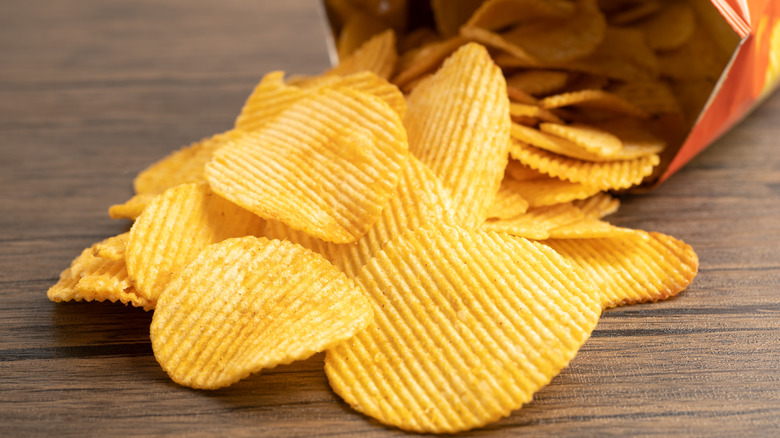
You probably already know that if you ask for chips in the U.K., you'll be presented with fries (either thick or thin) rather than potato chips or corn chips. What you call chips in the U.S. is what we call crisps in the U.K. Beyond this obvious language variation, there are differences between American chips and British crisps.
If you head to the snack aisle, the chip package size difference might be the first thing you notice. Sizes differ between brands, but the trend is the largest sizes in the U.S. dwarf anything available in the U.K. Take Doritos, for instance. The biggest American package is 14.5 ounces, compared to the biggest British size at 8.1 ounces. You're not going to find an absolutely massive bag of chips anywhere in the U.K.
The available flavors are different, too. Cheese and onion is one of Britain's favorite crisp flavors, but it's not generally available in America outside specialty British stores. While you might find one type of barbecue chips in the U.K., the U.S. has many barbecue variations, such as honey barbecue or Southern heat barbecue. British flavors you don't find across the pond include Worcester sauce and prawn cocktail, which sounds gross but tastes mostly like ketchup.
Baked beans
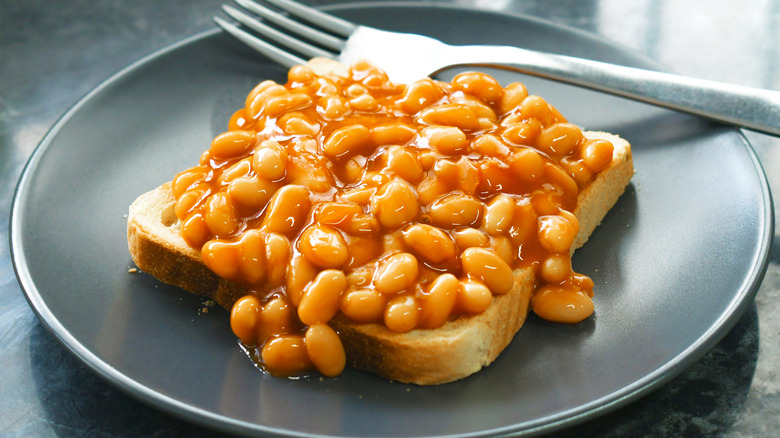
If you buy a can of British baked beans, expect it to be quite different from its American counterpart. Flavor, texture, and ingredients are all significantly different, as are the ways in which they're eaten. In the U.K., they're common as part of a cooked breakfast or enjoyed on their own on buttered toast, which is significantly different to what Americans are used to.
So, what's the difference between British and American baked beans? They're both made from navy beans (known as haricot beans in the U.K.), but in American baked beans, they're usually softer and mushier. British ones are creamy inside, but hold their shape well. In the U.K., they're almost always vegetarian, the exception being baked beans sold with little sausages in them. In the U.S., it's not uncommon for them to contain pork.
Despite there being different brands, the sauce and flavor profile is largely the same amongst British baked beans. They have a thin tomato sauce that's savory with a slight sweetness, very similar to the sauce in canned SpaghettiOs. American baked beans vary a lot by region and brand. Northeast baked beans are quite sweet, with a significant quantity of molasses in them, whereas Southwest versions can be more heavily spiced.
Packaged bread
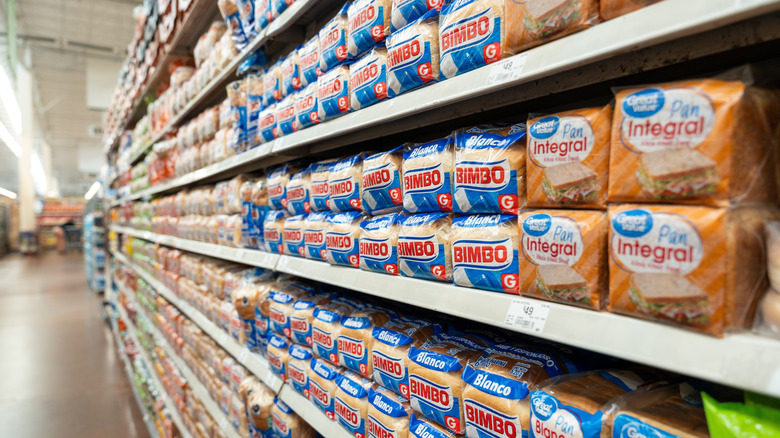
Supermarket bread, wherever you buy it, is never going to rival a loaf from a bakery. But, when you buy packaged bread in the U.K., you notice differences compared to the loaves you buy in U.S. grocery stores. The first thing you notice is the size of the slices is different. A standard loaf of Wonder Bread weighs 570 grams and has 20 slices, whereas a standard loaf of a similar U.K. equivalent, Hovis, weighs 800 grams, but also has 20 slices. American packaged bread slices are roughly square, whereas British loaves are a little taller than they are wide, so you get more bread in each slice.
The sugar content is also significantly higher in an American sliced white loaf. The flavor is quite sweet, whereas British bread has a more neutral flavor. It's slightly sweet compared to a homemade loaf, but not like American bread. Whole wheat bread is called wholemeal bread in the U.K. It has to be made with 100% whole grain flour to be given this name, whereas American whole wheat bread only has to be made with 51% whole grains. It's also worth noting that packaged bread is falling out of favor in the U.K. People are less likely than they once were to buy any kind of packaged bread, while bakery bread is gaining popularity.
Breakfast cereal
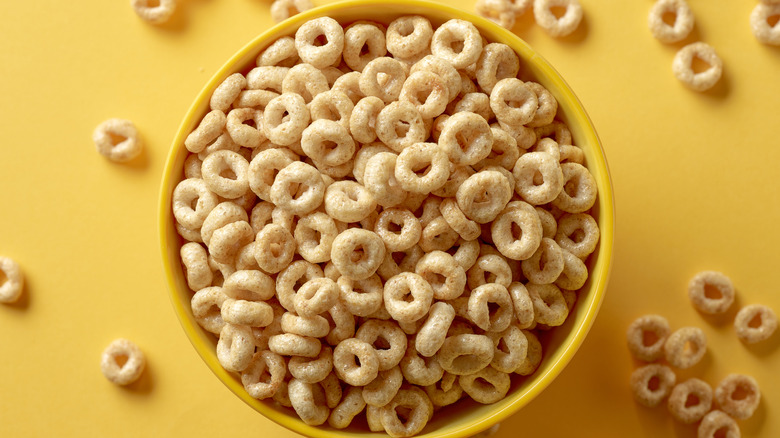
While we have our share of sugary breakfast cereals in the U.K., overall, British versions are a bit more sensible than U.S. ones. Over the years, sugar has been reduced in cereals and the sweetest ones are no longer considered reasonable breakfast foods by many parents (though I grew up on Cocoa Pops and Frosties in the morning).
The selection available in the U.S. and the ingredients are also different. There's more of a focus on variety of whole grains in the U.K., even in sweet cereals. For instance, in the U.S., Cheerios are made from oats, whereas U.K. Cheerios contain whole grain wheat, oats, and barley. British cereals also tend to avoid artificial colors, whereas American cereals may contain food colorings that have been linked to hyperactivity in kids. Some cereals you find in the U.K. but not in the U.S. include Weetabix (basically bricks of compressed wheat flakes with no sugar or flavorings) and Weetos (a bit like chocolate Cheerios). The U.K. doesn't get certain iconic American cereals, such as Froot Loops and Lucky Charms.
Tea
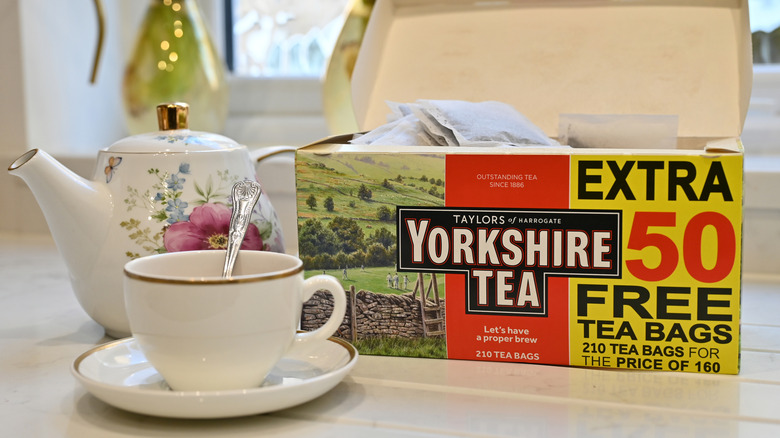
Offer someone a tea in the U.K. and everyone knows what this means: hot black tea with milk, often referred to as breakfast tea or builders tea when there's reason to specify. Sure, we drink herbal tea, green tea, and other tea varieties in Britain, but black tea is the default and dominates tea aisles.
In the U.S., sweet tea and other iced tea is more popular than hot tea. The iced tea market has triple the value of the market for teabags and loose leaf tea. There just isn't the same tea culture, and that's part of the reason people in other parts of the world consider American tea so bad. The first time I had tea in the U.S., I assumed it was bad because of how it was brewed. Electric kettles are less common in America, so people use water off the boil or even heat water in microwaves to make tea. But, when I bought a box of teabags and made tea at my apartment the way I usually do at home, it still didn't taste the same. This is just anecdotal, of course, but various sources suggest that tea sold in America is made with poorer quality leaves and a different blend of black teas, explaining the difference in flavor.