

If Your Bartender Does This, They're Breaking The Law
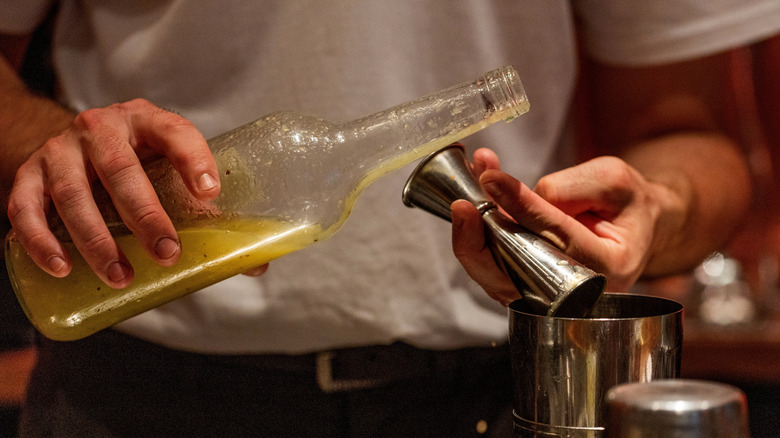
If you've sat at a bar, you might have witnessed an illegal practice you had no idea was against the law. Filling a bottle of liquor with alcohol from a different bottle is 100% illegal, and it can occur in a classy joint or a true dive bar.
This practice, called "marrying bottles," occurs when someone combines two spirits into one, whether it's to save space or for a reason more nefarious. According to provision 27 CFR § 31.201 of the Code of Federal Regulations, no bartender or anyone who sells alcohol shall "place in any liquor bottle any distilled spirits whatsoever other than those contained in that bottle at the time of closing ..." For example, if a bartender has two bottles of rum that are half empty, they cannot combine the two into one bottle. This is also true for wine.
If a bartender were to add juice or syrups to a bottle of tequila to make a cocktail, then tried to sell it to you, that would be illegal as well. Any drink mixing must be done in a glass, shaker, or new container not originally containing alcohol. Even two bottles of the same exact brand of liquor cannot be combined. With all of this in mind, you might wonder why outlawing the practice is necessary.
Why refilling liquor bottles is bad business
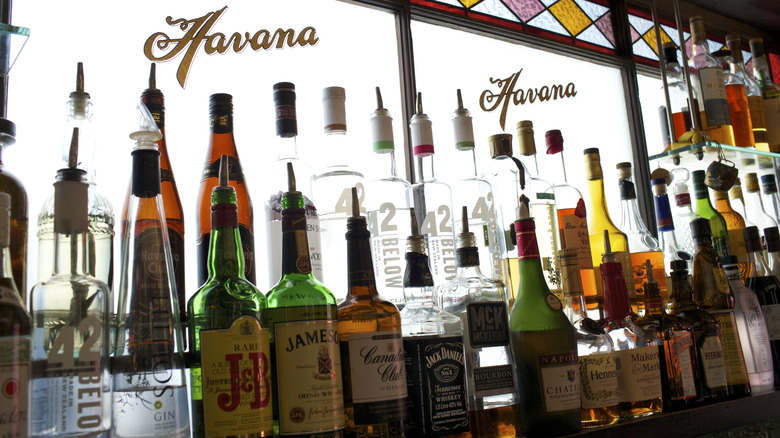
While this may sound like an arbitrary way to limit how bartenders serve their clients, there are some pretty good reasons why marrying bottles is a big no-no. Bars may be inclined to combine bottles to reduce the amount of alcohol they report for taxes. This may save them a little money, but it is considered tax fraud. Mixing the contents of bottles also makes it harder to ensure the safety and quality of the liquor. If one batch is recalled, it may be impossible to tell that the mixed bottle contains part of the tainted alcohol.
These regulations also make it illegal for bars to dilute their booze by adding water, counterfeit products, or bottom-shelf liquors into a top-shelf bottle. These concerns are so significant that this federal regulation is consistent in all jurisdictions throughout the U.S.
Even if you don't see a bartender performing this illegal act, you may suspect it is happening. If your drink smells like a chemical, it could contain a counterfeit version of the spirit. If the label is worn, that's a sign the same bottle has been reused for quite a while. If you think this is occurring, consider reporting the establishment for the infraction to organizations such as SafeProof or to state alcohol control agencies to prevent other patrons from being sold potentially harmful or low-quality alcohol.