

The Old-School Supermarket Chain Where The First Barcode Was Scanned
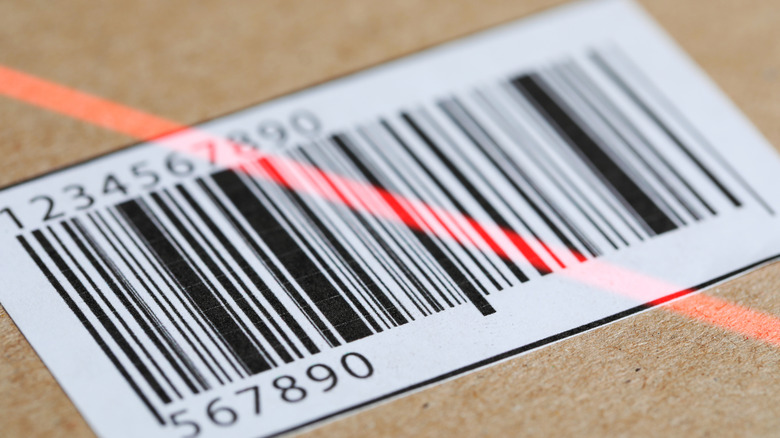
Barcodes are a familiar sight while grocery shopping, especially at Aldi's, where they are unusually large. They may seem like part of the shopping experience that has always been around, but grocery barcodes are a relatively new invention. Their origins date back to 1948, but they weren't used in retail until decades later. Their original shape was a bullseye, unlike the rectangle we know today. Barcodes were also used on train cars to identify shipments in 1967, but that wasn't their final stop. It wasn't until 1974 that a small Midwestern town implemented the world's first barcode scanner, cementing its place in history.
The turning point came at an old-school grocery store called Marsh – a supermarket in Troy, Ohio. The National Association of Food Chains had voted to start automating food price identification only two years before, finally settling on the Universal Product Code (UPC), which consisted of vertical black and white bars. However, no individual store had actually implemented it yet. On June 26, 1974, a shopper handed employee Sharon Buchanan a pack of Wrigley's Juicy Fruit gum. She used a brand-new scanner on the attached UPC barcode to identify the gum, and the process worked! This proof of concept spread quickly, and over the next decade, barcodes were applied across the country.
We're still seeing the barcode's impact today. While self-checkout has a long way to go, it's possible because of barcode scanners. Hospitals keep track of life-saving medical equipment and patients through barcodes. Even Mars rovers utilized barcode scanning. While Marsh supermarket may not be around anymore, it helped shape the modern world.
How Marsh changed grocery stores forever
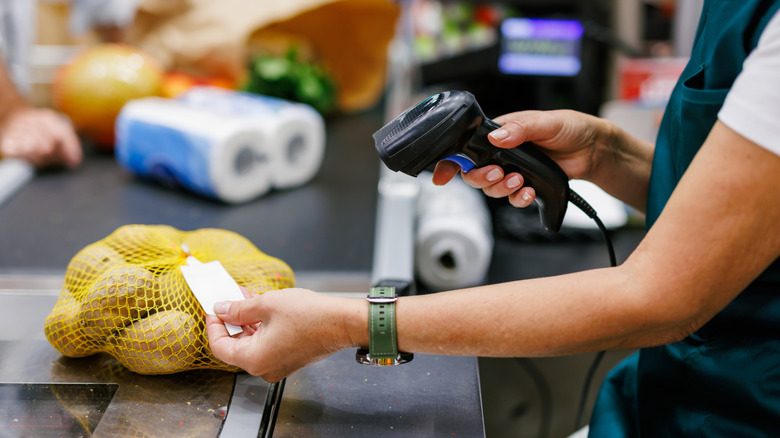
Marsh may have been the first grocer to use barcode scanners, but it was a pretty rocky start. Checkout lines could get achingly slow in the 1970s and desperately needed upgrades. Paul McEnroe saw an opportunity to implement scanning technology that he and engineers from IBM had concocted, where cashiers could simply point a "gun" at an item, and the price would be pulled up automatically. The system was inspired by Morse Code and relied on line thickness and guide bars, along with numbers beneath them, to tell a laser scanner which product to pull from a database. It was a straightforward idea, but there was genuine fear that the lasers could cause eye injuries. Several states also passed laws that individual price tags had to remain on products, even if they sported barcodes.
Yet the benefits were undeniable. At supermarkets like Marsh, lines moved faster, and cashiers worked steadily. With this innovation in hand, literally, the chain was able to effectively battle big names like Kroger and Cub Foods for many years. It even acquired other smaller stores, but the chain eventually went under in 2017. Its historic scanner now resides in the Smithsonian.
Barcode scanning technology is still evolving today. With QR codes, most modern phones can be turned into portable scanners. Beyond groceries, new barcode versions can help you pay back a friend, find a concert ticket, or learn more about college class options. We may not know where the future of grocery stores is headed, but barcodes in some form will most certainly be part of it.