

The Technique That Distinguishes A Hard Cheese From A Soft One
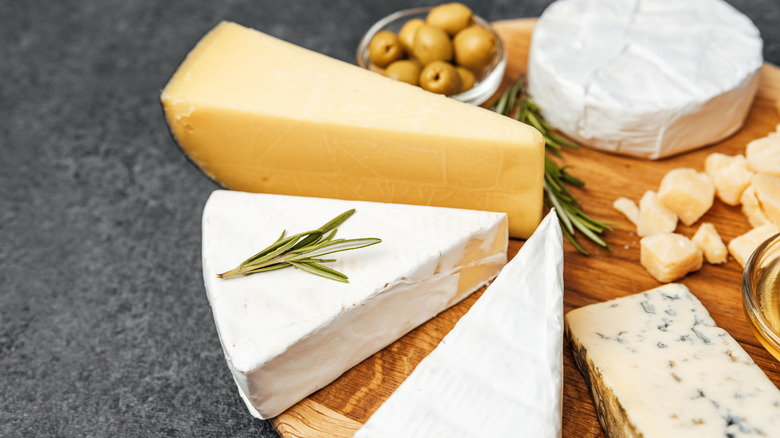
It's hard not to love a good cheese, no matter what its texture is. Simple cheddar cheese on crackers is an after-school snack many of us grew up with, and now a baked Brie or charcuterie is a favorite at celebratory gatherings. But for anyone who hasn't made cheese at home before, you may perhaps wonder how different cheeses get such different tastes and textures. Since it all comes from milk, why do some cheeses end up crumbly and hard, whereas others are soft and runny?
A lot of this comes down to the secrets of how cheese is made. The type of milk used and the fat content are part of it, as is the aging process. However, distinguishing a hard cheese from a soft one happens very early on in the cheesemaking process. For certain cheeses, getting the correct hard or soft texture is reliant on even the smallest of tweaks throughout the aging period. The biggest technique in all this, though, often comes down to a simple squeeze.
The science behind hard and soft cheeses

What it's really all about is moisture content and time. All cheese involves curdling milk with some sort of acid or enzyme, often rennet, then draining and forming. This draining is where the initial magic happens. For hard cheeses, the curd is first cut into very small pieces and then pressed and squeezed to get out as much liquid as possible. This whey removal process allows the cheese to be aged longer, and certain hard cheeses air-dry even further in food-safe environments. The less moisture a cheese has, the more crumbly, brittle, and hard it usually ends up. It also means the flavor is more concentrated and sharp, like you'd find in Parmigiano-Reggiano.
On the other hand, if you wanted to make a soft cheese, you'd start with larger cut curds and you wouldn't remove nearly as much whey. Instead, you'd drain the moisture slowly and gently, so as not to lose too much. You may also start with a bacterial culture rather than harsh acids. These cheeses are runny or liquidy, and they only get moreso when aged in rinds or washes. You generally don't age these cheeses for as long either, since their liquidous nature is more susceptible to going bad. Softer cheeses tend to have less fat per ounce compared to hard cheeses. This also explains why some cheeses are better at melting than others; higher moisture content and high-lactose cheeses tend to melt readily.
Types of cheese that will impress your guests
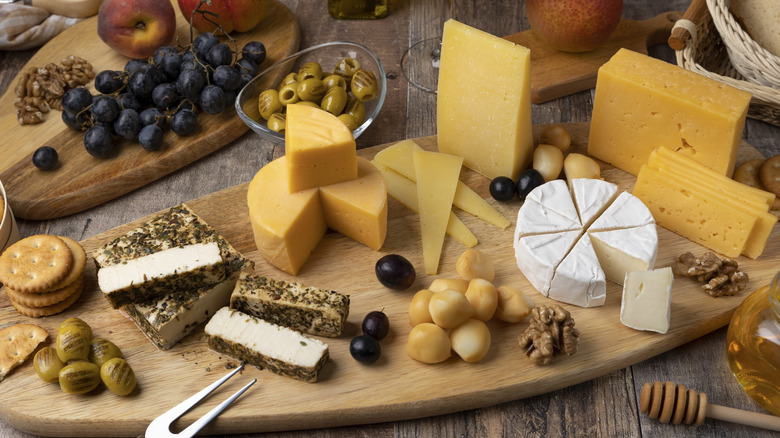
Cheese enthusiasts know that the best charcuterie boards should have a combination of both soft and hard cheeses. The subject of which varieties to pick can be trickier. Hard cheeses may go better with softer crackers and meats, whereas soft cheese can benefit from some crunchy crostini or crisp water crackers.
When it comes to soft cheeses, it's hard to go wrong with a creamy Brie. If you want a more flavorful punch that leaves an impression on guests, consider a soft blue variety or something pungent, such as a Taleggio. On the side of firm cheeses, salty aged cheddar can go with many charcuterie staples. For a more unique tasting note, go with a smoked Gouda or pecorino Romano, which can provide a good change in texture with soft meats and spreads. Of course, look into cheese made local to you for unique pairings.
Once you choose the right cheese to pair with the meat and other goodies on your board, be sure to cut the cheese like an adult. Wedges and thin slices of firmer cheese work better than crumbles. Soft cheeses may need a spoon or spreading knife since they get more runny as they sit. Little touches like these can transform you in the eyes of your friends from a cheese lover to a cheese aficionado.