

The Chewy Texture Behind Your Favorite Gummy Candy Has A Name

Americans can be picky about food texture, so it's doubly unsurprising that some Americans hate gelatinous, gummy foods the most. This also might explain why gummy worms are actually a recent addition to America's candy roster, having first appeared in the 1980s.
By contrast, if there's one thing all the various diverse cultures throughout Asia have on lock, it's foods with distinct textures. If you've experienced traditional Chinese, Korean, or Malaysian food, you'll notice a lot of it can be chewy, gummy, and have a thick mouthfeel. We don't really have an adequate English translation for the name of this texture in Asian cultures: Q ("kee-yew") describes foods that are gummy and squishy, but not mushy.
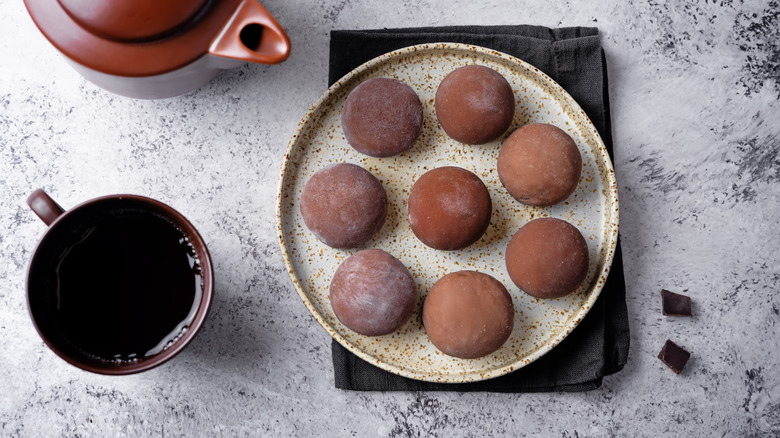
Think of mochi, tteokbokki (a gummy Korean rice cake served in a spicy sauce; you can even elevate your mac and cheese with comforting tteokbokki), boba tea, or even a really well-made Szechuan hot and sour soup (which is supposed to be a bit thick and gelatinous), and you'll begin to understand Q texture. It's also sometimes called QQ to denote an extra bouncy, extra-chewy consistency. None of these dishes produce a slimy feel, but those unfamiliar with this style of food might perceive it as such. But what's fascinating to me is that exciting textures open up a whole new realm of culinary possibilities. It's like adding a layer of complexity to a dish that can truly enhance the way you enjoy it.
How you can expand your palate to Q
Texture and taste are closely interrelated. You can find examples of this interrelation in every aspect of food and drink. For starters, think of a bad glass of wine. It might taste okay, having all the notes you're looking for: spice, fruit, acidity, tannins. But if that wine feels thin on your tongue or has a light mouthfeel we might call it watery. This is typically not what you want in wine. The texture of the wine plays a huge part in how you perceive its overall taste. Or, what about that perfect looking apple you picked which ended up being mushy and mealy? We typically would call it a bad apple, even if it's perfectly ripe.
I remember when I visited Italy and stayed a few days in Rome. One of Rome's true delicacies, one that probably reminds Romans of their nonna, is trippa alla romana. Yep, tripe in the Roman style. Being totally unacquainted with tripe, as I'm very much a white American, I thought, "Literally, when in Rome!" and in a small trattoria, I decided to order it. The waitstaff was delighted that an American was ordering the tripe, which was certainly an experience. It's chewy and exemplary of Q. Having tasted something delicious and totally new, I felt more connected to Italy and to the folks at that restaurant. But you don't have to eat tripe in Rome to experience Q; just get a bag of gummies and have at it.